
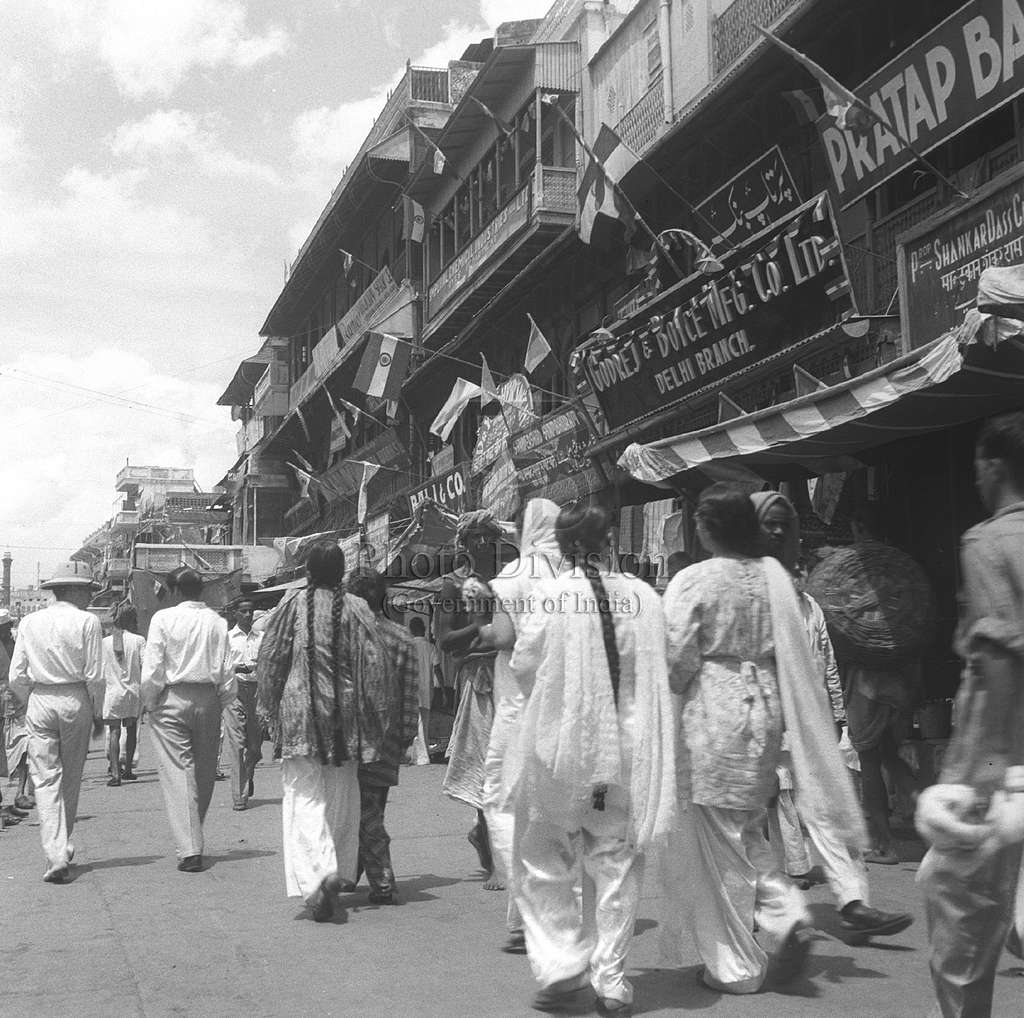
As today is India’s Independence Day—a day that holds, perhaps, more meaning than we can presently calculate—I have been thinking about swaraj: self-rule.
Independence is often understood in a political sense. Freedom from colonial rule, precisely. But … is a mind still ruled by colonial shadows, caste, gender, class, religious pride, and other thought structures entirely free?
Forsooth, no.
Swaraj/Svaraj must also enter our habits of thought: the ideational patterns we rarely pause to probe, and the material and immaterial conditions through which we live, and, indeed, imagine a life.
This brings to mind K. C. Bhattacharyya’s potent piece “Svaraj in Ideas” (1928), which Swaraj Barooah shared with me a few years ago and which I often return to in my work. The piece was originally delivered as a lecture by K. C. Bhattacharyya and is also included in Indian Philosophy in English: From Renaissance to Independence, edited by Nalini Bhushan and Jay L. Garfield.
For those unaware of Bhattacharyya, he was a distinguished Indian philosopher, known especially for his method of “constructive interpretation”: an approach that sought to clarify and develop the relationships and complexities within classical Indian philosophical systems. See more about him on the Wikipedia page.
Bhattacharyya broods over power in a particularly arresting way. He begins with two kinds of domination: the visible kind, in politics, where one person rules another; and the quieter kind, in spirit, where one culture settles inside another and begins to speak in its voice.
The British (and other colonial powers) had political power over India, of course. But for Bhattacharyya, cultural subjection was more troubling precisely because it was not always felt.
One could be free in the street and still be governed in one’s imagination, one’s thinking, even in one’s idea of freedom. It may not be amiss to note that this account of power, in its subtle and diffuse form, anticipates something later readers of Foucault and other post-structural thinkers may recognise. Bhattacharyya, however, arrives there from his own ground—and half a century earlier.
The opening passage of “Svaraj in Ideas” is worth sitting with. I will leave the rest to readers; it has its own quiet insistence.
1. We speak today of Svaraj or self-determination in politics. Man’s domina- tion over man is felt in the most tangible form in the political sphere. There is however a subtler domination exercised in the sphere of ideas by one culture on another, a domination all the more serious in the consequence, because it is not ordinarily felt. Political subjection primarily means restraint on the outer life of a people and although it tends gradually to sink into the inner life of the soul, the fact that one is conscious of it operates against the tendency. So long as one is conscious of a restraint, it is possible to resist it or to bear it as a necessary evil and to keep free in spirit. Slavery begins when one ceases to feel the evil and it deepens when the evil is accepted as a good. Cultural subjection is ordinarily of an unconscious character and it implies slavery from the very start. When I speak of cultural subjection, I do not mean the assimilation of an alien culture. That assimilation need not be an evil; it may be positively necessary for healthy progress and in any case it does not mean a lapse of freedom. There is cultural subjection only when one’s traditional cast of ideas and sentiments is superseded without comparison or competition by a new cast representing an alien culture which possesses one like a ghost. This subjection is slavery of the spirit; when a person can shake himself free from it, he feels as though the scales fell from his eyes. He experiences a rebirth, and that is what I call Svaraj in Ideas.
Once again, happy Independence Day.
May the year ahead leave us with enough light to recognise the powers that pass for common sense; enough courage to name them; and enough freedom, in thought and life, not to obey them.
Until we meet again.

 IP Musings