A few months ago, my winning entry in the ATRIP Essay Competition 2023, titled “Whither Global South’s Copyright Scholar(ship): Lost in the ‘Citation Game’?” was published in IIC – International Review of Intellectual Property and Competition Law. Below is the abstract of the piece. The original entry can be found on my SSRN page, and a short post discussing the essay is available at SpicyIP.
Abstract
Are some scholars more equal than others? Surely not. But some are more visible than others. What gives them this extra visibility? Of course, some (get to) write more and “better” than others. But why? Location is a significant factor, with scholars from the Global North often receiving more attention in terms of citations and reliance on their copyright-related research. This over-visibility cuts deep, invisibilizing scholars from other parts of the world and, more problematically, creating an epistemic framework. This framework knits an ideation/thinking pattern that supports certain ideas/reforms/arguments while suppressing, resisting, or discouraging others. While there are many known and unknown causes and effects of this phenomenon, this essay focuses on the history of IP teaching and research in the Global South, which, coupled with citation practices – or the “Citation Game”, as I call it –shape copyright discourses. To illustrate my claims, I problematize Art. 17 of the Berne Convention, which is typically interpreted as authorizing censorship. Using rules of interpretation, especially the provision’s history, I challenge the prevailing interpretation, which affirms the dominant “balance” discourse, and propose an alternative interpretation that empowers states to permit the dissemination of copyrighted work during emergencies such as pandemics. Grounded in Critical Legal Studies and TWAIL, this essay will help re-evaluate the history of copyright history and challenge the status quo of modern (international) legal thought.
A Few days ago, Akshat wrote a piquing post problematising the MEITY report, which concludes that training Large Language Models infringes and isn’t protected under Section 52(1)(a)(i) of the Copyright Act.
In his casually complex style, he noted:
“What’s missing from the current debate is a crucial understanding: copyright protects against unauthorized sharing of my work with others, potentially depriving me of credit or economic compensation that I could have gotten by sharing it with them myself. In simpler terms, while I cannot express your original expression without your permission, I can certainly consume your publicly available original expression without the same (maybe (or not?), barring paywall circumvention, which isn’t part of this current debate). The law focuses on unauthorized expression of original publicly available content—not its unauthorized consumption, as making content public already waives that claim.”
Reading Akshat’s piece and reflecting on my previous works, I don’t think there’s any angle that is innocently missed. The people who wrote the MEITY report very likely knew (and should have known!) that AI training can involve a different kind of “use” compared to the type of usage the Copyright Act authorises owners to exclude. Not every use constitutes infringement—only expressive ones, as Aksaht aptly pointed out. Not every act of storing a work is problematic, either. If no human involvement or communication occurs, why apply the fair use doctrine? Fair dealing, I repeat, is a tricky terrain, and sometimes it’s best not to tread there.
But I sense something more at play here, something beyond what we consider good or bad arguments, or what makes for a desirable or undesirable policy. From my limited readings, I’ve observed the AI and copyright discourse, and it feels like a loop—repackaged arguments, recycled citations, well-worn tropes of author vs. public, incentive vs. access, and innovation vs. regulation. While there are some shifts in interpretation—debates now incorporating the technicalities and workings of AI, discussing whether a use qualifies as fair, its alignment with copyright’s purpose, or invoking the balance trope—few changes reshape the discourse in any meaningful way.
This makes me wonder: Has the discourse around AI-Copyright, the way we think about the issue, been set, controlled and regulated? As Foucault says, “In every society the production of discourse is at once controlled, selected, organised and redistributed by a certain number of procedures whose role is to ward off its powers and dangers, to gain mastery over its chance events, to evade its ponderous, formidable materiality.”
Who knows and how: whether we remain caught in the act of defending or extending our current positions? I attempted to address this question in my upcoming piece for the Journal of the Copyright Society of the USA, where I argue that a “balance” discourse is grounded in a utilitarian episteme—the general system of thought—that shapes the current approach to the issue. However, I feel I have left the issue incomplete. There is a deeper layer here that extends beyond the existence of a discourse.
It is also a question of agency: who controls the discourse itself, how the boundaries of discourse are defined, and who has the authority to do so. There are “epistemic forces” at play which shape not just what is said, but how it’s said and by whom. The questions we ask, the terms we use, and even the arguments we entertain are all filtered through an underlying power/struggle. What I’ve missed, and what I believe Akshat also missed in his post, is that this discourse delimitation is not passive or neutral. It is actively shaped by those who have the power to define the terms of the debate—and by those who have the power to exclude alternative narratives or conceptions from entering the conversation.
So, why assume that an argument or conceptual angle is absent simply because people are unaware of it or fail to appreciate its significance? It could be a deliberate omission. The way copyright and AI discourse is unfolding—especially in the Global North, and now in India and China—isn’t simply a matter of organic, unregulated exchange. The way courts and policymakers approach the issue, and how it’s shaped by the agendas of those in positions of power, is far from incidental. This discourse is actively moulded, steered, and controlled by the dominant players in the field. It’s not a free-flowing debate where the most compelling and convincing claims naturally prevail. No, it’s carefully shaped and restricted by the agents involved—not just by the substance of what’s being said, but by who gets to speak, and more crucially, by the language in which those arguments are framed.
Akshat has highlighted Big Tech’s influence through ChatGPT’s Opt-Out mechanism at SpicyIP, another blog for which both of us write. Similarly, we also know that tech companies are lobbying for easier access to copyrighted works. Meanwhile, authors and rights holders are pushing for licensing or remuneration. The Standing Committee on Copyright and Related Rights of WIPO is drafting a proposal on author remuneration, a key agenda item at the upcoming March 2025 meeting. Civil society groups and scholars are advocating for new research exceptions. Even those who argue that AI training doesn’t constitute infringement still (need to) frame their analysis in terms of fair dealing as a safeguard because that’s how legal arguments are structured in courtrooms and policy debates. The field is structured to work in this way.
On top of this, since the 1980s, we’ve arguably gestated a faith in fair dealing as the default response to every new technology. It has become a kind of conceptual messiah—the go-to solution, regardless of context. At the same time, authors and copyright holders know that some uses of their works are inevitable. They can’t stop them, so they focus on monetisation—hence the push for licensing as a practical compromise.
The real issue isn’t just what arguments are being made, but who is making them, where, and why. This is a symbolic struggle for power, with different groups competing to define the world order and how copyright law fits into it. In turn, there is an effort to define how knowledge governance will happen in the coming years.
That’s all from my end for now. I’ve explored these questions in greater depth in an upcoming piece for the Indian Journal of Law and Technology, co-authored with Luca Schirru, a brilliant scholar from Brazil and a dear friend. I will share that piece once it is published.
I’m Lokesh Vyas— a blogger who, along with my dear friend Akshat, started this blog a few years ago. We called it PhilLIP — short for Philosophy, Law, and Intellectual Property. Our aim was (and still is) to reflect on IP issues, or broadly, the problems of information regulation, especially from a theoretical or philosophical perspective — to theorise or philosophise IP, if you will.
While Akshat, being the Akshat — ever-curious, ever-enthusiastic about all things IP — found time to write, I, on the other hand, let procrastination (and an overloaded schedule) get the better of my writing ambitions. But, as the wise say, better late than never. And here I am.
In the meantime, I’ve been writing occasionally for SpicyIP, IPRMENTLAW, and academic journals (see my SSRN page). However, due to my PhD life, I have many thoughts and ideas (just “musings”) — which I believe are worth developing — that don’t always find their way into thoroughly researched pieces. That’s what I hope PhilLIP can still offer space for.
Going forward, I’ll use this blog to share: short musings and critical notes, historical tidbits or archival insights I stumble upon in my research, and perhaps even unfinished thoughts that deserve conversation, if not yet conclusions. We can, I hope, keep the conversations going.
Without further ado, here’s my first post, not exactly on IP but on “the politics of academic writing”. These are working notes from a panel I recently organised at Sciences Po, Paris.
I’ve been mulling over the politics of academic writing for a while now, thanks to my friend and co-author on this project, Aditya Gupta—an enterprising Indian scholar with a sharp eye for these things. We named this project “Namaskari Scholar”—a scholar who treats academic writing as performance while resisting and unpacking its symbolic violence. The central idea behind Namaskari Scholar is simple: in academia, it’s not just what you write that matters, but how you write it. And the “how” is often shaped by assumptions that determine whose voices are considered legitimate, and whose are dismissed as noise, excess, or emotion.
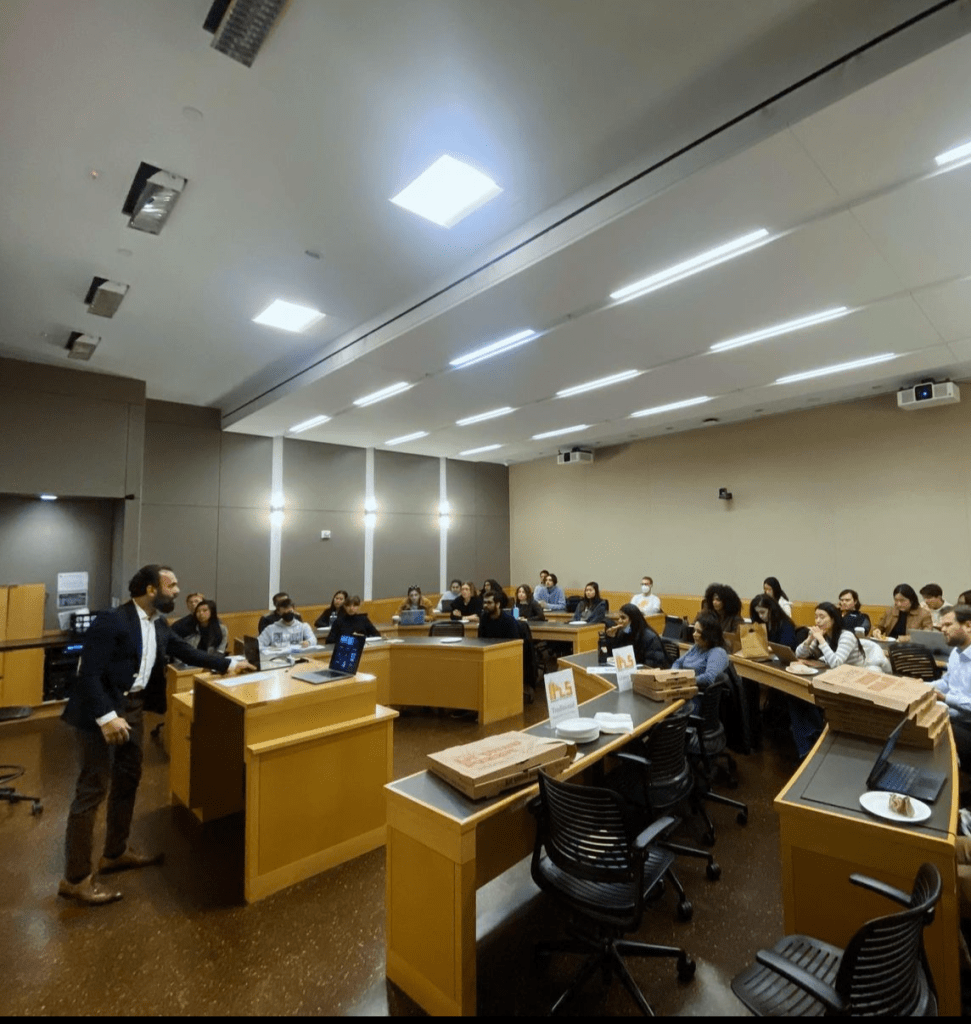
This broader reflection led me to organise a panel at Sciences Po, Paris — my current academic home — as part of our intensive doctoral week. I’m grateful to my kind and encouraging professor, Jean d’Aspremont, who first suggested that I put together something for the event. Last week, we successfully hosted the panel, featuring three truly outstanding speakers: Professor Surabhi Ranganathan, Rashmi Dharia, and Professor Jean d’Aspremont himself.
How It Began
The idea first occurred to me while I was reading “The Geopolitics of Academic Writing” by Professor Suresh Canagarajah. He argues — and persuasively so— that academic writing isn’t neutral. It adheres to Western conventions and expectations, often enforced through citation norms, peer review standards, and publishing structures that disproportionately favour certain voices, styles, and regions.
One example that stayed with me: In many South Asian traditions, texts often begin with an invocation or blessing. A Hindu might start with“Shri Ganeshaya Namaha,” a Muslim with “Bismillah ir-Rahman ir-Rahim.” Even in older European academic writing, scholars would begin with “Dear Editors” or “Dear Readers.” These gestures — forms of address that locate the scholar in a social or spiritual world — are rarely found or accepted in today’s academic writing, which prefers the impersonal, third-person, “neutral” voice.
That point resonated deeply. In my own experience, I’ve often been told that I write “too personally” — mainly because I blog and reflect in ways that aren’t always seen as “academic.” That made me pause. Why is the personal voice seen as less rigorous? Why are different styles of expression seen as less valid?
Of course, academic writing is just one of many issues in academia. Regarding the politics of academic writing, two key issues warrant deliberation:
First, there seems to be an unspoken capital—a kind of cultural and epistemic currency—that one must possess to succeed in academia. Simply put, to be an academic, one must have what Bourdieu would call capital: the right style, tone, cadence, and codes, or, in the interest of brevity, the right performance. Those who perform academic writing can gain access and authority; those who don’t are often sidelined or branded as non-academic, radical, deviant, or unreadable. Seen this way, academic writing doesn’t just express thought—it defines what counts as thought, and who counts as a thinker. It controls discourse—the way of thinking and talking about academia.
This panel began from the premise that academic writing is not neutral. It disciplines. It subjectivises. It polices. It silences. It shapes who can speak, in what form, and with what consequence. Drawing on lived experiences and theory, the panel explored how academic writing is taught, performed, and policed through various mechanisms, including pedagogy, peer review, citation norms, and editorial gatekeeping.
Now, to be clear: I’m not arguing that we abandon structure or start writing purely or only in slang. Resistance can take many forms. In fact, new forms of writing are being accepted in academia. I am advocating for more diverse modes of academic expression — more openness to multiple voices, idioms, and epistemic styles. Because when we privilege only one kind of voice, we don’t just limit access; we reproduce exclusion, silently but surely. (See generally, Melonie Fullick‘s potent post on politics of knowledge and academic writing. Check its comment sections!)
So the question is: should we continue to privilege a narrow, often US- or UK-centred idea of what “good” academic writing looks like? Or can we imagine more inclusive, plural modes of scholarly expression? Because if we don’t, then it’s not really about what you say—it’s also about how you say it. And only when you say it in the “right” way does your thought get recognised as a legitimate thought. Otherwise, it’s just dismissed as noise, emotion, or cultural excess.
This conversation is even more urgent today, in the age of AI. Generative AI has already begun to reshape how we write and think. However, if AI is primarily trained on dominant academic styles—such as objective, third-person, and de-personalised—then future writing produced with its help will likely reproduce the same epistemic hierarchies. That’s why I believe we must reflect on these questions now.
In sum, to write differently — with subjectivity, feeling, emotion — is not to write less seriously. It is to take writing seriously enough to ask: Who is it for? What does it silence? And what could it become if we did it otherwise? Here, the figure of Namaskari Scholar comes— the one who bows in greeting, writes with intention, and refuses to flatten themselves just to fit the page.
Today is World IP Day – that annual celebration where global institutions glorify a system supposedly designed to “encourage innovation” and “reward creativity.” As much as I’d love to join the festivities, I find myself unable to raise a glass to a system that has betrayed its original purpose.
Let me be blunt: modern intellectual property regimes have morphed from shields meant to protect creators from market pressures into weapons that deepen their market dependency and actively distort cultural production. The recent Daagarvani case in India, where a court granted relief against a song composed in the same traditional Ragas as another, demonstrates how copyright’s expansionary logic now threatens centuries-old cultural practices and practitioners. Meanwhile, the rise of AI systems trained on vast datasets of human creativity intensifies these contradictions potentially, through arguments by creators and publishers facing existential crises, by commodifying creative capacity itself rather than merely creative works.
But these examples are merely symptoms of a deeper theoretical problem – one that demands we reconsider the fundamental nature and purpose of intellectual property itself. What if IP’s current form isn’t an inevitable or natural development, but rather a historically contingent arrangement that has become unmoored from its original protective purpose?
Let’s get something straight about IP’s origins. Those early regimes – from the Venetian printing privilege of 1469 to England’s Statute of Anne in 1710 – weren’t designed to “incentivize” creation through market rewards. Their actual purpose was to protect creators and disseminators from emerging market pressures so they wouldn’t be discouraged from producing socially valuable expression. It was to enable them and for their economic security in a market society (not luxurious accumulation)
The Statute of Anne explicitly speaks of preventing the economic “ruin” of authors and their families – not maximizing creative output or maximal “monetizing” at the cost of access to such intangible resources. Early patent systems emphasized protection for investments already made, not incentives for future innovation. These systems were fundamentally about providing basic economic security for cultural producers in increasingly competitive market environments.
But here’s where things went sideways: by conceptualizing this protection in terms of market-compatible property rights rather than direct provision or alternative support systems, these regimes inadvertently laid the groundwork for the commodification of cultural expression and information itself. What began as attempts to shield creators from market pressures gradually transformed into mechanisms for deeper market integration and expansion.
This transformation stemmed from several theoretical misconceptions. First, a fundamental error similar to what Dianne Elson identifies as adhering to a “labor theory of value” rather than developing a “value theory of labor” – naturalizing the relationship between labor and value, creating the illusion that market value is attributable to intrinsic qualities of creative works rather than to specific social relations that impact labour used to produce such output. Second, the “pre-social creativity” myth that ignores the fundamentally social and communicative nature of cultural production. Third, “physicalism” that inappropriately attempts to derive normative conclusions about nonrival informational resources from physical descriptions of property relations.
Over time, intellectual property’s conceptual framing shifted from protection against market pressures to “encouragement” through market incentives. Its institutional form increasingly converged with conventional property paradigms despite fundamental differences between informational resources and their non-rivalrousness and physical goods. Its scope and duration dramatically expanded through legislative amendments and judicial interpretations, and its relationship to creative practice became increasingly distorted.
This market-based structure generates several distinctive distortionary effects that undermine IP’s purported goals. Let me walk you through three crucial ones:
By creating artificial scarcity for inherently non-rival resources, IP enables pricing information goods above their marginal distribution cost (which for digital goods approaches zero). This pricing structure excludes potential users whose ability to pay falls below the market price but above the actual cost of providing access.
Beyond efficiency concerns, this raises profound questions of distributive justice and cultural participation. When access to informational resources depends primarily on willingness and ability to pay, distribution inevitably skews toward those with greater financial resources regardless of creative potential or social contribution.
Market-based allocation through IP amplifies preferences of economically advantaged groups while marginalizing others. Because markets respond to willingness and ability to pay rather than need or potential social contribution, investment naturally flows toward satisfying demands of affluent consumers while neglecting less economically powerful communities.
This manifests across various domains – from pharmaceutical research prioritizing wealthy-world conditions over “neglected diseases” affecting billions, to entertainment industries concentrating investment in products targeting demographics with greatest disposable income while culturally significant but less commercially viable expressions receive minimal support.
Perhaps most troublingly, IP systems create systematic biases regarding which types of creative activities receive investment and development. This “distortionary effect” operates through market mechanisms that value certain characteristics of informational goods over others, independent of their intrinsic merit or social contribution.
IP’s reliance on excludability – the capacity to control access and use – as the primary mechanism for monetizing informational goods creates inherent preferences for innovations and creative works that exhibit high excludability and appropriability through existing property rights, regardless of their social value compared to less excludable alternatives.
Before proceeding further, we should recognize that defenders of strong intellectual property rights have marshaled various theoretical justifications for exclusive control. These fall into several main traditions:
Labor-desert theories, often traced to John Locke, suggest creators deserve compensation for resources they produce through their labor. However, with nonrival resources, labor theories at most justify claims to fair compensation, not exclusive control. When someone creates information, preventing others from using it cannot be justified as protecting the creator’s own use (which remains unaffected by others’ use) but solely as protecting compensation interest.
Personality theories, associated with continental European traditions, emphasize the intimate connection between creators and their works. Yet the personality interests these theories identify – primarily concerning recognition of authorship and integrity – do not inherently require restricting others from using creative works. These interests can be protected through attribution and integrity rights without granting comprehensive control.
Utilitarian theories justify IP through its role in addressing market failures in information production. However, this account provides no intrinsic justification for exclusive control over information – only adequate compensation to maintain production incentives. This compensation interest doesn’t inherently require exclusive rights but merely sufficient revenue to recover risk-adjusted development costs plus normal returns.
Democratic theories evaluate IP by its contributions to robust democratic culture and equitable access to conditions of self-determination. These approaches typically support limitations on exclusivity to promote widespread participation in cultural meaning-making.
As Profs. Talha Syed and Oren Bracha remark, none of these traditions provides compelling first-order justification for exclusive control rather than appropriate compensation or recognition. The strongest remaining defense lies in second-order institutional considerations – IP’s role in harnessing decentralized market signals of information to guide innovation and prices. Yet this justification remains parasitic on first-order values and contains inherent expansionary tendencies.
The Indian classical music case of Ustad Wasifuddin Dagar v. A.R.Rahman and Ors. exemplifies IP’s inherent expansionary logic. The court granted relief against a song sharing ragas with another composition, ignoring that such similarity is both inevitable and desirable within this tradition. Every raaga has rules making perceivable similarity between compositions inevitable, including characteristic phrases called “pakad” that signify the raaga’s identity.
This case isn’t an isolated incident but part of a systematic pattern where exclusionary rights expand beyond justifiable boundaries to encompass elements that should remain in the cultural commons. The same dynamics appear in hip-hop sampling, documentary filmmaking, fan fiction, and countless other creative practices that necessarily build upon existing materials.
Similarly, the rise of AI systems intensifies these contradictions by simultaneously drawing upon vast reservoirs of human creative expression while potentially displacing human creators from traditional economic roles. AI development creates economic interest in previously uncommodified aspects of creative expression like patterns, styles, and techniques, completely displacing the safeguards against commodification of information and ideas embedded within doctrine.
These examples illustrate the broader theoretical problem: IP regimes contain an inherent expansionary dynamic that gradually disconnects them from any coherent normative foundation. Once information becomes commodified through property rights, it becomes subject to the ceaseless pursuit of exchange value, generating constant pressure to expand protection regardless of diminishing social returns, completely in ignorance of the communicative and non-rivalrous nature of these resources.
To understand the true underlying purpose of intellectual property, we need to distinguish between two fundamentally different approaches to meeting human needs: self-preservation focused on securing basic necessities versus self-love potentially expanding into unlimited accumulation.
Jean-Jacques Rousseau’s political philosophy offers crucial insights for reconceptualizing intellectual property beyond market paradigms. Rousseau directly challenged emerging commercial society by distinguishing between apparent freedom within market relations and substantive freedom through social solidarity. His analysis illuminates how negative liberty focused on protecting market transactions fundamentally differs from positive liberty providing conditions necessary for meaningful self-determination and creative flourishing.
Rousseau recognized that genuine needs in social contexts are intersubjectively determined rather than individually defined without limit. He distinguished essential needs from luxuries, rejecting commercial society’s “compete or die” logic that transforms preservation requirements into endless accumulation pursuits. This distinction grounds his critique of financial systems that place “public good and freedom on the auction block,” making “venal souls” through constant pressure toward accumulation beyond actual necessities.
Rousseau thus emerges as an early theorist of human flourishing approaches contrasting with individualistic welfare maximization. He explicitly distinguished wealth from prosperity, arguing “it is better to live in plenty than in opulence.” His political economy focused not on incentivizing through competitive pressures but on socially enabling through provision of conditions necessary for meaningful freedom and agency.
Applied to intellectual property, Rousseau’s insights suggest shifting focus from market-based incentives to social provision of conditions necessary for creative flourishing and enablement. Rather than relying primarily on exclusionary rights enabling market success, this approach would directly address creators’ basic security needs while ensuring broader access to cultural and knowledge resources necessary for creative development.
Here’s the fundamental insight: humans don’t primarily require monetary incentives to create – they require not being disincentivized by economic insecurity. The problem IP purports to solve isn’t fundamentally about motivating otherwise reluctant creators through financial rewards, but about enabling creative expression by removing the barriers of economic precarity.
By reframing the issue from positive incentives to removing disincentives, we can envision alternative institutional arrangements that secure basic creative needs without resorting to exclusionary rights that ultimately subject creators to market dependencies.
The theory I propose, distinct from rewards or incentives justifications, is that copyright is a historically specific tool (in the age of capitalism) of enablement for human flourishing. It is a tool meant to ensure that those who wish to expressively produce are free to do so without worrying about fulfilling their basic economic needs in a modern market society – a tool to affirmatively protect those who wish to produce expressions from involuntary subjection to market imperatives.
This human enablement framework encompasses two complementary dimensions: negative freedom from market dependency and positive freedom to participate meaningfully in cultural production. Freedom from market dependency involves reducing creators’ reliance on commercial success for basic economic security, while enabling positive freedom requires developing capabilities necessary for meaningful creative participation through education, exposure to diverse cultural materials, and institutional support.
Before discussing specific reforms, we need a robust research agenda to reconceptualize intellectual property. I suggest employing two critical methodological tools from the Law and Political Economy tradition:
Denaturalizing is a mode of critique that attempts to show the pre-conditions of the existence of a legal tool and delimit the conditions of possibility of the field itself. By denaturalizing intellectual property’s social relations and examining its contextual emergence, we can uncover the historically specific social dynamics that shaped this legal tool, providing both an explanatory and programmatic frame for understanding its purpose and development.
Denaturalization allows us to understand IP not as a mere coincidence or divine realization, but as a consequence of the imperatives of a market society – its purpose not to form markets but to protect from market imperatives, ensuring fair recompense for basic necessities and risk-adjusted production costs.
Dereifying follows from denaturalizing, challenging the presumption that ownership through exclusionary rights are the only monolithic tool to further IP’s policy objectives. Through dereification, we can conceptualize IP’s commonly used tools through a relational understanding – tweaking scope, duration, and applicability in contexts where competing fundamental social interests like education, research, and meaningful cultural participation outweigh individual enablement claims.
This approach brings to light alternate tools, including non-market alternatives like public funding, compulsory licensing, remunerative levies/tax, and general social provision of access to basics and creative agency, calibrated along a continuum of contexts to embed IP’s social relations. Moreover, it allows us to inject proportionate priority, tailoring tools and remedies to prioritize interests of those who genuinely need legal tools for enablement due to no fault of their own.
Scholars and practitioners must embrace these methodological approaches to develop a framework that can meaningfully address both current distortions and emerging challenges like AI. This isn’t merely an academic exercise – it’s essential for preserving meaningful spaces for human creativity in an increasingly commodified cultural landscape.
The derivative right should only cover adaptations in a different medium or instrument of expression and perception – like adapting a book to a film, not creating another book based on the original. This would eliminate excessive licensing costs for genres that inherently build upon previous works in the same medium.
Courts should shift from analyzing similarity of fragments or elements to examining whether the allegedly infringing work substitutes for the overall aesthetic experience of the original. This would ensure that works which inevitably contain similar elements (like compositions in the same Raaga) aren’t disadvantaged by either excessive licensing costs or reduced appropriability.
These structural changes would reduce the potential to appropriate the highest possible economic value from single highly excludable expressions. However, they would enlarge the cultural breadth and diversity of expressions receiving investment – creating a more egalitarian starting point for cultural creators regardless of their chosen genre or tradition.
We should also consider diverse institutional arrangements supporting creative flourishing beyond exclusionary property rights alone:
Direct public funding through grants, fellowships, and institutional support
Procurement systems involving public or collective purchasing
Prize systems rewarding valuable contributions without restricting subsequent use
Community-based support through patronage, crowdfunding, and membership models
Liability rule approaches allowing use with mandatory and fairly determined compensation- something embedded within our Copyright system in the name of statutory and compulsory licensing.
Different creative contexts require different support structures depending on their specific characteristics and needs. This institutional pluralism recognizes that the one-size-fits-all approach of exclusionary rights isn’t appropriate across diverse creative traditions.
On this World IP Day, rather than uncritically celebrating a system that has increasingly betrayed its original purpose, let’s commit to reimagining intellectual property as a tool for human enablement rather than market subjugation.
Intellectual property regimes present a curious paradox: they purport to promote innovation and creative expression by providing creators with economic security, yet they deploy mechanisms that ultimately deepen creators’ dependency on market success rather than insulating them from market pressures. This fundamental contradiction remains largely unexamined in mainstream intellectual property discourse, which typically accepts market-based approaches without interrogating internal tensions.
By understanding IP as historically contingent rather than inevitable, we can identify points of possible transformation. By dereifying its current institutional forms, we can develop a pluralistic approach calibrated to different contexts and cultural practices.
This reconceptualization becomes especially crucial as AI intensifies IP’s contradictions. The challenge now extends beyond protecting specific works to preserving human creative agency itself. A human enablement framework offers promising avenues for addressing these challenges by focusing on creative capacity rather than mere market incentives by commodifying “works” which potentially leads to the negative effects outlined above.
Implementing this vision requires embedding intellectual property within broader social frameworks: substantively anchoring it in democratic values rather than market efficiency alone; conceptually maintaining doctrinal integrity against market-driven distortions; and globally breaking property’s monopoly on institutional imagination by developing complementary support mechanisms beyond exclusionary rights.
By focusing on securing basic needs rather than maximizing returns, by developing alternatives to exclusive rights where appropriate, and by structurally limiting exclusionary rights to prevent their inherently expansionary tendencies, we can create legal frameworks that genuinely support diverse creative traditions while fostering broader cultural participation.
Only then can we resolve the fundamental contradiction at the heart of modern intellectual property and reclaim its original protective purpose.
In India, there has been significant discourse lately surrounding copyright concerns in the development of Generative AI models, the most recent contribution being MEITY subcommittee’s Report on AI Governance in India, which declares that storing and copying works to create datasets for training foundation models constitutes infringement. Moreover, it isn’t protected under Section 52(1)(a)(i) of the Copyright Act.
While I have written extensively about these issues elsewhere, this piece focuses on what I believe is a fundamental misdirection in this debate—from both sides—whether it’s those claiming training-purpose usage is infringement or those arguing it constitutes “fair use.” Let us not even touch fair use. Training models using copyright works (including storing or making copies of them for training a model) is not infringement of any exclusionary right provided under Section 14, period.
The MEITY Sub-Committee’s broad conclusion that models infringe copyright holders’ exclusive rights simply by storing and making training copies of publicly available copyrighted works is deeply problematic. This stance, if accepted, would fundamentally overturn our understanding of copyright law. Here’s why:
Consider the implications of this statement. If the mere act of making and storing a copy constitutes copyright infringement, wouldn’t you be liable for printing or saving an article from my blog to read later? Could I legitimately sue you for that? If you showed it to someone else or uploaded oit n a public drive, then maybe, but otherwise could I?
The essence of copyright—whether it is reproduction, distribution, performance, or other rights—lies in the exclusive ability to express one’s original expression, translating to an ability/ or a right, to stop someone else from expressing one’s original expression. It is crucial to understand that toexpress is fundamentally a relative concept involving two human beings– the human “expresso” and the human “consumer” of that expression. Copyright claims, in respect of publicly available works, are only available, under law if one has substituted the position of the expressor (by becoming the expressor of someone else’s original expression)- not if someone is a mere consumer of the expression. This relative relation does not exist in AI training. It merely involves consumption of the expression of the original creation by the model to learn and train itself.
What’s missing from the current debate is a crucial understanding: copyright protects against unauthorized sharing of my work with others, potentially depriving me of credit or economic compensation that I could have gotten by sharing it with them myself. In simpler terms, while I cannot express your original expression without your permission, I can certainly consume your publicly available original expression without the same (maybe (or not?) barring paywall circumvention, which isn’t part of this current debate). The law focuses on unauthorized expression of original publicly available content—not its unauthorized consumption, as making content public already waives that claim.
This is why I struggle to understand how storing or copying for purposes that don’t involve sharing/expressing the original expression, or a substantial part thereof with third parties (what academics often call non-expressive, consumptive copying) could be considered infringement at all. This question needs to be addressed before we even enter the fair use debate, which only becomes relevant after establishing prima facie infringement. If such copying were illegal, simply printing publicly available web pages for one’s learning/consumption would constitute copyright infringement. If I store content for learning, which I might use to produce a potentially competing article, is that infringement? By this logic, academia (a commercial enterprise), which more often than not requires storing and printing publicly available articles for learning the ideas embedded within them, would equal to an enterprise built on infringement of copyright. Fortunately (and thank god for that!) that is not the case.
Developers of models aren’t exposing any humans to the expression of the inputted works—they’re creating an alternate expression. If this alternate expression substantially resembles the original expression used for learning, that will indeed constitute infringement, but that’s fundamentally different from claiming that storing and copying for model training purposes is inherently infringing.
In short – (i) no, copyright is not the answer for your existential crises, and (ii) it is a “scope of rights” issue, not concerning itself with a backend defense of fair use.
The sooner we understand this and get over copyright, the sooner we will look for other arenas that actually resolve the existential concerns.
In Part 3 of the Series, we explored the output side of things – showing how if the output generated by the Generative AI model is substantially similar or a trivial alteration, or an adaptation in a different format of a work, it may infringe the rights of the copyright owner. However, who will be liable? The user or the Model developer? or both? or neither? These questions are essential to consider given the Model itself lacks legal personhood for imputing any intent, liability, or damages – and responsibility for infringement has to be attributed to a human/corporation.
There are three distinct situations that arise here:
Would liability be on the model developer/service provider for direct infringement, as direct copyright infringement is a strict liability offence?
Would liability for direct infringement be on the user of the model, for imputing certain prompts which yield infringing outputs, and liability for indirect infringement be on the model developer/service provider?
Would both the model developer and the user be jointly liable for direct infringement?
The answer to each of the queries rests on a host of factual considerations, some of which are as follows:
A situation where the developer of the model has taken all objectively plausible, practically feasible, and technologically available steps to ensure that the model does not regurgitate memorizations or output that is substantially similar to any of its input training data.
A situation where the user/prompter has used prompt injections or the model as a copy-machine, to provoke prohibited regurgitations, exploiting the inherent vulnerabilities/fallibilities of LLM Systems, at the current state of technology,[i] and in violation of the user terms and conditions.
A situation where even upon normal/generic prompts, the model generates regurgitations of its memorized training data set, narrowing down possible outputs.
A situation where a model is specifically built to produce the inputted work in a different medium/format of expression (for instance a literary work to a dramatic work) and allows attachments to be uploaded by prompters who can upload a copyrighted script or work.
When Developer may be liable for Direct Infringement
Section 51(a)(i) provides for direct copyright infringement where copyright is deemed to be infringed if any person does anything, without a license from the copyright owner, the exclusive right to do which is, by the Copyright Act, conferred upon the copyright owner. The provision, which is a strict liability provision, however, like other strict liability provisions requires “causation”, i.e., a “but-for” cause pointing towards volition.[ii] Even around the world, volitional conduct has been deemed to be an essential component of direct copyright infringement, as compared to indirect – for instance, a copy shop that lets customers operate photocopiers is not a direct infringer, but a copy shop that makes infringing photocopies is.[iii] Thus, direct infringement, would imply a degree of “authorization” or “control” over the output produced in the hands of the developer.
In respect of the various factual situations considered above, as Generative AI is a self-evolving tool[iv], which continues to learn and expand its training data set through user prompts, beyond the control of the developer who merely trains it to understand “how to learn”, a volitional requirement is unlikely to be met especially when the developer has taken all objectively plausible, practically feasible, and technologically available steps to ensure that the model does not regurgitate memorizations or output that is substantially similar to any of its input training data. However, if the model is specifically trained to produce adaptations of inputted content (where often copyrighted content is allowed to be attached), or produces memorized regurgitations even on generic prompts, a volitional requirement may more probably be deemed to be fulfilled to attract direct liability.
A contrary view, however, could be that the inherent vulnerability associated with LLMs where they may be manipulated to produce infringing content, makes them an inherently dangerous avenue for copyrighted works. Hence, all responsibility ought to be on the developer choosing to run the platform to ensure no infringing content spurs out of its usage. However, in light of the lack of direct causation, or loss of life and limb, the strength of this argument is arguably thin.
When Developer may be liable for Indirect Infringement
When direct infringement claims fail due to lack of causation/volition, the focus often shifts to the indirect infringement standard. Section 51(a)(ii) of the Copyright Act provides that permitting for profit, any place for communications that infringe copyright would constitute indirect infringement, unless the operator was unaware or had no reasonable ground for believing such communication to be infringing.
“Reasonable ground for believing” has been interpreted by Indian Courts, in the context of the Copyright Act, to mean “consciousness or awareness and not mere possibility or suspicion of something likely.”[v] Moreover, in respect of automated platforms, it has been held that authorization/approval from a person or authority is essential to connote knowledge.[vi] In other contexts as well, the mere possibility of harm, without the existence of facts that show knowledge, has been held to be insufficient to connote knowledge for the purposes of imputing liability.[vii] Moreover, in an analogous context of banking, it has been held that for determining reasonable belief, officers of banks are not required to be amateur detectives, albeit they can be attributed the degree of intelligence ordinarily required from a person in their position while evaluating cheques for violation of the Negotiable Instruments Act.[viii]
Applying this in the context of Gen AI developers, in factual situations (i) and (ii) above, where the developer has taken reasonably possible steps to eradicate the regurgitation of substantially similar output and disallowed prompts that exploit the inevitable and inherent vulnerability associated with LLM technology at its current state, it is improbable that developers would be held liable for infringing outputs. In other words, the mere possibility of generating substantially similar outputs, due to the inherent vulnerability of LLMs in spite of the developer taking reasonable care in designing the product, would not connote knowledge or reasonable belief for indirect infringement.
To determine “reasonableness”, the classic “risk-utility” test in product-design liability could be adopted – weighing whether the burden on the product developer to eradicate the harm outweighs/is outweighed, by the gravity and the possibility of harm as well as the utility of the alternative design available that reduces the harm. The factors considered in such weighing include – (i) usefulness and desirability of the product; (ii) utility to the public as a whole; (iii) gravity of danger posed; (iv) scientific and mechanical as well as economic feasibility of an alternate design that is safer; (v) user’s ability to avoid harm by exercising care in use of the product including effect of instructions or warnings; (vi) developers ability to eliminate the danger without impairing the usefulness of the product or it being unduly expensive; and (vii) feasibility of alternate design.[ix]
Thus, so long as the developer has taken care to ensure that infringing outputs are not produced in the reasonable course of the model’s use and are only produced when the inherent vulnerabilities of the model are exploited by the user, on the basis of the risk-utility test above, it cannot reasonably be expected that the product developer is to eradicate harms driven by such uses – shifting the focus of liability to the user. In other words, so long as the Model/Product is not built willfully blind to its inherent fallibilities and an attempt to remedy the possibility of copyright infringement at the output stage to the extent technologically and economically feasible/possible is evident, it is unlikely that the developer of the Model would be held liable.
When User may be liable for Direct Infringement
It is the user’s specific interaction with the model that leads to the output generated. The user’s instructions add a filter that steers the model towards the output. Without the user’s specific directives, the potential of the model to generate infringing content remains just that – a potential.[x] The questions leading to the answer become as important as the answer itself. This is particularly relevant in a time where prompt engineering has been considered equivalent to a form of creative practice that deserves copyright protection due to its potential to specifically induce the model to create certain outputs.[xi] Therefore, in case of infringing outputs that are a result of very specific prompts, or even prompt injections (that is manipulating the model to answer certain questions it initially is refusing to answer by prompt engineering, thus capitalizing on the inherent fallibility of LLM Systems in contravention of the user terms and conditions of these products), the liability for direct infringement most probably would shift towards the user. Thus, it is important to account for the user’s actions on the product when imputing liability, especially because of the lack of ability of the developer to control the outputs produced by the self-evolving tools of Generative AI, as well as the inherent fallibilities associated with such tools at this stage of technological development.
Part 5 of this series shall look at issues concerning Moral Rights, and Digital Rights Management provisions under the Copyright Act.
[ii]Municipal Corporation of Delhi v. Uphaar Tragedy Victims Association and Ors., (2011) 14 SCC 481.
[iii]CoStar Grp., Inc. v. LoopNet, Inc., 373 F.3d 544 (4th Cir. 2004); Religious Technology Center v. Netcom On-Line Communication Services, Inc., 907 F. Supp. 1361 (N.D. Cal. 1995) at 1370; Cartoon Network LP, LLLP v. CSC Holdings, Inc., 536 F (3d) 121 (2d Cir. 2008) at 131. Perfect 10, Inc. v. Giganews, Inc., 847 F.3d 657 (9th Cir 2017); Basic Books, Inc. v. Kinko’s Graphics Corp., 758 F.Supp. 1522 (S.D.N.Y. 1991); Princeton
[vii]India Telecomp Limited v. Adino Telecom Limited, 1993 SCC OnLine Del 127; Collector Of Customs, New Delhi v. Ahmadelieva Nodira, (2004) 3 SCC 549.
[viii]Pradeep Kumar and Anr. v. Postmaster General and Ors., (2022) 6 SCC 351.
[ix]Barker v. Lull Engineering Co., 20 Cal. 3d 413, 143 Cal. Rptr. 225, 573 P.2d 443, 96 A.L.R.3d 1 (1978), Knitz v. Minster Mach. Co., 69 Ohio St. 2d 460, 23 Ohio Op. 3d 403, 432N.E.2d 814 (1982).
[x] Giancarlo Frosio, Generative AI in Court, in Nikol Koitras and Niloufer Selvadurai (eds)., Recreating Creativity, Reinventing Inventiveness- International Perspectives on AI and IP Governance. (Routledge, 2023).
[xi] Mark Lemley, How Generative AI Turns Copyright upside down, 25 Columbia Science and Technology Review 190 (2024).
Trademark policy is a tool to facilitate consumers to distinctly identify the source of goods or products that they like. Its goal is to ensure that a consumer who wants to specifically use product x is not confused or deceived into using product y, believing it to be from the same source and hence of the same value- be it aesthetic or functional, as product x. To fulfill this goal, law makers have deemed it fit to confer exclusionary rights in the use of such source identifying attributes– often affixed to the products- to those who provide these products. What are these source identifying attributes? The legislators seem to understand these attributes to include verbal and non-verbal identifiers.-n“any word, name, symbol, or device” or any combination of these tools of source identification that a provider may use in conjunction with their product to facilitate recognition- as being excludable.
The underlying purpose of this exclusionary right is to protect the interest of consumer in being able to firmly identify the source, and to protect the interest of the provider in being able to use such distinctive identifiers enabling consumers to identify the source. It logically flows from this that such exclusionary rights are only to be extended to those attributes that are primarily and specifically used for identifying the source of the product. However, by broadly interpreting the meaning of “symbol” and “device”,[1] courts have rendered even attributes that generally are not considered by consumers to identify source, as being source identifiers or performing a source identification function.[2] Courts have reasoned this on the basis of the capability of such attributes to have a source identification function,[3] without investigating into whether – when divorced from the word mark and/or the distinctive logo (that primarily have source-identifying functions)- these attributes are even considered by consumers while identifying source, or not.
The upshot? Exclusionary rights have been extended to even (i) attributes which- even when divorced from the word mark or the logo- almost never actually have a source identification function but are merely attractive design features with their own non-source identifying significance (and its own legal tool of enablement – copyright law or design law)[4]; (ii) attributes which sometimes form part of the product- thus allowing an exclusionary right over the product itself- a product which may have use significance, although not functional utility in its strict sense;[5] (iii) attributes which flow from the experience of the product – its sensory characteristics- aesthetic, auditory, olfactory.[6] These although, almost always are a subject of originality and creativity and sometimes even novelty, are rarely primarily performing a source identifying function, especially when used in conjunction with a word mark or a logo. Most of the time, the originality of their sensory expression is excludable through other forms of intellectual property – copyright law, design patent law etc.- however given trademark protection, at least theoretically is perpetual (although we have the genericide doctrine), providers would often love to double up these exclusionary rights by portraying these attributes to also be source identifying.
A further radical upshot, with potential to be dismissed as being a conspiracy theory- Almost all of visual and auditory copyrightable subject matter could potentially be overlapping with trademark law- thus providing double and perpetual exclusion of works which are socially valuable to be accessed and used. The way trade dress protection has expanded- it is not inconceivable that Taylor Swift seeks trade dress protection over her songs arguing that – Hey! Someone listening to my song will immediately identify that this song comes from me, or Banksy seeks trade dress protection arguing – Hey!Anyone who sees that art on the train would obviously know that it’s me who has done that. We all know this has nothing to do with the goals of trademark policy and why it exists.
Such analysis is not limited to product configuration but extends to product packaging too- where even when divorced from the wordmark and the logo, the packaging would mostly be attractive – and that would be its primary function as against source identification -which automatically flows from that attraction because we would want to know who produced this attractive packaging. But such secondary potential of source identification is possible with all subject matter of copyright law as well. I might like a song by Radiohead because of its sensory attributes, but I would then associate Thom Yorke’s voice with him as a byproduct of the attraction. This source identification function although does not seem to be the concern of Trademark law because it directly flows from the song (product configuration) or its amazing sound recording (product packaging), as against a specific attribute peculiarly intentioned to help a consumer identify source. That specific attribute is the concern of trademark law. Put another way, how much ever Thom Yorke wants to trademark his sound, because as soon as we hear it- we know it distinctively is Thom Yorke’s attractive voice, that is not the kind of source identification trademark law protects – by providing an exclusionary right over the product itself.
If at all trademark protection is to be extended to product packaging or product configuration as source identifiers, the relevant enquiry could be:
Divorced from verbal and logo- identifiers which primarily serve as source identifiers- does the consumer, almost inevitably, associate the sensory attribute to be source identifying, as against anything else?
Maybe in the absence of the logo and the word mark on the product packaging, I would have to rely on distinct design features or packaging color (product configuration or product packaging), but when the product already has specific source identifiers in the form of a word mark and/or a logo, associating any source identification function on the trade dress/ design- be it of the product or the packaging- is a leap, which, on an objective basis, average consumers would not rely on.
This is where secondary meaning comes at play. If there is a product which does not have a specifically dedicated source identifier but rather relies upon its product packaging or product configuration to perform an identification function, and the consumers realize this and rely upon the said attribute over time (hence secondary meaning), there could be enough of a claim to extend source identification to trade dress. But this is as rare as it gets, and this is why, as Glynn Lunney recognizes- the legislators did not envision this, specifically including “packaging” or “configuration of goods” in the definition of a trademark only in the secondary/supplementary register and not for purposes of the principal register.[7]
Thus, J. Breyer’s broad reading of “symbol and device” in Qualitex, to conclude – any and everything that could possibly, inspite of the existence/ or in the absence of a dedicated source identifier, be a source identifier – is overzealous interpretation- completely ignoring the purpose and the interest sought to be achieved by the tool of trademark policy. It, as Lemley and Dogan argue, is a tenuous presumption of consumer behavior.[8] Put concretely, in my opinion, it is not objectively reasonable to assume that inspite of the boldly written distinctive name- Reese, in its distinctive style, font and logo-like characteristics, the consumer would continue to rely on its orange-colored wrapper to identify its source. And even if the consumer unbelievably loves associating the color- orange with Reese- thus showing certain amount of secondary meaning, still- so long as primarily specific source identifiers in the form of the logo or the word mark exist, there is no reason to allow excluding some other chocolate manufacturer- with a different logo and word mark to use the color orange on its packaging.
There is thus a need, and a strong one, to get rid of the propertarian impulse that provokes an exclusionary right on packaging or product design or sensory features, in the presence of other and specifically dedicated source identifiers. An exclusionary right on such features in some cases could be the domain of copyright law and in some of patent law, but in none is it a concern of trademark law and policy. When these specifically dedicated source identifiers are not present, it is only then, as a policy matter, that it could be explored whether upon finding secondary meaning- product packaging or product configuration could be rendered excludable for the purposes of source identification, or not.
[1] In Two Pesos, the Supreme Court interpreted trademark protection to extend to the total image of the business, general appearance of the product/its exterior, the décor, the menu and collated it into a single test – distinctive total image and overall appearance. The Court noted that in §43(a) or in the definition of Trademark under §45, legislators have not differentiated between a trade dress and a trademark – and hence an inherent distinctiveness approach ought to be followed, as against a secondary meaning approach. The Court said that legislators have given no basis to differentiate between a trademark and a trade dress or to not include the latter as a subset of the former. It thus differed from the logic of the 2nd Circuit in Stormy Clime Ltd. v. Pro Group. This was applied to extend protection to the festive eating atmosphere and the interior and exterior design of a Mexican restaurant. As Glynn Lunney argues in The Trade Dress Emperor’s New Clothes: Why Trade Dress Does Not Belong on thePrincipal Register, 51 Hastings L.J. 1131 (2000) [Emperor’s New Clothes], the Court completely ignored the distinction between the definitions of trademark for the purposes of the principal register and the supplementary register. It was a conscious omission- conscious decision of the legislators according to Prof. Lunney, to not include trade dress for purposes of excludability through the principal register. Such excludability was wrongly first initiated by A.C. Daphne Roberts Leeds in Exparte Haig & Haig Ltd., 118 U.S.P.Q. (BNA) 229 (Comm’r Pat. 1958), and has since, according to him, begun to spiral out of control.
Even in Qualitex v. Jacobson, J. Breyer extends the meaning of symbol and device to include anything capable of carrying meaning. He logically supports this by referring to the registration and validity of shape marks, scent marks, sound marks etc. He accordingly posits if all of that is in scope, why would not the scope extend to color? Justice Breyer thus seems to, without any reasoning, accept the premise that shape marks, scent marks and sound marks are protectable. He assumes the authority of these registrations, without questioning whether they are within the scope of the interest sought to be furthered by the tool of trademark law or not- and on the basis of that presumption extends protection to colors.
[2] Graeme B. Dinwoodie, The Death of Ontology: A Teleological Approach to Trademark law, 84 Iowa L.Rev. 611, 621-622 (1999) [“Courts have protected as trade dress the design features of extensive range of products including kitchen appliances, sporting equipment, candies, bathroom fittings, sports cars, giant gumball machines, furniture, hardware items, fashion accessories, lamps and even golf holes.”] See also, Justice Breyer in Qualitex, where he states- “The courts and the Patent and Trademark Office have authorized for use as a mark a particular shape (of a Coca–Cola bottle), a particular sound (of NBC’s three chimes), and even particular scent (of plumeria blossoms on sewing thread). See, e.g., Registration No. 696,147 (Apr. 12, 1960); Registration Nos. 523,616 (Apr. 4, 1950) and 916,522 (July 13, 1971); In re Clarke, 17 U.S.P.Q.2d 1238, 1240 (TTAB 1990). If a shape, a sound, and a fragrance can act as symbols why, one might ask, can a color not do the same?”
[3] In Two Pesos, the Court prominently focused on capability of having a source identification function as against whether the attribute is generally considered to be performing a source identification function or not. The Court held any attribute that is an “inherently distinctive dress that is capable of identifying a particular source of the product” to be eligible to be excludable. Glynn Lunney argues against this in Emperor’s New Clothes, where he asserts- “First, the mere possibility that trade dress can serve a trademark function does not mean that a product feature or design is serving as a trademark in any given case. Yet, the recognition of trade dress as principal register subject matter encourages the assumption that some aspect of a product or its packaging claimed as trade dress is necessarily serving a trademark function. This assumption is unwarranted, particularly when a party claims a product’s features or configuration, rather than its packaging, as trade dress As the Restatement (Third) of Unfair Competition has recognized, consumers seldom perceive and rely on product configuration or product features as a source of information regarding the product, rather than as an aspect of the product itself.”
[4] In Christian Louboutin, the use of an aesthetic product or its aesthetic feature was protected. In Wallace, the use of the silverware, in case it was a part of a competitive market, would have been held to be excludable. In Qualitex, the particular product and its color feature was protected. In Best Cellar, the interior design of a wine cellar was held to be protectable, inspite of ambience being one of the core elements of the market of the product. Lemley and Buccafusco argue this to be an awkward overlap with Copyright law which is completely undesirable and comes with much more costs- and should be scrapped. See, Mark Lemley and Chris Buccafusco, Functionality Screens, 103(7) Virginia Law Review 1293, 1373 (2017).
[5] The decision in Wallace Int’l Silversmiths, Inc. v. Godinger Silver Art Co. clearly shows this – where the Court falls in what Richard Stallman calls intellectual property law’s seductive mirage- conflating the propertarian impulse associated with copyright law- with the extremely distinct purpose of trademark law. In Wallace, the Court rejects, what I believe to be the sound rationale of the 2nd Circuit in Pagliero to hold that “Under Pagliero, the commercial success of an aesthetic feature automatically destroys all of the originator’s trademark interest in it, notwithstanding the feature’s secondary meaning and the lack of any evidence that competitors cannot develop non-infringing, attractive patterns. By allowing the copying of an exact design without any evidence of market foreclosure, the Pagliero test discourages both originators and later competitors from developing pleasing designs.” This extremely significant portion of the Wallace decision shows how court is confused about the difference between the trademark and the copyright doctrine and its goals- and extrapolates copyright’s logic on a trademark issue. The court limits the doctrine of aesthetic functionality as a defense to only when market competition is being foreclosed- another logic that flows straight from the logic of the merger doctrine and the scenes a faire doctrine in copyright law- without understanding that most of these aesthetic feature are actually valuable for their attractiveness, and what the actual subject matter of trademark protection is, is the name or logo that accompanies it for the purpose of associating this attractiveness with the one who provides the attractive work. The court also relies on Illustration 6 of the Restatement which says- “A manufactures china. Among the products marketed by A is a set of china bearing a particular “overall” pattern covering the entire upper surface of each dish. Evidence indicates that aesthetic factors play an important role in the purchase of china, that A’s design is attractive to a significant number of consumers, and that the number of alternative patterns is virtually unlimited. In the absence of evidence indicating that similarly attractive “overall” patterns are unavailable to competing manufacturers, A’s pattern design is not functional under the rule stated in this Section.”- In my opinion- by adopting this rationale, the Restatement and the Court in Wallace has conflated the subject of copyright protection and its rationale supported by Clause 8 or the IP Clause of the Constitution, with the subject and object of trademark protection- which is completely distinct and is more of a source identification function with roots in the commerce clause. See also, Mark Lemley and Chris Buccafusco, Functionality Screens, 103(7) Virginia Law Review 1293, 1346-1347, 1373 (2017).
[6] Justice Breyer in Qualitex, where he states- “The courts and the Patent and Trademark Office have authorized for use as a mark a particular shape (of a Coca–Cola bottle), a particular sound (of NBC’s three chimes), and even particular scent (of plumeria blossoms on sewing thread). See, e.g., Registration No. 696,147 (Apr. 12, 1960); Registration Nos. 523,616 (Apr. 4, 1950) and 916,522 (July 13, 1971); In re Clarke, 17 U.S.P.Q.2d 1238, 1240 (TTAB 1990). If a shape, a sound, and a fragrance can act as symbols why, one might ask, can a color not do the same?”
Even J. Scalia in Wal Mart Stores, to avoid disagreeing with Two Pesos, teleologically finds (awkwardly- as noted later in Best Cellars Inc. v. Wine Made Simple) that “Two Pesos is inapposite to our holding here because the trade dress at issue, the decor of a restaurant, seems to us not to constitute product design. It was either product packaging—which, as we have discussed, normally is taken by the consumer to indicate origin—or else some tertium quid that is akin to product packaging and has no bearing on the present case.” It is unfathomable as to how the interior of the restaurant does not function as a product design – because in a restaurant, the product is not just the food and drinks but also the ambience- which significantly drives consumer choice and motive of visit.
[7] Glynn Lunney, Emperor’s New Clothes, supra notes 1 and 2.
[8] Stacey L. Dogan & Mark A. Lemley, Trademarks and Consumer Search Costs on the Internet, 41 HOUS. L. REV. 777, 777 (2004) (“[C]ourts have stretched trademark doctrine . . . based . . . not on the normative goals of trademark law, but on unexplored instincts and tenuous presumptions about consumer expectations and practices.”).
In the first two posts in this series, we addressed Copyright concerns raised by Generative AI, primarily at the stage of training the LLM as well as using certain datasets. In the first post, we considered whether storing copyrightable works for training purposes is an infringing reproduction. In the second post, we analyzed whether extracting meta-information or using meta-information embedded within copyrighted works for the purposes of training the model would be infringing of any of the exclusive rights of the copyright holder, including when such content is scraped out of paywalls. We also briefly evaluated the impact of the codified exceptions and limitations under Indian Copyright law and their implications at the training stage.
In this third post, we are finally moving to the Output stage- or the downstream side of things. We address two questions here:
Would the output generated by the AI Model, basis a query from the user, infringe the Reproduction Right of a copyright owner, whose work was inputted at the training stage?
Would the output generated by the AI Model, basis a query from the user, infringe the Adaptation Right of a copyright owner, whose work was inputted at the training stage?
Similarity in Output and the Reproduction Right
The Reproduction Right under Section 14 of the Copyright Act protects the primary market of the original work [for derivative works like sound recordings and cinematograph films, a distinct right to exclude the making of a copy of the said work is provided. We are currently not concerned with that]. While analyzing the contours of this Reproduction Right, courts use the test of substantial similarity, to conclude whether the Defendant’s work, overall, is substituting the primary market of the owner of the Plaintiff’s work. In the seminal decision of R.G. Anand v. Deluxe Films[AIR 1978 SC 1613 [52]], the Supreme Court held that “One of the surest and the safest test to determine whether or not there has been a violation of copyright is to see if the reader, spectator or the viewer after having read or seen both the works is clearly of the opinion and gets an unmistakable impression that the subsequent work appears to be a copy of the original.” This test clarifies that unless the output generated by the model is substantially similar, i.e., unmistakably similar or a literal imitation of a previous work/ a work that is a member of the dataset, it would not infringe on the Reproduction Right of the Plaintiff.
As many have argued [see here and here], the possibility of an LLM model trained on a dataset to produce an output that is unmistakably similar or a literal imitation to any one of the inputs of the dataset, is considerably low, although it cannot be ruled out due to inherent fallibilities of LLMs as well as the potential mindset of the developer.[i] Even if the prompts inputted as queries are very specific, yet the possibility of output, that so closely resembles a single individual input that the model is trained on, is low, unless the model is specifically trained to produce regurgitations from its memorizations. Prompt injections, however, change this. Prompt injections mean inputting certain carefully designed prompts to trick the model of manipulated Gen AI into disregarding its content generation restrictions.[ii] These are often in violation of user terms and conditions. Susceptibility to such manipulation is an inherent fallibility of Generative AI and here to stay, however it requires carefully and wickedly engineered prompts, often in violation of user terms, to exploit this vulnerability of the model.
In any case, if the output produced by the model is a literal/substantial imitation of any of its training inputs, of course there would be a claim of violation of the exclusive Reproduction Right i.e., Section 14(a)(i) / (c)(i) r/w Section 51(a)(i) and Section 51 (a)(ii) of the Copyright Act. However, who will be liable for this is a different question that we shall explore in Part 4 of this series.
What we, although, need to be mindful of is that liability may only arise for violating the reproduction right if the output is substantially similar to the input. The Reproduction Right only protects against substantial similarity, which as the Supreme Court in R.G. Anand (supra) holds means similarity of the nature that will result in a situation where a person when looking at the two works as a “whole” would conclude unfair appropriation. The similarity may be in respect of certain fragments or hook parts of the original work, however, if- when looked as a “whole”, a lay person does not think it to be literal imitation or thinks of it to be a different work, the same would not be infringing. [Para 53 and 71]. In simpler terms, “substantial” has been held to mean a part of the original work which is qualitatively or quantitatively so significant that inspite of merely being a part, it makes the whole of the two works seem similar, thus reducing the differences to plain noise, and giving an impression of it being a colorable imitation.
As per a couple of interim orders of the Bombay High Court in Ram Sampath v. Rajesh Roshan and ors. [2008 SCC OnLine Bom 1722] and Twentieth Century Fox Film Corporation v. Sohail Maklai Entertainment Pvt. Ltd. and Anr. [2010 SCC OnLine Bom 1577], copying of even fragments of works, which may be “hooks” would be infringing, terming the test to be where an illiterate person thinks that “Hay! I have heard this tune before”, i.e., is reminded of the former tune.
The correctness of the legal position of these interim orders, when analyzed in context of the binding judgment in R.G. Anand (supra) is doubtful. For instance, I may think of so many songs to have sequence of notes that are similar to the basic hook note sequence of “Hey Jude” by The Beatles, embedded within their work. However, that would not mean that the analysis of similarity would have to be divorced of the context of the work looked at/compared as a “whole”. Such a test ignores the material context surrounding the fragment, and its contribution to the originality of the whole work over which copyright rests in the first place. Such an inward fragmentation approach to the Reproduction Right, expanding exclusivity to include even fragments or elements of the work divorced from its context, is arguably outside the scope and purport of the right. In other words, the “substantially similar” test mandates a holistic comparison of the works, as against comparison of certain elements (which may be qualitatively significant) of the work, divorced from its overall context.
In any case, for our purposes, it is noteworthy that Courts may hold reproduction of notable or qualitatively essential fragments of works at the output stage to be infringing relying upon the aforementioned interim orders.
Importantly, however, the Reproduction Right does not extend to the the basic themes of the work, style of the author, or the generic storyline of the work, but only the expression as a whole. The former constitute ideas and are not protectable.
The Adaptation Right
When a claim under the Reproduction Right fails, the focus shifts towards the “Adaptation Right” which, due to its literal phrasing, has a seemingly larger scope, encompassing uses of works which even alter or re-arrange the original so long that it retains the core of the primary expression. The connotation, as commonly understood, is similar to extending the primary market of the copyright owner to works that are based on a previous work [creation of a secondary market]. However, arguably this common understanding is at odds with the purpose of the Adaptation Right.
In fact, the Adaptation Right for original works (the said right is not available for derivative works like sound recordings and cinematograph films), as originally conceived under the Indian Copyright Act, limited the secondary market of the Copyright owner to conversions, translations, abridgements and transcriptions. [Section 2(a)(i)-(iv) of the Copyright Act]. What this arguably indicates is that the focus of the Adaptation Right was on the same expression (originally produced by the owner of the primary work), communicated in a different format / medium. In other words, originally conceived, the Copyright Act created a secondary market for the owner of a work but limited its scope to representations of the identical work in a secondary format. However, with the Amendment to the Copyright Act in 1994, the scope of the Adaptation Right was expanded to include any use involving re-arrangement or alteration [Section 2(a)(v)]. This was, according to the Notes to Clauses to the Amending Bill, added to bring the Act more in consonance with the Berne Convention, which provides in Article 12, exclusive rights over rearrangements and alterations.
However, an expansive reading of alteration has potential to swallow all transformative depictions, using elements of prior works, including meta-information embedded within them. This has, in fact, been clarified by the Division Bench of the Calcutta High Court in Barbara Taylor Bradford and Anr. v. Sahara Media Entertainment Ltd. and Ors[2004 (28) PTC 474 (Cal)], which consciously restricted the scope of the word “alter” to minor alterations, which do not transform the core purpose and character, as well and meaning and message conveyed by the overall work. Holding against full internalization of value even through use of fragments of a work, the Division Bench of the Calcutta High Court held that a purposive interpretation of the definition of Adaptation under Section 2(a) of the Copyright Act, clearly points towards a limited reading of “alter” to only be used in cases of works which cannot ideally be represented in a different medium- for instance computer programmes, as well as to reduce its purport to slight or minor changes which do not transform the work. The Calcutta High Court held:
“125. This argument of Mr. Sen deserves full attention. Rearrangement not being very much in issue in our case, we put to Mr. Sen the question what the meaning of the word “alteration” in this sub-section was. Did it mean mutation or transformation, and did it include such extreme changes also ?
126. Mr. Sen could not maintain any argument of this extreme form, that by introduction of this amendment, the Copyright Law has been so altered in India, that if a literary work is taken by somebody other than the author, and it is so changed and muted as to make it transformed, and a different work altogether, even then copyright would be infringed. Such an interpretation of this sub-section would make nonsense of the Indian Copyright Law. A totally changed thing can never be termed a copy of the original thing. How can copyright affect the right in something, which is not related to the protected work’s copying or reproduction at all ? Pursuant to our queries, Mr. Sen referred us to several Dictionaries. Dictionaries are the last resort of Judges who either find it difficult to give a meaning to a particular word, or, having deal with all the other principles and authorities, and just for the sake of completeness, refer to these voluminous and useful works.
127. On the basis of what we saw from the Dictionaries, and on the basis of common knowledge of the English language, it appears to us that the word “altered” is capable both of meaning slight changes and of meaning extreme changes.
….
131. In our opinion, the large change meaning cannot be ascribed to the word “alter” in Section 2(a)(v) of the Copyright Act, 1957, because it renders the interpretation absurd. Minor change, slight change, not making the original something beyond recognizable possibilities, changes in some of the details, this would be the meaning that would fit the word alter in Sub-section (v). In our opinion this sub-section might have a very good bearing when applied to copyrights of computer programmes and databases, but in relation to literary works, the sub-section does not bring in any very great changes in the law; one can at best say that the subsection would make it slightly, we repeat only slightly, easier for an author or an authoress to establish infringement, after its introduction, than it would have been before the introduction. It is often misleading to speak of percentages in legal matter, but the difference made by introduction of this sub-section for literary works is the sort of difference that exists between two mathematics answer papers, one of which gets, say, 46% and the other 52$. There is no reason why we have mentioned these two figures but if this clears the understanding even a little bit, then the illustration would have well served its purpose. In our opinion, the view that we take of the strength of the prima facie case of the plaintiffs, cannot be altered (meaning radically changed) by the introduction of this subsection only, and by reason merely of the presence of this single new sub-section.”
Even in UK, which is a fully Berne compliant country, adaptations are limited to medium/format changes, and alterations/rearrangements are only considered adaptations for computer programmes.[iii]
This interpretation is arguably in line with the decision of the Division Bench of the Delhi High Court in University of Cambridge v. BD Bhandari [2011 SCC OnLine Del 3216], which protects uses of works for “transformative purposes” or a “transformative character”. It ensures that the Adaptation Right, Reproduction Right as well as the transformative use exemption (3 distinct concepts within the same Act), harmoniously co-exist without impinging on either of their scope and purposes.
In light of the above, output produced by Generative AI models which are merely based on inputted datasets/works, would arguably not ipso facto be hit by the Adaptation Right, unless the output is essentially the same/substantially similar work in a different format of expression, or the output even in the same format merely includes trivial/minor variations which do not rise to the level of transforming the character of the work.
It may be noteworthy to mention that no analogy can be drawn to the “based on” framing of the Derivative Works Right in the United States because of two reasons:
The Derivative Work Right in the United States self-proclaimedly is beyond Berne, following the logic of expanding exclusionary rights to all channels which expose even fragments of the primary work to the public. The US had a similar restricted framing in its 1909 Copyright Act, however it rejected the same and rather adopted a broader and more open-ended Derivative Works right in its 1970 Statute. As Prof. Pamela Samuelson documents,[iv] at least one publisher wanted the Derivative Right to cover more than Berne-Style adaptations as an “adaptation” oriented framing cut down the intention of excludabilities covering any work “based upon” a preexisting original work. India refuses this and is fully Berne compliant.
Even in the US, as many scholars argue, the scope of the Derivative Right is restricted to transformed forms/formats and not all kinds of alterations or outputs based on a previous work, which impinge on the transformative use doctrine within its Fair Use doctrine.[v] Moreover, the Ninth Circuit in the United States has rejected the “based on” understanding of this right, and has reiterated that to constitute a derivative work, the “infringing work must incorporate in some form a portion of the copyrighted work,….[and] must be substantially similar to the copyrighted work.” [Vault Corp v. Quaid Software Ltd., 847 F.2d 255, 267 (5th Cir. 1988), quoting Litchfield v. Spielberg, 736 F.2d 255, 267 (9th Cir. 1984)].
Finally, as an epilogue to this piece, we would like to suggest that when thinking about copyright liability of allegedly infringing outputs, one needs to be mindful of the fact that even if the act of creating substitutes of human creativity, based on datasets that are exemplars of human creativity, seem “harmful” from the point of view of the copyright owner, more often that not, they are not copyright’s concern, unless the expression is actually copied. Independent creation that is not copied is infact fostered in copyright law as against constrained even when it uses the meta-embedded information within previously produced expressions. It increases competition, which is desirable in a cultural and semiotic society. Hindering the same, using the tool of copyright law, basing it on an argument of existential crises for creative industries [an argument non-existent in copyright jurisprudence] is undesirable. We rather need to look towards more social solutions of providing external opportunities for creative industries to not lose out in competition to AI, by using it as a tool, or by political changes like social basic income, as against shrugging Gen AI models which significantly enrich our cultural realm.
[i] Ido Kilovaty, “Hacking Generative AI”, 58 LOY. L.A. L. REV __ (forthcoming), available at <https://papers.ssrn.com/sol3/papers.cfm?abstract_id=4788909>. See also, Katherine Lee, James Grimmelmann, A. Feder Cooper, “Talkin’ Bout AI Generation: Copyright and the Generative AI Supply Chain”, Journal of the Copyright Society of the United States (forthcoming 2024) < https://arxiv.org/pdf/2309.08133>.
[iii] Section 21 of the Copyright Designs and Patents Act, 1988.
[iv] Pamela Samuelson, The Quest for a Sound Conception of Copyright’s Derivative Work Right, 101 GEO. L.J. 1505,1512-1513 (2013).
[v] Talha Syed & Oren Bracha, Copyright Rebooted, Presentation at the 2022 Stanford University Law School Intellectual Property Scholars Conference (Aug. 12, 2022) (unpublished manuscript) (on file with author), See also: Akshat Agrawal, Andy Warhol Foundation v. Goldsmith: A misnomer of a debate, PhilIPnPolicy Blog [22nd October 2022], available at < https://philipandpolicy.wordpress.com/2022/10/22/andy-warhol-foundation-v-goldsmith-a-misnomer-of-a-debate/>.
I did not end up posting anything on World IP Day this year. So here is a consolation for that. I am leaving all of you with a beautiful and provocative portion of the inimitable Prof. Talha Syed’s [my mentor, supervisor, and favorite law professor] speech at UC Berkeley as part of a debate (linked here). I hope you enjoy:
“For me, intellectual property rights—you have to begin with the basic idea that they are rights to exclude others from using a resource—information or knowledge or culture—which resource is intangible. And because it’s intangible, it’s nonrival, and because it’s nonrival, many people can use without anyone degrading anyone else’s use. So, it’s really unfortunate, unfair to restrict access on that. For me, the harm is that it restricts access to something which, once created, should be available to all because it does not derogate from anyone’s use that others share it. That’s the miracle of intangible resources.
Having said that, there are both fairness and incentive arguments for why the creator might be owed a decent return for the effort that went into creating something that’s socially valuable and that, if we don’t get that decent return, it might be that others will be discouraged from doing so, and we might get less innovation. That’s my basic, very modest framework. Access restrictions on intangible resources are a default bad idea But some way of generating those resources may be required through some legal policy to promote fairness and robust production and robust innovation.
What the ultimate principled basis of that is we could explore, and I’m happy to discuss. But it’s this mix of sort of basic ideas of wide access and fair returns that motivates my view that intellectual property rights, like some other innovation policy mechanism, should be evaluated in terms of how well they enable wide access and robust production and fair, equitable returns.
And on that, I’m not committed to intellectual property rights as being the best scheme or to how strong they should be. My own view is that current rights are, through the roof, way too strong. There’s a massive overreach. There’s a very clear, political economy story why that happens. It’s completely unfortunate, and it’s expanding to this day. And what’s happening on the internet with criminal enforcement and so forth makes it all even much worse.
So, on all that, we, I think, are not too far apart, although one could have various sort of modest disagreements. But where we disagree is sort of the foundational basis of our positions. And so, on this, I don’t have much time, so I’m going to just try to say a few things. So, Mr. Kinsella has what he claims is a sort of a libertarian, principled position based on natural rights arguments.
Now, to me, there’s a few problems with this.
First of all, it’s always puzzling to me why it’s called the libertarian position when it’s really the propertarian position. It’s not about freedom. It’s about property rights. Well, then say that. It’s a propertarian position. It’s not about an unvarnished, principled commitment to freedom. It’s about the guiding motif being something called property rights. Now, on the idea of property rights, I just want to say three things and see if I can get it in in this time.
First, of all, natural rights. I’ve never understood what people mean when they say natural rights. To me, rights are claims against others. Mr. Kinsella seems to agree. There are no rights on a desert island by yourself. Rights are claims against others. Rights are social relationships.
Now, the basis of those rights can be in various different kinds of arguments. Those are arguments. Calling them natural is just cheating. Where do they reside? They’re not your eyesight. Eyesight might be natural for some. To call something natural is a dishonest way of trying to get pre-modern warrant for a normative argument as quasi-non-normative. It is, in a word, bullshit.
There are rights, which we can respect based on reasons. We have to give reasons for those rights. When the reasons are given, they can be more or less persuasive. Calling them natural does nothing to the argument except try to convince you that it’s not a normative argument at all. It’s like a physical act. Well, there’s a chair there, don’t you know. Well, okay, good. But that doesn’t tell me about whether the chair is nice or not nice, pleasing or not pleasing, should be sat upon or not, whose chair is it, and so forth.
Those are normative arguments. Historically, until about 1700-1800s, normative arguments were couched in the language of time inmemorial, divinity, revelation, and so forth, or something called natural rights, which was a fusion of them, natural reason, according to Locke in the Second Treatise. Ultimately, natural reason is just reason, and I’m fine with arguments from reason. But putting this label “natural” on it as if it’s not any longer something human, something social, something historical, something normative, is a cheat, pure and simple. It is an attempt to deny the inescapable reality that rights are social relationships, which we have to argue about to determine which interests merit protection over which other interests.
I have no problem saying the argument should be grounded in something called right reason of the Second Treatise, but then you have to tell me what the premises and principles of that right reason are. So let me go to that second point in a moment.
On natural rights, I think the word “natural” has mental-blocking properties. The minute you say natural right, you’ve made it seem as if you’re making an argument of individuals outside of society. All rights are social, period, conceptually and institutionally. That’s just a truth. There’s nothing you can do about it except cry. But that’s what it is. All rights are social. Natural rights theorists have, for most of history, argued that natural rights can be justified in unilateral, individualist ways. Any time you get an argument that justifies someone’s rights in a unilateral, individualist way, without taking into account competing bilateral claims, it’s someone who doesn’t understand what a right is conceptually and institutionally. And that misunderstanding is facilitated by the rhetoric of natural, which has had, historically, that role. Second, “natural” also has the rhetorically loaded character of inviting you to believe that this is something you observe as an empirical claim rather than something that you argue for as a normative claim. The minute someone says, yeah, of course, all rights are social and normative and backed in normative reasons, we’re fine. Then the word “natural” plays no role. If you say, well, that’s what the word means, then my question is, well, why use the word “natural?” What does natural add except to say certain reasons do not depend on their recognition by certain contingent legislatures? Well, that I agree with. Of course, I absolutely agree that rights are not just the conventional positive legal rights that our legal system may or may not recognize. Of course, I agree we all have the right and obligation to be critical of the existing rights of a legal regime according to reflection and reason. Of course, that’s right. Anyone who doesn’t think that besides Bentham is crazy. But that’s a different view. The word “natural” doesn’t add anything.
On that second point, the idea that all rights are property rights strikes me as patently bizarre. Either it’s going to be tautologically true, because we’re going to empty the concept of property rights of any content and meaning, in which case what’s the point of the exercise? Or it’s going to be false because I don’t understand what it means to say that my interest in being able to express myself should be protected as a right against other people’s interests in not hearing what I say, and being able to violently stop myself from speaking.
Oh, well, that’s really a property interest because you’re using your vocal organs, and you own them. I don’t know what that means. I don’t know how that helps anything. I don’t know what that means except to illicitly try to reduce all human interests to the logic of the market. And that’s, to me, a very historically specific recent phenomenon, and when libertarians, or what I call propertarians, think it is somehow true from time immemorial, they’re just wrong.
There are no such arguments until very recently on the stage of history because the social form that those arguments track is very recent on the stage of history. Propertarian mindsets are the mental expression of people who live in capitalist societies. That’s fine, but that shouldn’t be then naturalized into some sort of trans-historical, human phenomenon through the gobbledygook of natural and blah, blah, blah. It just doesn’t make sense. It’s dishonest. It’s patently absurd. The argument should be made on their own terms, not with the implication of unhelpful metaphors, which try to hide the ball.
Last point. The rights of property that are being claimed as absolute and sacrosanct here are the rights in one’s body, self-ownership, and the rights in external resources based on first occupancy, fundamentally [then there’s contract and rectification]. But that’s a very strange argument, first occupancy. The first person who delimits or does something that no one else has done now has it. Locke never made that argument fully. He thought that that argument by itself was too thin a read, and he was right because, of course, by itself, that can’t be enough, just being there first.
What if you’re there first in a lot of places, and you don’t leave “enough and as good” for others? Well, there’s a problem. Locke understood that. The propertarian literature has struggled with this from the beginning. How do you deal with the in-built limit on property rights in external resources based on the “enough-and-is-good” proviso? There is a whole industry on talking about this. What does it mean to be born into an Earth that’s already been occupied and owned by everyone? What is all this about? And fundamentally, I can’t really argue against this at this time, I’m happy to argue it against it at length.
But I just want to leave you with an idea that, fundamentally, this whole mindset is a bizarre idea that humans are born fully form, self-autonomous beings at birth. They are not. They are born vulnerable, fragile, deeply dependent, social beings all the way down. Adults at some point in a market society come to resent this reality and deny it deeply by pretending something else is the case and then invent a series of fictional just-so stories which none of which have any grip for anyone who’s not already in the grip of the idea, the infantile desire to escape the reality of society and history and go back to some primordial, fictional story in which there are absolute rights, sacrosanct between self-governing sovereigns who relate to each other as pinball machines and can’t define their rights in any plausible way.
There is no such thing, period, as an absolute right because rights are social relations, and to have an absolute right would mean to have an interest protected against any other interest absolutely. And that is conceptually and institutionally not on the cards. Okay, I’ll stop.”
Hope you enjoyed it. All of this is of course “owned” by Prof. Syed. It is his “vocal organs” after all!
Having first considered the question of whether storing copyrightable works for training purposes is reproduction that amounts to copyright infringement under Section 51 of the Indian Copyright Act, 1957, in this second post of this series we will specifically be looking at transformative and extractive uses, applicability of exceptions and limitations under Indian Copyright law, as well as implications of Anti-Circumvention laws.
Transformative Use
India does not recognize the transformative use exception to copyright infringement within the parameters of Section 52 of the Copyright Act. However, the Division Bench of the Delhi High Court in University of Cambridge v. BD Bhandari [2011 SCC OnLine Del 3216][i], has held use of a work for purposes of making a guidebook to be a substantially different purpose from the purpose for which the original work of the Plaintiff was made. The Court recognised this purpose to be a transformative purpose, which did not impinge upon the expressive purpose for which the Plaintiff had an exclusive reproduction right. The reproduction right, or its scope, was thus, arguably restricted by the Court to the expressive purpose for which the original work was curated.
Can a similar analogy be extended to use for training genAI models, where genAI developers argue that not even a single human being is exposed to the expressive content of the work? Not even the Large Language Model (LLM) reads or experiences the work in its expressive sense, and storage of a single copy merely enables the foundational model to discern, among other things, the “structure, syntax, and semantics of language,” including “grammar, sentence construction, and how words and phrases are related to each other” in order to facilitate the generation of “coherent and contextually appropriate output”[ii].
Unlike the United States where there is a contrast in statute- i.e., the Copyright Act, 1976 itself provides for transformed forms of works to be protectable derivatives, as well as provides fair transformative use to be exempted from infringement, the Indian statute is not clear on whether use of a work for an expressively different purpose, or in fact for a non-expressive purpose is within the domain of the creator’s market. The Division Bench of the Delhi High Court inUniversity of Cambridge (supra) recognised that if the use of the work is of a “transformative character” i.e., the purpose served by the use is different from the purpose for which the work was made, it is a limitation to copyright protection or its subject matter. The Court also held guide books to be a transformed work, not amounting to reproduction of the original. The Division Bench of the Calcutta High Court in Barbara Taylor Bradford v. Sahara Media Entertainment[2004 ILR (1) Cal 15]has also recognised that a work which is taken, and then used for producing a subsequent work that is so changed and muted as to make it transformed, and a different work altogether, would not generate an actionable claim for the owner.
This line of decisions presents an important question. Is use for the purposes of training, to enable the Gen AI model to produce accurate responses to user queries, a part of the expressive purpose for which the work was originally created? Or is it a transformed purpose that is beyond the circumscribed domain of exclusionary rights granted to the copyright owner? Is use for training purposes, when the work is primarily expressive, and meant to be expressively consumed as against used for non-expressive training, infringing? This would require an analysis of what really comprises the subject matter of protection for the owner- their primary and secondary markets – and how much of it is linked directly with the purpose for which the work was created- expressive purpose or training purpose? In other words, does use of a copyrighted work for a non-expressive/ non consumptive purpose amount to copyright infringement, or is it a distinct and transformative purpose outside copyright’s boundaries/scope of protection?
Extractive Use
A distinct question here deals with use and copying of even protected material for arguably extracting unprotectable elements, that would otherwise not be possible to be extracted. The affirmative essence of such use is to extract unprotectable elements from copyrighted works, elements which are not a subject matter of copyright protection.
In Akuate Internet Services Pvt. Ltd. v. Star India Pvt. Ltd[2013 SCC OnLine Del 3344][iii], the Division Bench of the Delhi High Court has recognised that copyright’s balance is maintained by ensuring that information, facts and knowledge embedded within expression cannot be monopolized using Copyright law. The Court has further held that protection cannot be extended to information and facts embedded in protectable works, even under the premise of unfair competition. Extending the same would inevitably restrict the ability to extract and disseminate information which is a critical component of Article 19(1)(a) of the Constitution of India. Thus, Indian Copyright jurisprudence clearly recognizes that information embedded within expression is not protectable and no monopoly can be extended in respect thereof. The said rationale of balancing copyright protection with access to unprotected information for the purposes of furthering expressive and speech values has also been recognised by the Division Bench of the Delhi High Court in Wiley Eastern Ltd. v. Indian Institute of Management [61(1996)DLT 281].
This is furthered by the idea expression dichotomy under Copyright law that is widely accepted in Indian Copyright jurisprudence. Useful information contained in any expressive work is not protected. It is only the form in which the said information is contained/presented that is a protectable expression for purposes of Copyright law. This is line with the fundamental purpose of Copyright law which is to reward and incentivize/enable production of creative expressive forms, that disseminate useful information. This, as Prof. Molly V. Houweling recognizes, is not because information and facts are not valuable enough to justify copyright but rather because they are so valuable that they belong to the public domain for everyone to be able to access.[iv]
For instance, in the case of a poem that expresses conceptions of thoughts, copyright in the poem gives no monopoly in the ideas or conceptions of facts expressed by the said words, but merely to the arrangement of the words used to express those thoughts. Others have a right to discern that information and exploit the information within, provided they do not substantially reproduce/adapt/communicate to the public, the concrete form in which the ideas have been arranged or put into shape.
The basic rationale for protecting uses of copyrighted expressions which are not reproductive of the expression or expressing form but are merely to extract the ideas or the unprotectable elements embedded within, flows from this idea expression dichotomy. For extraction however, it is arguably necessary and could be essential to access the whole copyrighted expression, and even store it, without exposing it in its expressive form to a single human being- which is exactly what GenAI systems often do. Without such access to the complete work, extraction of embedded information becomes impossible, inevitably extending copyright protection to such unprotectable elements. That, of course, is not a desired outcome of copyright policy. In other words, copyright does not give the “right to control access” to extract unprotectable elements (Anti-circumvention provisions do- which are dealt with below). It merely gives the right to exclude reproduction/adaptation/communication of the expressive form of the work (No wonder, Section 14 of the Copyright Act does not include “right to control access” within its sub-provisions).
Even well recognised doctrinal principles like the merger and scenes a faire doctrines in Copyright law provide scope for extractive uses of seemingly expressive elements. These doctrines recognize that unprotectable ideas, facts, stock characters, incidents, images and themes sometimes do not lend themselves to a wide variety of expressions. Thus, these doctrines prohibit protection of seemingly expressive elements that represent only a few limited ways of expressing certain ideas. Without being able to extract these seemingly expressive elements which have merged inseparably with the unprotectable limited ways of expressing ideas, and use them, the purpose of the idea-expression and merger doctrine is rendered illusory.
The analysis may, thus, focus on the nature of the expression used, and the purpose of storing that seemingly expressive expression i.e., merged into an idea – whether it is to extract informational content out of it, or for expressively reproducing it? Many a times, we will realize that without accessing, copying and using the entire expressive form that is protected, extracting unprotectable ideas out of such expressions would be impossible.
Codified Exceptions and Limitations:
Under Section 52 of the Indian Copyright Act, fair dealing for the purposes of private or personal use, including research is permissible. An important question that Courts will have to grapple with, as they deal with extension of legal personality to Artificial Intelligence Technologies (separate article soon!), is whether use by AI systems for training and for its models to learn would be private or personal use, that does not expose the expression to a single human being apart from the AI system. Moreover, whether private use by a corporate entity like Open AI for its own learning and development (for its models), even if that learning leads to a competitive product, is permissible or not will also have to be examined. Would the defense of private or personal use under Section 52(1)(a)(i) of the Copyright Act only extend to humans or also to corporates or juristic personalities?
On the side of research use, it is arguable that use for the purposes of extracting information embedded in expressions, without exposing a single individual to the expression, could amount to research use that is protectable under Section 51(1)(a)(i) of the Copyright Act. Importantly, the explanation to Section 52(1)(a) also provides that storage for fair dealing for a private or personal use, including research, is not infringing.
These questions at the back end, however, will only arise if Courts, in the first place, deem such storage and use for training purposes, to be a part of subject matter of protection under Section 14 of the Copyright Act.
Anti-Circumvention and the Training stage (Para-copyright right to “control access”)
Anti-circumvention provisions under Copyright laws are essentially to prevent unauthorized access to copyrighted works that are safeguarded in the digital realm using modes like, inter alia, paywalls etc. In the United States, New York Times in its complaint against Open AI has alleged that Open AI has trained its model by circumventing paywalls and unauthorizedly accessing its copyrighted protected articles that are behind technological protection tools that prevent circumvention. The allegation is synonymous to unauthorizedly circumventing its security measure put in place to prevent access, for purposes of training the model. Would a similar act be actionable under Indian Copyright law?
Section 65A(1) of the Copyright Act provides that circumvention of a technological protection measure is forbidden under the Indian Copyright law. It is the only provision that controls the “access” to copyrighted digital works and is a para-copyright measure to ensure that even unauthorized access is actionable. However, importantly, Section 65A(2) specifically prescribes that technological protection measures can be circumvented if it is for purposes that are legal, or not expressely prohibited by the Act. This provision was specifically inserted keeping in mind the importance of accessfor permitted purposes. The Standing Committee that was constituted for the 2010 Copyright Amendment Bill, that translated into the Copyright Amendment Act 2012, specifically argued that without a provision that allows circumvention of technological protection measures for permissible purposes under the Act, access to works for permissible purposes would be impossible and exceptions and limitations to Copyright Act would be rendered redundant – “In the absence of the owner of the works providing key to enjoy fair use, the only option was to circumvent the technology to enjoy fair use of works.”[v]
Thus, if Courts find use for training purposes transformative, extractive or outside the subject matter of protection, or for that matter, permitted under Section 52 of the Copyright Act, circumventing technological protection measures to enable extraction would be permissible under the Copyright Act.
Section 65A (2) however comes with a condition, i.e., every person facilitating the circumvention of a technological protection measure (“hacker”) has to maintain a complete record of the name, address, and all relevant particulars of the person (“fair dealer/user”), as well as the purpose for which he has been facilitated. So long as this is maintained by the hacker, Section 65A (2) allows circumvention of technological protection measures. Importantly, this also ensures keeping a record of every protected work that is accessed for training purposes, for the purposes of technologically facilitating attribution, which is a desirable goal of copyright policy.
In the next part of this series, we will transcend from the training stage to the output stage, to analyze whether outputs produced by GenAI systems would be violative of the owners reproduction or the adaptation/derivative rights.
[i] Special Leave Petition before the Supreme Court bearing – SLP(C) No. 029951 / 2011, dismissed vide order dated 27th January 2016
[ii] Understanding Generative AI and its relationship to Copyright, Written Testimony of Christopher Callison-Burch before the U.S. House of Representatives Judiciary Committee Subcommittee on Courts, Intellectual Property, and the Internet Hearing on Artificial Intelligence and Intellectual Property: Part I– Interoperability of AI and Copyright Law, available at <https://docs.house.gov/meetings/JU/JU03/20230517/115951/HHRG-118-JU03-Wstate-Callison-BurchC-20230517.pdf>
[iii] SLP(C) No. 029629 / 2013 pending before the Supreme Court.
[iv] Molly S. Van Houweling, The Freedom to Extract in Copyright Law, (unpublished draft on file with the author)