(This post continues a series where I share readings that I’ve found useful or, at the very least, intellectually stimulating. See here and here.)
Salam/Namaskar
The nineteenth century was somewhat a moment for international law. It was marked by a distinctive, I’d say, thought style in which organising international congresses to address perceived “social problems” became almost a thing. Intellectual property (IP) treaties were no exception. The late nineteenth century, as Bentley and Sherman claim, was a period of consolidation of IP laws and the beginnings of IP expertise as a specialised legal field. (Its a must-read book for IP history enthusiasts!)
I recently chanced upon two pieces that speak nicely to this broader historical moment, and I think our readers here may find them both useful and intriguing. Before pasting their abstracts below, let me briefly flag what they offer.
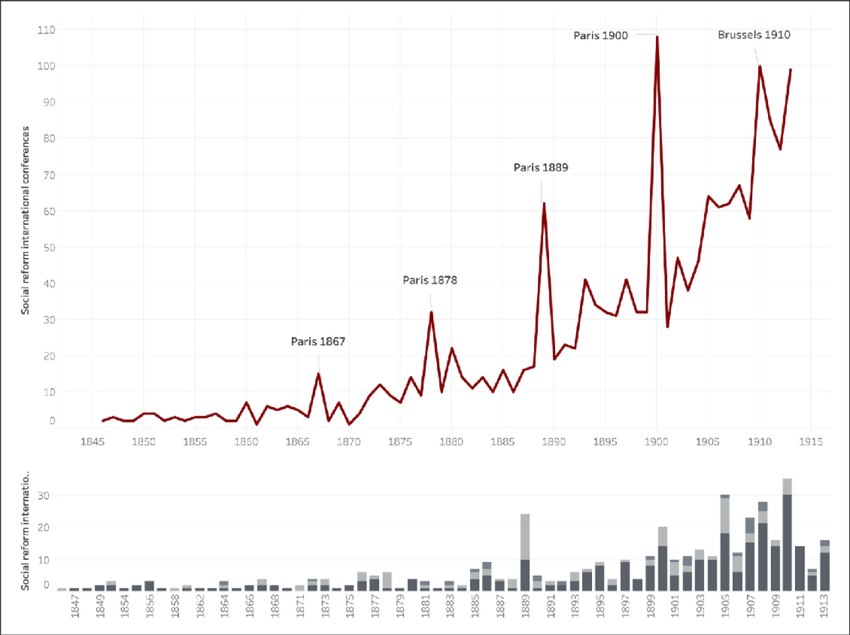
The first piece looks at the international congresses held between 1846 and 1914. ‘Tis a short yet sharp account of the early conference culture of internationalism—mapping not only the sheer proliferation of such meetings, but also the kinds of ideas, aspirations, and even anxieties that circulated within them. It can be a useful piece for someone willing to dig deeper into this topic. For those interested in IP like me, this can turn useful in tracing the genealogy of international copyright law.
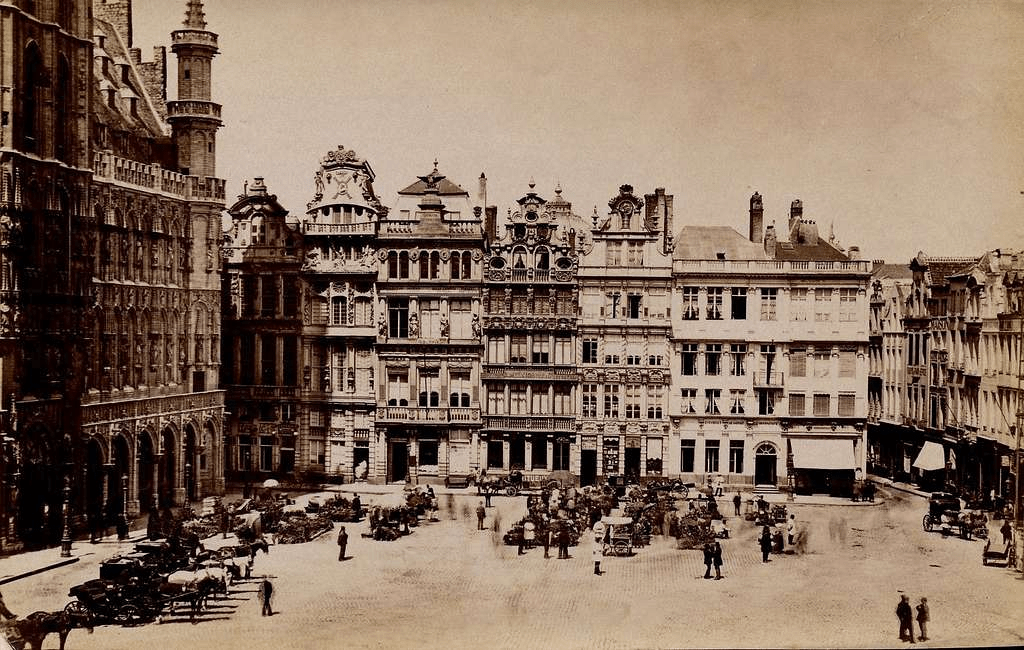
Belgium, as is well known, emerges as a key site in this history. Brussels hosted a remarkable number of international copyright meetings, most notably the 1858 Congress, arguably the first serious attempt to forge the foundation of international copyright law, which would later become the Berne Convention. The second piece offers why Belgium came to organise so many international congresses in the first place. These congresses functioned as a form of soft power.
Read together, these pieces help situate international copyright law not merely as a doctrinal or treaty-based development, but as part of a wider nineteenth-century culture of conferencing, expertise-building, and international problem-solving—one where law, politics, and power were deeply intertwined.
Okay, here are the readings:
Christophe Verbruggen et al, Social Reform International Congresses and Organizations (1846–1914): From Sources to Data, Journal of Open Humanities Data (2022)
TIC-Collaborative was a collaborative digital humanities project that focused on transnational intellectual cooperation (TIC) in the long nineteenth century, in particular on transnational connections in the field of social reform. The dataset contains information on over 1650 international congresses and 450 organizations and conference series related to the social question. The project focussed on the Low Countries and a selection of reform areas.
The piece also provides a gripping graph showing how the congresses escalated after 1845, see page 4
“Social reform international congresses and organizations, 1846–1914”
DAVID AUBIN, Congress Mania in Brussels, 1846—1856: Soft Power, Transnational Experts, and Diplomatic Practices, 50(4) Historical Studies in the Natural Sciences (2020) pp. 340-363 (24 pages)
In 1853, the director of the Belgium Royal Observatory, Adolphe Quetelet, welcomed delegates from several countries to two consecutive meetings that have acquired considerable reputation as the first international congresses of, respectively, mete- orology and statistics. This paper examines the local context where several similar international congresses (on free trade, universal peace, prison reform, public hygiene, etc.) were organized in the same decade. It argues that the new Belgian state developed this new form of international conference in order to bolster its soft power in the Concert of Nations. It also discusses tensions between national interests and global beliefs in the efficiency of science, which arose from these congresses.
On a tangential (but highly recommended) note, do check out this beautifully penned piece by my dearest friend Shivam Kaushik, How India Learnt to Stop Complaining and Love Copyright. It pairs rather well with the themes discussed here.
Okay, that’s it for this post! See you in the next post.
This post is co-authored with Aditya Gupta, an enterprising IP scholar and a dear friend! Aditya is studying LLM at the American University Washington College of Law and is a recipient of the Arcadia Fellowship for 2025-26. He completed his law degree from NUSRL, Ranchi, in 2020.
Salam Readers,
We have recently been working on a short piece titled “Academic Anxieties and Visa Woes.” The piece is our experiment with a duo-ethnographic methodology, through which we explore how visa delays and denials contour the academic trajectories of Global South scholars, including our own. The piece extends many of our long-running conversations and contestations—as friends, collaborators, young scholars, and constant academic sparring partners who share (to some extent) overlapping positionalities and relationalities.
We began with two simple threads. First, the anxieties we carry into academic spaces—where they come from, why they cling to us, and how they shape our movement. Second, how these anxieties contour our place within knowledge production: how we read, participate, and create; how some claims are invited into the room while others are kept waiting at the door. But when we actually sat down to put the proverbial pen to paper, yet another disagreement surfaced. We call it, for want of a better phrase, the paradox of privilege.
This short post offers a glimpse into the thought process behind the essay. We try to sketch out some ideas around epistemic privilege (especially how they occurred to us). This is, of course, not to settle them, but to mark them as questions worth lingering with. Discussing this epistemic privilege, we sense an inherent paradox that continues to trouble us, that we suspect needs collective reflection, critique, and conversation.
Thanks, Geertz, for “Thick Description”
First things first, we asked ourselves a simple but unsettling question: what are we really doing here, other than intellectualising our undesirable experience? And is there anything wrong with intellectualising it—after all, isn’t that what academics are meant to do? Clifford Geertz (an American anthropologist), and particularly his idea of thick description, came to our rescue. Though it’s worth noting that the notion of thick description was first introduced by the British philosopher Gilbert Ryle in 1968 in “The Thinking of Thoughts: What is ‘Le Penseur’ Doing?” and “Thinking and Reflecting“. Here, thin refers to surface-level observations of behaviour, whereas thick emphasises adding context to such behaviour.
This notion helped us see that experiences—no matter how mundane or routine, one may call them—carry peculiar cultural meanings that deserve to be understood, interpreted, and investigated. Geertz allowed us to shift both the frame and focus of our analysis, encouraging us to stop chasing or chagring generality through the rigours of social-scientific theorisation and instead embrace humanistic interpretation.
For those unfamiliar with the distinction: a thin description might state, “He closed one eye,” recording the bare movement. A thick description would situate the same act within the shared meanings that make it intelligible. For example, “He winked eye in a crowded café while catching his coworker’s gaze; among the staff, this well-known signal marks a private joke about the manager, recognizable because of their earlier banter and the café’s playful culture, distinguishing it from a nervous twitch or a flirtatious cue.”
Thick description, thus, interprets actions by placing them in the local webs of significance, showing not just what happened (physically), but how participants know what it means and why that meaning holds in that setting. We take this idea to underscore the importance and relevance of distinct and unique experiences (i.e., visa denials and delays in our case), without an innate pressure or requirement to theorise and situate them in a larger, more identifiable mould.
But as we began to brood these ideas—articulating our experiences and reading how others have written about similar moments—we encountered an unexpected sense of isolation. Stories of visa denials and delays, scholars missing conferences, being unable to attend crucial courses or deliver keynotes, or even being turned away at airports, are all over the place on social media platforms. (see here). As per this CNN news report, Africans lost nearly $70M to denied visa applications to Europe in 2024. Many visa denial or delay accounts sound uncannily alike, with many of these voices sharing certain identities: they hold not-very-privileged passports that do not guarantee easy mobility.
This pattern initially struck us as surprising—or rather, it was the absence of surprise, the sense of normalisation, that became the most surprising element of all. Based on our ongoing research, we found this issue as one of the very few areas of academic scholarship where voices from the Global North were noticeably absent. Even the few voices that could be traced to the Global North had some degree of identifiable similarity and relationality with the larger set of voices and articulations within the discourse. Say, a professor from Columbia University, who holds an Indian passport, or a French professor with a Ghanaian passport. It felt almost as if this issue was only being articulated from a very discrete echo chamber.
The Complexity of Epistemic Privilege
Neither of us understood this. We have written about and talked about how citation politics work and how scholars who belong to certain epistemic traditions are given more weight and influence than others, but this time, the game seemed a bit different. To understand this, we read standpoint theory/epistemology and, more specifically, epistemic privilege. The concept of epistemic privilege remains broad and oft contested. However, the term generally refers to the forms of privilege that accrue from one’s social position. For standpoint theorists, these positions in a social circle provide them access to evidence, group knowledge,sui generis ways of knowing, or some other distinctive epistemic good. It argues that members of certain marginalised, oppressed and excluded groups can have superior insights into the workings of society, especially hidden biases, injustices, and exclusionary practices, thus affording an epistemic advantage in understanding how knowledge and power interlock.
This idea, to some extent, assuaged our anxiety that our concern was not unwarranted. There was, indeed, a privilege in being an outsider, in being outside the reward network of systems. This privilege allowed us to think, theorise and articulate in a certain manner. It extended unto us an audience. In terms of network theory, it created an in-group of subjects who were outside the network of privilege.
However, it is worth pausing to recognise that even this in-group privilege—the ability to engage with issues like visa delays or denials—comes with its own layers and hierarchies. Well … realistically speaking, having a passport is itself a privilege in India. As per this Times of India report, in 2022, 7.2% of Indians own passports, a number set to cross 10 crore soon. And per this The MapsDaily report, only 8.71% of Indians hold a Valid Passport in 2025.
Coming back to the point of epistemic privilege, it allows us to turn our lived experiences into knowledge: to translate uncertainty, anxiety, and bureaucratic precarity into insights that become legible within academic discourse. But there is something more subtle at play. Not everyone within the group shares this privilege equally—there are meta-privileges embedded within it. The way I can interpret my visa denials and evangelise it into an academic issue is something that our other friend will be able to do.
This makes us believe that there exist two overlapping privileges underlying epistemic privilege. First, the privilege of being an outsider and being privy to a thought process and knowledge framework that often remains unnoticed and overlooked. This is a privilege that we inherit by way of experiencing an event which brings within it a pre-defined audience that can engage with, comprehend and even empathise with the positions we articulate. Second, the second form of privilege shares something with what Bourdieu might call cultural capital (e.g. education) and social capital (family associations, networking, etc.). Meaning, it is our educational backgrounds, intertwined with the institutional support around us, that furnish the material, institutional, and cognitive tools which ultimately reinforce our epistemic privilege.
Conclusion: Knowing is never neutral!
Herein lies a hitch, however. Recognising this privilege also introduces a sense of responsibility. That is, once you begin to notice and interrogate how these systems function—how visas operate as technologies of control, how borders govern intellectual mobility, how academic structures simultaneously generate opportunity and precarity—you lose the comfort of innocence. You become acutely aware of your own position within these arrangements. So, if Stan Lee could say, “With great power comes great responsibility,” perhaps we might add: with greater knowing comes greater responsibility (and anxiety?).
Knowing is never neutral. Knowing alters us; it asks something of us. It produces a form of responsibility to see, to name, to stay with the discomfort rather than look away on the pretext of being mundane, commonsensical, routine, etc. Although epistemic and standpoint privilege—along with the overlapping layers of advantage identified above—may enable us to articulate these issues and situate them within broader structures, they also leave us wondering: to what extent, and toward what ends, does this very privilege carry our articulated concerns? What capacities does it open, and what limits does it quietly reproduce? This is where the paradox of privilege becomes palpable: even when we possess epistemic advantage to see, sense and sensitise certain issues, we remain uncertain about where it ultimately leads us and what our articulated concerns can, in fact, accomplish.
What do you think of this paradox? Let us know.
Note: As always, we owe a debt of gratitude to those who nudged this work along. A big thanks to two very kind and supportive professors, Suresh Canagarajah and Bryan Khan, for their thoughts/comments on the essay. If you’d like to read it, we’re happy to share a working copy and would appreciate any thoughts you might have—we’re currently working through the suggestions we’ve received. Thank you!
In my reading of the Second Treatise‘s property chapter, I do not find desert absent – that would overreach. Rather, I find desert claims functioning as morally appealing packaging for arguments with instrumental aims. These aims operate at two levels: (i) individual self-preservation in an emerging market society where social relations of production are driven by creation of exchange value for survival in an ever competitive environment, and (ii) social improvement to expand the overall propensity for creating exchange value – what Locke frames as God commanding labor to “improve” land “for the benefit of life,” giving it to “the Industrious and Rational,” and increasing “the common stock of mankind.” Locke writes at a moment when feudal relations are dissolving, and market dependencies are emerging as the structure governing access to subsistence. His move is articulating a theory to enclose commons in favour of someone who is expending labour or sacrifice or effort and being productive – through property rules – while packaging them in the intuitive and morally appealing language of deserving for individual desert, divine command, and natural right – “subduing or cultivating the earth, and having dominion, we see are joined together”; “God by commanding to subdue, gave authority to appropriate”.
The chain runs: God commands self-preservation → self-preservation requires continuous production → production requires continuous labour → therefore labour deserves rights → these rights are enclosures (which provide access to means of self-preservation as a matter of transaction capacity) and hence, property rights. The weight, thus, rests on self-preservation and its consequences (including “preservation of mankind” through increasing the common stock), not on effort or exertion as possessing intrinsic moral value. How self-preservation got linked to continuous production, which got linked to labour, and ultimately provided a connection to “property” which is the bounty to ensure self preservation, is not appropriately explained by Locke or Lockeans.
As the previous piece explained, self-preservation got linked to a need for continuous and self-expanding notion of production (resulting in accumulation) only in a particular epoch where through a period of transition, humans were dis-embedded from their means of subsistence, and were forced to labour and be productive for self-preservation. Productive labour is deemed “valuable” (which I shall explore in the next piece) solely because of the prevalence of this epoch, and not for any intrinsic worth that it embodies. Touting it as god’s command ignores this factual-historical reality. Moreover, Locke, no where explains, why property or enclosure is the rightly “deserved” reward for the “labour” extended, and intuitively assumes it.
When Locke writes that someone who takes “the benefit of another’s pains, which he had no right to” [§34] commits a wrong, this is a desert formulation. But what and why are these “pains”? Notice the grounding: “the penury of his condition required it of him” [§32]; “God commanded, his wants forced him to labour” [§35]. These pains are efforts compelled by preservation necessity in prevalent social relations, where such preservation (remember “safety first”?) increasingly requires productive appropriation creating exchange value. The wrong isn’t purely about respecting individual effort as such – it’s about taking what someone’s survival needs forced them to produce and they need for their own preservation. Desert is real in Locke, but it’s an instrument towards preservation as against a moral reward for effort (for any simpliciter non instrumental moral reason, as a justification with any intrinsic reasoning for itself). One deserves the fruits not because exertion is intrinsically morally worthy, but because one needs them to survive in a market society, and one’s condition (hence god’s command) forced one to produce them, apart from it adding social value to the world (to whatever extent that is). Labor matters because it produces survival-necessary mechanisms in the relevant epoch, not because mixing one’s efforts with objects carries intrinsic moral significance which is de hors any explanation.
Further. §28 states: “The Grass my Horse has bit; the Turfs my Servant has cut; and the Ore I have digg’d in any place where I have a right to them in common with others, become my Property, without the assignation or consent of any body. The labour that was mine, removing them out of that common state they were in, hath fixed my Property in them.” The servant performs the physical labor of cutting turfs. The servant’s preservation needs drove the effort. Yet the master owns the product as initial entitlement, without any contract or transfer. If property followed from personal desert, the servant should own. Locke could save appearances by invoking contractual transfer, but he doesn’t. He simply asserts master’s ownership. This makes sense if property follows from organizing productive appropriation – the master owns because he directs the productive deployment of labor (his own, his servant’s, his horse’s) toward creating exchange value. In my reading, Locke uses “one’s labor” to mean the labor one owns, not the labor one performs. Some argue this to be the naturalized reminiscent of feudalism still prevalent to an extent when Locke was writing, and not a foundation for employment relations that came much more subsequently. However, I believe, Locke assumes production relations similar to employment from the outset, embedding them in the state of nature itself. The framework concerns productive deployment, not rewarding individual exertion, simplicter. Also, I don’t think this is about slavery or coercion. Chapter IV explicitly distinguishes slavery and clarifies that men sold themselves “only to drudgery, not to slavery” [§24], with masters lacking arbitrary power. The servant relationship represents voluntary employment, yet master still owns as initial entitlement without requiring contractual transfer.
I see a functional role of labor in passages where Locke says labor “puts the difference of value on everything” [§40], “makes the far greatest part of the value of things, we enjoy in this World” [§42], and “puts the greatest part of value upon Land” [§43]. The language is consistently descriptive of function rather than prescriptive of entitlement based on effort, per se.
Locke measures this value through market exchange rather than use-value or subsistence. §43 is “the benefit mankind receives from the one in a year” measured by what it “is worth” versus what “an Indian received from it were to be valued, and sold here; at least, I may truly say, not one thousandth”. This completely orients toward creating exchange value. Even §50’s discussion of money supports this: gold and silver have value “only from the consent of Men,” yet “Labour yet makes in great part the measure” of value [§50].
Locke also says that Americans are “rich in Land, and poor in all the Comforts of Life” [§41] despite laboring, because they lack “improving it by labour.” An American “King of a large and fruitful Territory there, feeds, lodges, and is clad worse than a day Labourer in England” [§41]. Native Americans perform labor through hunting, gathering, and cultivation. They certainly exert effort. Their preservation needs certainly force labor. Yet Locke says they lack “improving” labor and therefore remain poor despite working. Americans labor and remain poor while English day-laborers – who don’t own land and work for wages – enjoy superior material conditions. In my reading then, what matters isn’t effort but productive value-creation organized within specific social relations. In this process he seems to naturalize a conception of “value” that is prevalent and relevant to his time (to the social relations constituting his mindset) as against anything else. What counts as “valuable” labor is determined by whether it’s organized within the market structures emerging in his historical moment, not by effort or productivity in any abstract sense. This is a value theory of labour: desert seems intuitive because labor creates “value,” but what constitutes “value” is itself determined by social relations preceding and constituting “value”.
This connects to a deeper problem with claiming market valuations, through rights to exclude (which are then transacted through licenses or assignments) measure what workers deserve, simpliciter. There are several problems with this approach. First, whether someone develops valuable marketable skills depends largely on morally random factors like their genetic makeup and the family and social circumstances they were born into – things they didn’t choose. Second, what the market values at any given moment reflects social factors that have little to do with moral merit, such as current consumer preferences and what labor or skills happen to be available from other workers. Third, the price something commands in the market isn’t just about a person’s abilities and what society wants; it’s also heavily influenced by various legal and institutional structures that determine how much bargaining power different people have in the marketplace – factors that have nothing to do with what someone morally deserves.
Property rights, in Locke’s text, seem instrumental to me because he says that without appropriation, resources “could be of no use, or at all beneficial to any particular Man” [§26]. “He who appropriates land to himself by his labour, does not lessen but increase the common stock of mankind… he, that incloses Land and has a greater plenty of the conveniences of life from ten acres, than he could have from an hundred left to Nature, may truly be said, to give ninety acres to Mankind” [§37]. This appeals to social consequences: increased “common stock,” “plenty,” more “conveniences of life.” He further links “subduing or cultivating the Earth” with “having Dominion” [§35], showing that he values productive improvement rather than effort per se. The “enough and as good” proviso [§§27, 33] preserves others’ productive opportunities. The common stock principle [§37] makes appropriation legitimate only when it increases general benefit.
Moreover, the spoilage limitation [§§31, 46] grounds property in actual sustenance (self-preservation needs rather than unlimited accumulation. These are preservation-based constraints.
I don’t think desert or reward or deservingness is the justification itself. I think it’s a consequence of social relations that make it compulsory, and hence convincing, to link effort or labour to some kind of reward through conferment of something valuable that can provide a link to click to access resources for needs of sustenance/ self-preservation (be it exchange value through some determined form of fair compensation that is socially provided, or self-expanding market determinant property rights (which have been more so criticized for being a circular justification)). It comes across as convincing rhetorical packaging. Just as “God commanded” or “natural reason” provides intuitive force, labor-mixing language, in a social situation where access to basics are stripped off, and labour is a way of getting access to sustenance, provides intuitive force for property rules which aim towards expanding overall production of exchange value – both for individual self-preservation in market relations and for social improvement through increasing the common stock – without doing genuine desert work in the foundational sense.
And there’s an internal tension: for Locke, the liberty that an individual possesses in his person is inalienable [§23], while the argument from self-dominion is often used to justify conceptions of legal ownership that include the right to alienate. Locke immediately uses self-ownership to create transactable property rights. Self-ownership, in my reading, thus seems to be functional – it explains the technical process by which appropriation occurs in Locke’s theory to create value that fulfills preservation needs and conveniences of life, as against having any intrinsic moral value in itself.
By framing property as arising from isolated acts of individual productive labor-mixing with nature, Locke obscures that what makes labor “productive” or “valuable” is determined by a comprehensive system of social relations – the market dependencies, competitive imperatives, employment structures that capitalism creates. The framework presents isolated individuals mixing labor with unowned nature [§§26-28], when what’s actually happening is systemic transformation of social relations that creates certain behaviors as necessary for survival. What appears as individual choice – to labor productively, to improve land, to enter employment – is actually compulsion generated by transformed property relations that render access to means of subsistence market-dependent, and hence creation of maximum exchange value imperative for survival. Locke is just theorizing a further bait – through enclosures – to make sure labour is performed as it would increase overall common stock that generates value (meaning exchange value).
Thus, the preceding post showed that labor became “valuable” and “productivity” became meaningful only because of specific historical transformation – when market-dependence made labor-for-exchange-value a survival imperative – meaning “value” itself was constituted by these new social relations, not discovered as a natural property or derived from any intrinsic moral worth related to effort or industriousness. It is relevant only because it is labour that is “productive”, and not anything else, that now helps (or is useful to) realize access to conveniences of life (as access to means of subsistence is linked to it), and the more productive one is, the better they sustain in a competitive society. This means desert claims based on labor or productivity only seem intuitively compelling because we’re already embedded in social relations where productive labour equals access to means of survival; the moral force of “labor deserves reward” derives from social conditions where not-rewarding-productive labour with value would undermine the social relations of production as source of access to basics (which feudal lords competing for now “free” peasants conceptualized by dispossessing and claiming absolute control of land (through leasehold arrangements), as explained in the preceding part).
Locke and Lockeans present the causal chain as: Labor (intrinsically valuable and morally worth) → Desert → Property rights. But the actual order, revealed by historical analysis, runs: Transformed property relations → Labor becomes “valuable” (survival-necessary) → Desert claims become intuitively appealing → Used to justify property rules and enclosures (as bounty for labour). Desert presupposes what it claims to ground. Labor doesn’t possess intrinsic value that naturally generates property rights; rather, labor became “valuable” in the relevant sense – only because the transformation explained in the preceding post made it so. When Locke argues that labor-mixing creates property rights, he’s not articulating transhistorical truth but naturalizing historically specific compulsions – theorizing as eternal what the preceding post showed was created – showing that now that productive labour is a compulsion one can make it the subject of enclosure by adverting it some “value” for purposes of exchange enabling it to be a source of realizing the means of subsistence and subsequently, conveniences of life. Are enclosures that are then transactable through exchange the only source of sustenance though?
To conclude, the moral link between labor and desert may be more historically contingent than we typically assume. In pre-capitalist contexts, labor wasn’t primarily understood through desert frameworks at all – people worked the land as embedded participants in households and communities, where “return” meant participation in a shared form of life rather than individually deserved compensation for discrete labor inputs. The desert-for-labor intuition intensifies precisely under specific conditions: when labor becomes alienated and commodified, when survival depends on selling labor time, when work is experienced as sacrifice rather than embedded activity, and when there’s constant anxiety about whether one is receiving “fair” compensation (and whether enclosure/property is the best mode of providing “fair” compensation). In other words, the moral urgency of “I deserve X for my labor” emerges from the very conditions where labor is separated from life and becomes something one must do for others who control resources. The desert framework, rather than being an intrinsic moral truth about productive activity, appears to be ideology generated by the material circumstances of capitalism itself – we must believe labor deserves return because under market dependence, that transactional logic and imputing such “value” to productive labour, is the only mechanism through which we can claim access to subsistence.
Capitalism ¹ Liberty : Notes from Wood and Brenner
The conventional narrative posits that capitalism arose naturally from expanding trade, urban development, wealth accumulation, or technological advancement – elements supposedly present throughout history, requiring only liberation from feudal constraints which had stumbled their pre-presence. Ellen Wood’s The Origin of Capitalism and Robert Brenner’s Agrarian Class Structure and Economic Development and Property and Progress: Where Adam Smith Went Wrong, reveal a dramatically different story: capitalism emerged from a specific transformation of social property relations in the English countryside, creating for the first time markets operating not as opportunities but as imperatives – mechanisms compelling certain behaviors on pain of elimination. This distinction explains why capitalism emerged specifically in the English countryside rather than in societies with more extensive commerce, and illuminates why capitalism represents not natural liberation of economic behavior but creation of novel compulsions operating through apparently impersonal (and hence, “un-free” contrary to libertarian narrative) market forces.
The Concept
No quantity of accumulation – from theft, imperialism, commercial profit, or even labor exploitation – by itself constitutes capital or produces capitalism. Roman senators, Venetian merchants, Spanish conquistadors accumulated vast wealth without creating capitalism. What transforms wealth into capital is not quantity but social form: property relations generating capitalist “laws of motion” – imperatives of competition and profit-maximization, compulsion to reinvest surpluses, systematic requirement to improve labor productivity and develop productive forces for subsistence. It is when “safety first” gets linked to constant production, fundamentally reinventing social relations of production.
This means capitalism cannot be defined by the presence of markets simpliciter (which have existed for millennia), nor by trade (connecting distant civilizations in antiquity), nor even by profit-seeking behavior (motivating merchants throughout recorded history to “buy cheap and sell dear”). Rather, capitalism is defined by specific social relations that create systemic imperatives for continuous accumulation and productivity improvement
Marx identified the critical transformation in English countryside. In Marx’s account, the critical transformation occurred in the English countryside through the expropriation of direct producers (Wood, p.40). Landlords derived rents from capitalist tenants’ commercial profits. These tenants were actually leaseholders: after absolute ownership was expropriated in lords’ favor, rents were levied competitively upon lease transfers, exchanged for freedom from serfdom and common law rights in King’s Courts. Meanwhile, numerous small producers underwent dispossession and became wage laborers. Marx regards this rural transformation as the authentic “primitive accumulation” not because it created a critical mass of wealth – numerous societies had accumulated substantial wealth through conquest and trade – but because these social property relations generated novel economic imperatives, particularly the compulsions of competition and a systematic requirement to develop productive forces, producing new laws of motion unprecedented in human history. (Wood, p.40).
Polanyi recognized that only in “market society” do economic institutions separate from social relations, with society becoming market’s “adjunct” rather than economy embedded in society (Wood, p.26). Without “protective countermoves,” “human society would have been annihilated.” According to Wood, however, Polanyi’s explanation contained technological determinism – arguing complex machinery necessitated commodifying labor. This, according to Wood, inverts reality. She argues that radical social relations transformation preceded industrialization (Wood, p.29) – Capitalist imperatives drove machinery development, not the reverse.
What transpired in the English Countryside?
Through competitive political accumulation, particularly responding to the emerging French monarchy, Anglo-Norman lords created a more centralized feudal state than existed elsewhere in Europe at that time. By organizing through a national monarchical state that could discipline the aristocracy, English lords achieved unusually high cooperation in operating their decentralized surplus extraction system and in military ventures (Brenner, p.20-21).
A critical institutional innovation was imposing a national common law system binding the lords themselves. This system granted all free persons, including legally free peasants, access to royal courts while excluding unfree peasants and relegating them to manorial jurisdiction. The resulting enhancement of lordly power enabled English lords to experience an economic golden age from the late twelfth through early fourteenth centuries – precisely when French lords faced declining feudal revenues due to peasant gains. English lords imposed tighter serfdom with state assistance, maintaining extraction levels right until the Black Plague (Brenner, p.21).
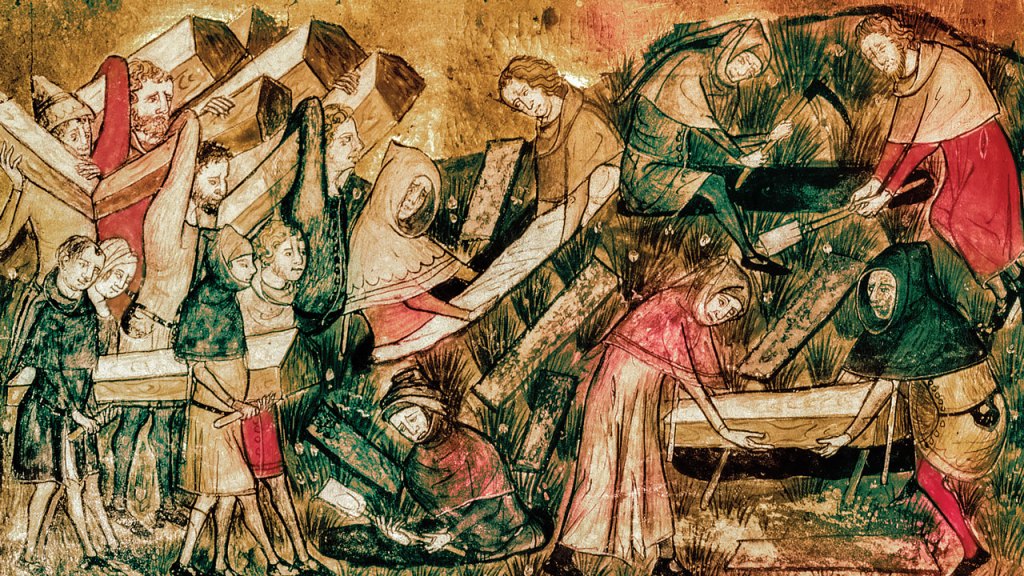
The catastrophic post-plague population collapse undermined coercive extraction. The drastically altered man-land ratio caused lordly cooperation to collapse under competitive pressures for scarce tenants (Brenner, p.21). The 1381 revolt proved watershed – peasants streamed away, lords competed offering better terms and legal freedom through written manor roll copies (contracts between legal equals). By the fifteenth century’s second quarter, most English peasants had won freedom and paid reduced rents.
This was the social condition that created lords’ existential threat. Unable to reimpose feudal levies, they deployed their “trump card”: the powerful monarchical state they could now repurpose (Brenner, p.22). With Tudor state assistance, lords asserted that customary land remained subject to arbitrary, variable rents upon transfer – transforming it into commercial leasehold, effectively lords’ own property, as against peasant proprietorship that was prevalent in France. State power suppressed sixteenth-century peasant revolts vindicating customary rights in the land, separating the peasants from their means of subsistence. Lords cut short peasants’ push to win not just freedom but fixed payments and inheritance rights, thereby establishing their own property rights, while severing tenants from full means of subsistence, rendering them market-dependent, as the cost of freedom (Brenner, p.22). This is why it is sometimes referred to as “freedom in the double sense”.
Critically, English lords understood themselves as acting within established feudal tradition, merely reaffirming their customary prerogative to impose arbitrary levies on customary tenants. Their objective was not creating a new system but preventing peasants from consolidating possessory rights – fixed dues and inheritance rights – that would eliminate lords’ ability to obtain economic returns from customary land. Given population growth’s inflationary pressures, consolidation of such peasant rights threatened lords’ capacity to extract any meaningful rent whatsoever (Brenner, p.22).
The epochal yet unintended consequence was – subjecting tenants to competitive lease bidding, imposing necessity to abandon subsistence production and adopt capitalist reproduction rules (Brenner, p.22-23). Once rendered market-dependent, emerging farmers had no alternative but to alter their “safety first” strategy – Production and maximal accumulation to win rent-competition was initiated as that was the only way of being safe from being famished. This transformation was fundamentally political – lords inadvertently created capitalism while preserving feudal privileges.
This transformed into what Robert Brenner identifies as a classical landlord-capitalist tenant-wage labor structure (Brenner, p.35). Landholding in England was unusually concentrated. Large landowners controlled an unusually substantial proportion of land under conditions enabling them to deploy property in novel ways (Wood, p.102-103). An unusually large proportion of land was cultivated not by peasant-proprietors but by tenants – a pattern reflected linguistically in the fact that the word “farmer” originally and literally signified “tenant,” as the phrase “farming out” continues to indicate.
What English landlords lacked in “extra-economic” powers – juridical, military, political powers continental lords employed – they compensated for through increasing “economic” powers from controlling land and structuring tenant relationships (Wood, p.102-103). Their income depended on tenants’ capacity to produce profitably and remit rent from that profit. Both landlords and tenants came to depend on the market in historically unprecedented ways merely to secure conditions of their own social reproduction (Wood, p.56).
“Rules for reproduction” captures how property relations determine logic by which actors must operate to survive and reproduce themselves – they constitute individual action. Reduced to market dependence, commercial tenants had no alternative but to adopt “production for exchange,” maximizing profits through specializing, accumulating, innovating (Brenner, p.29). They abandoned peasant rules: producing numerous children for insurance, subdividing holdings. Customary leases ultimately transformed into economic leases, and property itself became an instrument of economic exchange as against ownership by conquest.
The consequence was a highly productive agrarian sector in which landlords and tenants alike became preoccupied with “improvement” – the enhancement of land’s productivity for profit (Wood, p.109). This dynamic initiated an entirely novel historical process: an unprecedented rupture with old Malthusian cycles, a process of self-sustaining development, new competitive pressures that generated their own effects upon the requirement to increase productivity, further concentration of landholding (Wood, p.56). Where other European societies remained trapped within cycles of expansion and crisis, England achieved breakthrough to sustained growth – not through technological superiority or greater commercial development but through transformed social relations imposing systematic imperatives for productivity improvement.
This makes clear that capitalism does not simply liberate pre–existing entrepreneurial tendencies or rational economic behavior. Rather, it creates entirely new compulsions that reshape behavior across multiple domains, production, investment, family formation, demographic patterns. Understanding these transformed rules for reproduction illuminates why the absence of such transformation in other contexts, most notably France, failed to generate capitalist dynamics.
French Contrast
French peasants enjoyed land at fixed rents. Where English landlords obtained rent increases through cooperation in improvements increasing output, French lords extracted larger shares of declining output. The paradox: customary property rights meant poverty and backwardness. In England, absence of secure peasant rights facilitated development (Brenner, p.47). Self-preservation became linked to production and commodifying labor.
The peasant proprietor faced relatively little pressure to operate his plot as profitably or efficiently as potential competitors in order to survive, because no direct mechanism existed through which such competitors could “defeat” him (Brenner, p.44-45). Unlike a tenant, the peasant proprietor need not provide a level of rent equal to what a landlord might obtain from any alternative tenant or face eviction. Unlike the independent artisan within a competitive urban environment, he need not produce cheaply enough to sell goods profitably at market price or face business failure and thus famine, as acquisition of means of subsistence was dependent on the market and not through basic proprietorship or general ability (but specialization). All that survival required for the peasant proprietor (assuming food production) was sufficient output to provide for family subsistence and to meet tax obligations and generally fixed customary rents, which could often be supplemented through wage labor (Brenner, p.45).
The peasant proprietor could resist market pressures simply by maintaining possession, by producing sufficient for subsistence, by supplementing farm income with wage labor as necessary. He need not maximize profit or improve productivity competitively. He could survive through satisficing rather than optimizing. Surplus could be reinvested for luxury, but adopting specialization and more productive mechanisms meant divorcing from means of subsistence, which was antithetical to the “safety first” approach. A market for basics necessarily came with the burden of risk.
Possessing means of subsistence shielded peasants from competition (Brenner, p.66). But why not pursue the gains from trade anyway, as rational homo economicus theory predicts? Here, Brenner identifies “the fatal flaw of Smithian trans-historical micro-economics”: Smith specified gains from specialization but “failed to consider and investigate the other side of the coin – potential costs” (Brenner, p.67). The primary constraint: “safety first.” Bad harvests were unpredictable, leading to subsistence crises. Peasants specializing in non-food crops faced incalculable danger of being squeezed between high food costs and low output returns – risking famine (Brenner, p.68). Given starvation as business failure’s cost, peasants adopted “safety first.” Large families provided insurance but reduced surplus, creating intolerable competitive disadvantage if specializing. No incentive is needed to not be willing to starve – it is an imperative.
Contrarily, In Adam Smith’s explanation, as merchants offer lords irresistible luxuries previously unavailable, lords, at an individual level dismiss retainers, expel peasants, offer commercial leases – producing capitalism. But Smith accomplishes this only by ignoring feudal social-property relations as constraints (Brenner, p.70-71). Smith’s lord acts rationally only if capitalism already exists – he presupposes its existence, reflecting lack of understanding the socially curated and constitutive nature of humans. This is methodological individualism failing to grasp how social structures constrain action.
Opportunity to Imperative
Throughout history, direct land access – through ownership, customary rights (common pool use rights Wood specifically recounts, before “improvement” led to “enclosures”), or traditional arrangements – was given for agricultural producers. In England, access became market-mediated, contingent on competitive success. The emergence of “economic rents” – determined by market conditions, not custom – exemplifies this transformation (Wood, p.103-104). Surveyors calculated “unearned increment” accruing to customary tenants paying below market-determined value – early capitalist rationality reducing social relationships to abstract monetary calculations.
The triad of landlord, capitalist tenant, wage laborer emerged. With wage labor growth, the same process created highly productive agriculture but also increasing propertyless mass constituting both wage-labor force and domestic market for cheap consumer goods – “a type of market unprecedented in history” (Wood, p.106). This mass market of the poor became central to industrial capitalism.
Improvement, Enclosure, and Locke’s Labour Producer Theory
The concept of “improvement” encapsulates the transformation in economic mentality and practice that accompanied agrarian capitalism. The word itself, in its original signification, denoted not merely “making better” in a general sense but specifically meant to render something productive of monetary profit, especially to cultivate land for profit – derived from the old French for “into” (en) and “profit” (pros) (Wood, p.109).
By the seventeenth century, the word “improver” designated someone who rendered land productive and profitable, especially through enclosure or waste reclamation. In the eighteenth century, “improvement” in both word and deed achieved its full articulation. The concept reveals how capitalism transforms the very criteria by which we evaluate resource utilization – from serving human needs or community welfare to generating profit.
An extensive new body of literature emerged in the seventeenth century elaborating techniques and benefits of improvement (Wood, p.109). This literature operated not merely at the technical level but functioned profoundly ideologically, disseminating a novel conception of humanity’s relationship to land and nature. Improvement became a major preoccupation of the Royal Society, which assembled England’s most prominent scientists – including Newton and Boyle – with members of ruling classes such as the first Earl of Shaftesbury and his protégé John Locke, who himself was a follower of Pierre Nicole (Wood, p.109-110).
Improvement did not depend primarily upon significant technological innovations. Generally, it involved new developments in farming techniques or refinements of established ones: convertible husbandry, crop rotation, drainage (Wood, p.110). The agricultural revolution that preceded industrialization was not primarily a technological revolution but a social one. The same techniques had often been known previously; what changed was the systematic compulsion to apply them.
However, improvement signified something more fundamental than novel techniques: it signified new forms and conceptions of property (Wood, p.110). “Improved” farming entailed enlarged and concentrated landholdings. It necessitated the elimination of customary practices that interfered with the most productive use of land – “productive” now defined strictly in terms of marketable output and profit. This was the first showcase of classical liberalism: a curb on regulation (through customary rights) or interference in the “market” to make it pure competition.
Peasants had employed various means of regulating land use in the interests of village communities since time immemorial (Wood, p.110-111). They restricted certain practices and granted certain rights not to enhance landlord wealth but to preserve the peasant community itself, perhaps to conserve land or distribute its fruits more equitably, often providing for the community’s less fortunate members. Distributive thinking was present but would be replaced. These practices reflected an entirely different rationality than capitalist improvement – one oriented toward community reproduction, equity, and sustainability rather than profit maximization.
Even private ownership had typically been conditioned by such customary practices, granting non-owners certain use rights to property owned by others, making it a means of subsistence for most. In England: common lands with grazing rights or rights to collect firewood; various use rights on private land, such as rights to collect harvest leavings during specified periods; traditional arrangements for crop rotation requiring coordination among landholders (Wood, p.110-111). Commons were common.
From the standpoint of improving landlords and capitalist farmers, land required liberation from any such obstructions to their productive and profitable property deployment. Between the sixteenth and eighteenth centuries, increasing pressure developed to extinguish customary rights that interfered with capitalist accumulation (Wood, p.111). This could entail disputing communal rights to common lands by claiming exclusive private ownership; eliminating use rights on private land; or eliminating customary rights of smallholders’ possession without unambiguous legal title.
This reflected a transformation in the understanding of property – from means of subsistence (access to means of subsistence) to means of maximal production to generate maximum profit, for maximum accumulation, to secure subsistence in a competitive environment. In all these cases, traditional conceptions of property required replacement by new, capitalist conceptions – not merely as “private” but as exclusive (Wood, p.111). This represents a first hint of the concept of allocative efficiency. Other individuals and the community required exclusion through elimination of village regulation and restrictions on land use, especially through extinguishing customary use rights. Property had to become absolute, exclusive, and alienable – a bundle of rights deployable solely according to owner’s calculation of profit, unencumbered by social obligations or community claims. This points toward a transformed meaning of property rights. What about the emergence of “intellectual property rights” around this time?
Enclosure is often understood simply as the physical fencing of common land or open fields. However, enclosure signified not merely physical demarcation but the extinction of common and customary use rights upon which numerous people depended for their livelihood (Wood, p.111).
The first major wave of socially disruptive enclosure occurred in the sixteenth century, when larger landowners sought to expel commoners from lands that could be profitably deployed as pasture for increasingly lucrative sheep farming. Contemporary commentators attributed to enclosure, more than any other single factor, responsibility for the growing phenomenon of vagabondage – those dispossessed “masterless men” who wandered the countryside and threatened social order.
A novel form of enclosure movement emerged in the eighteenth century: Parliamentary enclosures (Wood, p.112). The extinction of troublesome property rights that interfered with landlord accumulation now transpired through acts of Parliament. Nothing testifies more clearly to the triumph of agrarian capitalism. The state itself became the instrument for dispossessing commoners and transforming property relations. Is this neo-liberalism? So much so for law being constitutive, as against social relations being constitutive of the law.
Pressures to transform property manifested themselves in court cases, in conflicts over specific property rights (Wood, p.112). In such cases, customary practices and claims often confronted directly the principles of “improvement,” and judges increasingly recognized reasons of improvement as legitimate claims against customary rights that had existed for as long as anyone could recall. Where custom, tradition, and community need had once justified certain rights and practices, profit and productivity now became the standard.
Locke’s property theory, batting for enclosure, hinges on “improvement” (Wood, p.113-114). Locke commences with the proposition that God “hath given the world to men in common” (II.26), but proceeds to demonstrate how individuals came to possess property in particular things (Wood, p.113). Such private, individual property constitutes a God-given natural right. Men own their own persons, and the labor they perform is therefore their property. A natural right of property is established when a man “mixes his labor” with something, thereby removing it from its natural state or altering its natural condition. The theme permeating his discussion was that the earth exists to be rendered productive and profitable, and this is why private property, which emanates from labor, supersedes common possession (Wood, p.113-114).
This was the first articulation of any value – later to be revealed as exchange value – emerging out of production, in an environment where increased production and improvement was the only means of subsistence. Locke calculated “99/100” should be attributed to labour rather than nature. Crucially, Locke considers exchange value, not use value (Wood, p.114). Something particularly revealing emerges upon careful examination of Locke’s argument (Wood, p.114-115). There exists something initially appealing about the proposition that labor constitutes the source of value and the basis of property – it appears to ground property in actual productive activity rather than arbitrary power. However, something profoundly problematic becomes evident. No direct correspondence exists between labor and property because one man can appropriate another’s labor. The transferability notion becomes crucial. He can acquire a property right in something by “mixing” with it not his own labor but the labor of someone else whom he employs.
It appears the issue for Locke concerns less the activity of labor as such than its profitable deployment or its link with production/productivity. In calculating the value of the acre in America, he addresses not the Indian’s expenditure of effort but the Indian’s failure to realize profit. The issue is not the labor of a human being but the productivity, rendering exchange value, and its application in commercial profit (Wood, p.114-115), increasing common stock. (More on Locke in the next post).
What then is Capitalism?
Only in capitalism are legally free direct producers completely dispossessed, surplus labor appropriated through purely “economic” means (Wood, p.99). Workers have common law rights enforceable in King’s Courts yet must sell labor power because separated from means of production. Markets existed throughout history, but capitalism’s market possesses unprecedented function: the principal determinant and regulator of social reproduction (Wood, p.100). Once food production became subject to market imperatives, once land access became market-dependent, foundation was established for generalizing market dependence throughout society. Coercion is hidden and is the real invisible hand.
This unique system of market dependence possesses specific systemic requirements and compulsions shared by no other mode of production: the imperatives of competition, accumulation, and profit-maximization, and consequently a constant systemic requirement to develop productive forces (Wood, p.100). These imperatives signify that capitalism can and must constantly expand in ways unlike any other social form. It can and must constantly accumulate, constantly seek new markets, constantly impose its imperatives upon new territories and new spheres of life.
Crucially, agrarian capitalism rendered industrialization possible, not the reverse (Wood, p.146). English agriculture’s transformation was primarily social revolution – transformed property relations and productive imperatives, not technological. Techniques like convertible husbandry, drainage, crop rotation weren’t radically novel but systematic applications of known methods. What changed was social imperatives compelling their systematic application. Technology didn’t create capitalism; capitalism created the imperative for technological improvement. And this does not mean technology would not have developed but for capitalism, but just that it would have developed over a longer period of time de hors forces of compulsion.
In pre-capitalist societies with markets, the market was opportunity to invest surplus. But it didn’t determine social reproduction or impose systematic compulsions. Only when property relations transformed such that access to means of production and subsistence became market-dependent did the market become imperative– a force commanding behaviors under threat, generating capitalism’s distinctive dynamics: relentless productivity improvement, systematic accumulation, continuous revolutionizing of production, constant expansion, at the costs of whatever comes in it way – subsistence of those who are unable to win this competition, environmental impact, impact on human development, etc.
If capitalism arose from particular historical transformations rather than inevitable progress, it can potentially be transformed through creating different social relations. Capitalism is not history’s endpoint but a specific mode of production with a specific origin that may have a specific end.
I did not end up posting anything on World IP Day this year. So here is a consolation for that. I am leaving all of you with a beautiful and provocative portion of the inimitable Prof. Talha Syed’s [my mentor, supervisor, and favorite law professor] speech at UC Berkeley as part of a debate (linked here). I hope you enjoy:
“For me, intellectual property rights—you have to begin with the basic idea that they are rights to exclude others from using a resource—information or knowledge or culture—which resource is intangible. And because it’s intangible, it’s nonrival, and because it’s nonrival, many people can use without anyone degrading anyone else’s use. So, it’s really unfortunate, unfair to restrict access on that. For me, the harm is that it restricts access to something which, once created, should be available to all because it does not derogate from anyone’s use that others share it. That’s the miracle of intangible resources.
Having said that, there are both fairness and incentive arguments for why the creator might be owed a decent return for the effort that went into creating something that’s socially valuable and that, if we don’t get that decent return, it might be that others will be discouraged from doing so, and we might get less innovation. That’s my basic, very modest framework. Access restrictions on intangible resources are a default bad idea But some way of generating those resources may be required through some legal policy to promote fairness and robust production and robust innovation.
What the ultimate principled basis of that is we could explore, and I’m happy to discuss. But it’s this mix of sort of basic ideas of wide access and fair returns that motivates my view that intellectual property rights, like some other innovation policy mechanism, should be evaluated in terms of how well they enable wide access and robust production and fair, equitable returns.
And on that, I’m not committed to intellectual property rights as being the best scheme or to how strong they should be. My own view is that current rights are, through the roof, way too strong. There’s a massive overreach. There’s a very clear, political economy story why that happens. It’s completely unfortunate, and it’s expanding to this day. And what’s happening on the internet with criminal enforcement and so forth makes it all even much worse.
So, on all that, we, I think, are not too far apart, although one could have various sort of modest disagreements. But where we disagree is sort of the foundational basis of our positions. And so, on this, I don’t have much time, so I’m going to just try to say a few things. So, Mr. Kinsella has what he claims is a sort of a libertarian, principled position based on natural rights arguments.
Now, to me, there’s a few problems with this.
First of all, it’s always puzzling to me why it’s called the libertarian position when it’s really the propertarian position. It’s not about freedom. It’s about property rights. Well, then say that. It’s a propertarian position. It’s not about an unvarnished, principled commitment to freedom. It’s about the guiding motif being something called property rights. Now, on the idea of property rights, I just want to say three things and see if I can get it in in this time.
First, of all, natural rights. I’ve never understood what people mean when they say natural rights. To me, rights are claims against others. Mr. Kinsella seems to agree. There are no rights on a desert island by yourself. Rights are claims against others. Rights are social relationships.
Now, the basis of those rights can be in various different kinds of arguments. Those are arguments. Calling them natural is just cheating. Where do they reside? They’re not your eyesight. Eyesight might be natural for some. To call something natural is a dishonest way of trying to get pre-modern warrant for a normative argument as quasi-non-normative. It is, in a word, bullshit.
There are rights, which we can respect based on reasons. We have to give reasons for those rights. When the reasons are given, they can be more or less persuasive. Calling them natural does nothing to the argument except try to convince you that it’s not a normative argument at all. It’s like a physical act. Well, there’s a chair there, don’t you know. Well, okay, good. But that doesn’t tell me about whether the chair is nice or not nice, pleasing or not pleasing, should be sat upon or not, whose chair is it, and so forth.
Those are normative arguments. Historically, until about 1700-1800s, normative arguments were couched in the language of time inmemorial, divinity, revelation, and so forth, or something called natural rights, which was a fusion of them, natural reason, according to Locke in the Second Treatise. Ultimately, natural reason is just reason, and I’m fine with arguments from reason. But putting this label “natural” on it as if it’s not any longer something human, something social, something historical, something normative, is a cheat, pure and simple. It is an attempt to deny the inescapable reality that rights are social relationships, which we have to argue about to determine which interests merit protection over which other interests.
I have no problem saying the argument should be grounded in something called right reason of the Second Treatise, but then you have to tell me what the premises and principles of that right reason are. So let me go to that second point in a moment.
On natural rights, I think the word “natural” has mental-blocking properties. The minute you say natural right, you’ve made it seem as if you’re making an argument of individuals outside of society. All rights are social, period, conceptually and institutionally. That’s just a truth. There’s nothing you can do about it except cry. But that’s what it is. All rights are social. Natural rights theorists have, for most of history, argued that natural rights can be justified in unilateral, individualist ways. Any time you get an argument that justifies someone’s rights in a unilateral, individualist way, without taking into account competing bilateral claims, it’s someone who doesn’t understand what a right is conceptually and institutionally. And that misunderstanding is facilitated by the rhetoric of natural, which has had, historically, that role. Second, “natural” also has the rhetorically loaded character of inviting you to believe that this is something you observe as an empirical claim rather than something that you argue for as a normative claim. The minute someone says, yeah, of course, all rights are social and normative and backed in normative reasons, we’re fine. Then the word “natural” plays no role. If you say, well, that’s what the word means, then my question is, well, why use the word “natural?” What does natural add except to say certain reasons do not depend on their recognition by certain contingent legislatures? Well, that I agree with. Of course, I absolutely agree that rights are not just the conventional positive legal rights that our legal system may or may not recognize. Of course, I agree we all have the right and obligation to be critical of the existing rights of a legal regime according to reflection and reason. Of course, that’s right. Anyone who doesn’t think that besides Bentham is crazy. But that’s a different view. The word “natural” doesn’t add anything.
On that second point, the idea that all rights are property rights strikes me as patently bizarre. Either it’s going to be tautologically true, because we’re going to empty the concept of property rights of any content and meaning, in which case what’s the point of the exercise? Or it’s going to be false because I don’t understand what it means to say that my interest in being able to express myself should be protected as a right against other people’s interests in not hearing what I say, and being able to violently stop myself from speaking.
Oh, well, that’s really a property interest because you’re using your vocal organs, and you own them. I don’t know what that means. I don’t know how that helps anything. I don’t know what that means except to illicitly try to reduce all human interests to the logic of the market. And that’s, to me, a very historically specific recent phenomenon, and when libertarians, or what I call propertarians, think it is somehow true from time immemorial, they’re just wrong.
There are no such arguments until very recently on the stage of history because the social form that those arguments track is very recent on the stage of history. Propertarian mindsets are the mental expression of people who live in capitalist societies. That’s fine, but that shouldn’t be then naturalized into some sort of trans-historical, human phenomenon through the gobbledygook of natural and blah, blah, blah. It just doesn’t make sense. It’s dishonest. It’s patently absurd. The argument should be made on their own terms, not with the implication of unhelpful metaphors, which try to hide the ball.
Last point. The rights of property that are being claimed as absolute and sacrosanct here are the rights in one’s body, self-ownership, and the rights in external resources based on first occupancy, fundamentally [then there’s contract and rectification]. But that’s a very strange argument, first occupancy. The first person who delimits or does something that no one else has done now has it. Locke never made that argument fully. He thought that that argument by itself was too thin a read, and he was right because, of course, by itself, that can’t be enough, just being there first.
What if you’re there first in a lot of places, and you don’t leave “enough and as good” for others? Well, there’s a problem. Locke understood that. The propertarian literature has struggled with this from the beginning. How do you deal with the in-built limit on property rights in external resources based on the “enough-and-is-good” proviso? There is a whole industry on talking about this. What does it mean to be born into an Earth that’s already been occupied and owned by everyone? What is all this about? And fundamentally, I can’t really argue against this at this time, I’m happy to argue it against it at length.
But I just want to leave you with an idea that, fundamentally, this whole mindset is a bizarre idea that humans are born fully form, self-autonomous beings at birth. They are not. They are born vulnerable, fragile, deeply dependent, social beings all the way down. Adults at some point in a market society come to resent this reality and deny it deeply by pretending something else is the case and then invent a series of fictional just-so stories which none of which have any grip for anyone who’s not already in the grip of the idea, the infantile desire to escape the reality of society and history and go back to some primordial, fictional story in which there are absolute rights, sacrosanct between self-governing sovereigns who relate to each other as pinball machines and can’t define their rights in any plausible way.
There is no such thing, period, as an absolute right because rights are social relations, and to have an absolute right would mean to have an interest protected against any other interest absolutely. And that is conceptually and institutionally not on the cards. Okay, I’ll stop.”
Hope you enjoyed it. All of this is of course “owned” by Prof. Syed. It is his “vocal organs” after all!



 IP Musings