
Salam,
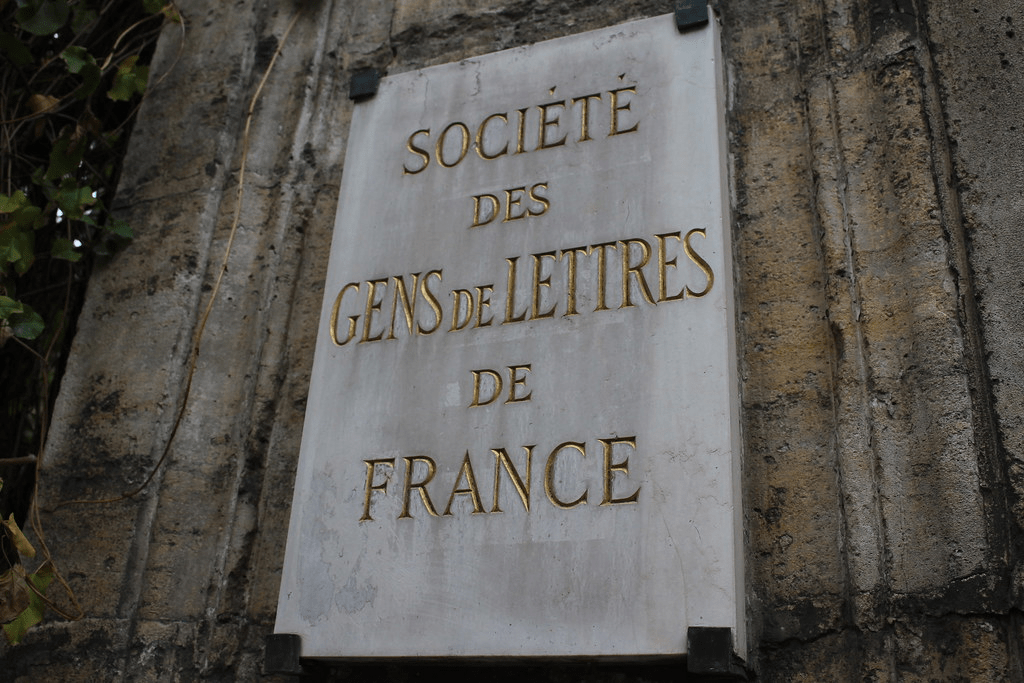
In the previous posts, I shared the three speeches delivered by Victor Hugo at the 1878 Paris Conference. (See here: Speech one, two and three) However, there was also a cogent counterpoint to Hugo by Mr Pataille, an author and member of the Société des gens de lettres and its judicial council. As the source document states (mentioned below, page 27), his arguments were presented in a letter addressed to members of Congress, but could not be printed in time for distribution before the vote.
While he remains loyal to the idea of authors’ rights as a form of property, he pushes back hard against Hugo’s more idealistic vision. At one point, he asserts, defiantly so:
“… Let us remain realistic. – The author is everything, and the public domain is nothing! – Whether the author has released his work to the public or kept it in his desk, he remains the sole and unique owner. — If he can no longer recapture the ideas he has put into circulation, he nevertheless retains exclusive ownership of his name and the material form he has given to those ideas.”
Well … that sounds spicy! Doesn’t it? And yet, Pataille isn’t blind to solidarity. He also applauds Hugo’s “the grand and beautiful idea of establishing a common fund for men of letters.” but picks holes for two reasons “first, because imposed charity is not charity, it is a tax; second, and above all, because a fund established and financed with public funds for the benefit of an entire category of unnamed individuals would be nothing more than disguised alms, whereas I want any relief fund to be based on the principles of mutuality and solidarity.”
Okay, without much mediation, below is an English translation of Pataille’s letter (via DeepL). For the French original, see pages 27-33, Pataille, J., ed. Annales de la Propriété Industrielle, Artistique et Littéraire, Vol. 25 (Paris, 1880), available through Gallica—the fantastic(!!!) digital archive of the Bibliothèque nationale de France. Needless to say, if you can’t find it there, let me know. I’ll share a copy.
To the members of the International Literary Congress.
Gentlemen and honoured colleagues,
Ever since the issue of authors’ and artists’ rights to their works has been raised and debated, both in times of privilege and since the recognition of equality for all before the law, in publications by interested parties and in the work of legal experts, in congresses and legislative assemblies and, let us say, in the
texts of the laws themselves, there has always been antagonism between those who support authors and those who support the public domain.
There was a time when the struggle was so fierce that the system known as the paid public domain appeared to many good minds as a happy compromise between the two extreme parties; so I was not surprised to hear our great poet and honourable president defend the interests of the public domain with the generosity of sentiment and magnificence of language for which he is known.
But after the incessant conquests of the authors’ party, when there is hardly any discussion left except about the word and we have the thing itself, when almost all modern legislations recognise, under different names, the legitimacy of their rights and are ready to extend their duration and increase their guarantees, I was strangely surprised to to see friends from our ranks and authors ready to accept, as progress and as the law of the future, a system which, in law, is a denial of the property for which I have been fighting, along with so many others , for more than forty years, and which, in fact, constitutes a veritable expropriation of the rights of heirs , with the aggravating circumstance that, place of prior compensation, they are granted only an arbitrary and problematic royalty that is as difficult to collect as it is to determine and guarantee. This is what prompted me to speak at the last session of the Congress and what prompts me to take up my pen today, at the risk of arriving too late.
From a theoretical point of view, the system of paid public domain is based on what I believe to be the erroneous opinion that, once published, a work belongs to everyone or, at the very least, that there are two co-owners with equal rights: the author and the public. Let us examine this as quickly as possible.
In the interest of the public domain, it is always said that authors and artists work on a common fund and that by delivering their work to the public, they are only giving back what they have taken from it. This has been said, and very seriously, in legislative assemblies.
In the interest of the public domain, it is always said that authors and artists work on a common fund and that by delivering their works to the public, they are merely giving back what they have taken . This has been said , and very seriously, in legislative assemblies . I do not think I need to refute the objection in a literary congress. This is obviously confusing the idea, the thought, with the work that is its expression. Proclaiming ownership of the work does not mean seeking authorship of the ideas it may contain, and even if it were true that they were inspired by earlier works, the new form given to the same subject, to the same thought, is enough to make it a unique and personal work. ” Who would dare, as we have written elsewhere, to ask La Fontaine to account for the borrowings he made from his predecessors? Did he not appropriate all the subjects through the charm of his style and the profusion of details and philosophical ideas with which he enriched them? Did this appropriation diminish the public domain? No! The Fables of Aesop and Phaedrus have lost none of their originality, and if there has been imitation, that imitation is in itself a masterpiece, and therefore a new work constituting property.
“Even though an author has only compiled a work, he has engaged in an intellectual process of appropriation that serves as the basis for a private right, while allowing everyone else to do the same, on the sole condition that they do not take away what is personal in that work . “
Even the most ardent defenders of the public domain are willing to recognise that as long as the work is unpublished, it is the sacred, exclusive property of the author, who remains free to communicate it to the public or to destroy it. – So far, therefore, there is no primary ownership of the public domain, nor even co-ownership. The public remains in possession of everything it previously possessed; it therefore has no claim to assert.
It’s a fact! – But is it right? No! This is the perpetual confusion between, on the one hand, the idea which, once expressed, escapes me and becomes the property of anyone who wants to appropriate it, and on the other hand, my name and the form given to this idea, the book, which remains my property because it is the fruit of my intelligence and my work.
It is said that the author can no longer destroy his work, nor modify it!
But that is the question within the question; it is very certain that once he has entrusted his work to the public and sold copies of it, he will, in fact, find it all the more difficult to buy them all back, as the people who have acquired them will be entitled to reply that they own them by virtue of a regular contract and his own consent.
However, does it follow that, on the one hand, the author will not be able to modify or disavow his original work and, on the other hand, that each of these owners of old copies will be able to reproduce them to his detriment and against his will?
Of course not! – The author’s right of ownership, which derives from the very nature of his creation, is not limited to a simple right to publish or not to publish, to choose his publisher and the method of publication; it necessarily includes the right to prohibit any subsequent publication, either to complete, modify or transform their original work, or even, if they so wish, to keep it silent, as far as it depends on them.
It is understood that he retains these rights only insofar as he has not voluntarily transferred them to a publisher or a third party. However, as for the public, and especially purchasers, they have acquired and paid for only copies of which they are the undisputed owners with the jus utendi et abutendi, that is to say, the right to use and dispose of them and even to destroy them, but not to reproduce them by printing or other means. Why? Because this is the spirit of the contract that has been entered into between the seller and the purchaser, and which must be interpreted and executed as if each purchaser had signed a deed whereby, acknowledging that they have only purchased and paid for the copy, they undertake not to reproduce it.
If this is true for each individual purchaser, it will be true for all and for the public domain, which is nobody precisely because it is everybody. Once again, no one disputes that the public has the right to profit from the ideas expressed, but that it claim ownership of the work itself , that it claims to have acquired the right not only to draw inspiration from it, but to alter and mutilate it or to make copies or reproductions of it , in order to derive commercial profit to the detriment of the author or his successors, is something that we will never accept. In reality, he has only a right of use.
If we argue that it is in the public interest for certain works to fall into the public domain as soon as possible, so much the better! Civil law is there for that purpose. In its omnipotence, it can decree the expropriation of a literary work, as of any other property, for reasons of public utility, but it must pay for its value. It can even, in exchange for the special protection it grants, limit its duration, just as it limits the duration of ownership of a mine or a railway. This has been accepted by all modern legislation, even by those, like ours, that recognise the principle of authorship.
However, when life annuities and variable rights are gradually being replaced by fixed and certain rights that eliminate uncertainty and make it possible to plan for the future; when the duration of the rights of heirs and concessionaires, which was only ten years not long ago, is now fifty years in France, Russia, Denmark and Norway; when we see so many other legislations ready to follow this path of increasing duration, with Spain, in particular, bringing it to eighty years, I do not understand why we are thinking of going backwards and making the public domain the owner of the work from the death of the author!
Nevertheless, we are willing to reserve a royalty for the direct heirs, to be paid by each publisher. I will not dwell on the difficulty, not to say impossibility, of setting this royalty in a way that is both remunerative and equitable. Any determination made without the cooperation and outside the parties concerned (the heirs and future publishers) will necessarily be arbitrary and, in most cases, unfair, whether a uniform royalty is adopted for all literary works without distinction or whether classes and categories are established.
As I told you at the last meeting, Horace was able to write, in a burst of legitimate pride:
Exegi monumentum ære perennius,
because no one knows what became of his bust and there is not one of us who does not have his works in their library; but it is not given to many to impose themselves on all generations and there are many degrees even among the greatest and most illustrious! Moreover, it is not always the name or talent of the author, nor even the merit of the work itself, that makes a book successful.
Habent sua fata libelli,
says the poet! Some books, indeed, shine and disappear like meteors; others take ten, twenty, thirty years to make their way and are often only appreciated at their true value after the death of the author. If this is true for the works themselves and from the point of view of their intrinsic merit, how much more true is it from a commercial point of view! A novel, even a bad book, will find thousands of readers and make the publisher’s fortune, while a scientific work that has cost its author thirty years of labour and has its place in all the major libraries will find, with great difficulty, only a few hundred buyers. Is it not clear that such a work, even if unpublished, will not find a publisher if, in exchange for the royalties to be paid to the heirs, the publisher does not obtain exclusive rights for at least a few years, and if, by undertaking a costly edition worthy of the work, he finds himself exposed to being overtaken and perhaps ruined by cheap editions!
I am well aware that these objections and many others, which will strike anyone with some practical knowledge of bookshops, can be levelled at the system of paid public domain adopted by the first section, of which I was a member. But you will note that the resolution it proposes to you only allows this after the expiry of the heirs’ absolute property rights. For several members of the section, this was only a compromise and a step towards the declaration of perpetuity, and in any case it did not affect acquired rights, whereas the proposal for a paid public domain applied at the very moment of the author’s death is a step backwards and a real denial of the author’s absolute right. I am well aware that inheritance law is a civil law institution. But it is so in tune with the family spirit and the aspirations of all that it is one of those rights which, if they did not exist, would have to be created. There is no one among us who, when working, does not think about the future and the fate of their children and their property, and if one has the right to leave one’s fortune to one’s children and to bequeath to one’s parents or friends the jewellery or objects one has been most fond of, it is difficult to understand why the law would deprive an author of the right to pass on all or part of their literary works to their spouse, children or even strangers of their choice. What is the point of proclaiming loudly that it is the most personal and sacred of all property, only to immediately deny the author of a literary work a right that is granted to the manufacturer and even to the mere purchaser of a table or a snuffbox?
Our honourable and illustrious president, whose door is besieged by publishers and who has nevertheless made himself an ardent defender of the public domain, has anticipated the objection by proposing an exception for the benefit of publishers who have acquired a work during the author’s lifetime and who, by derogation from the principle of paid public domain, will continue to enjoy their exclusive right for a period of fifty years . But if it is true that the author loses all his rights upon his death, that his heirs are nothing and that the public domain is the true owner, it is difficult to understand this distinction between transfers made during the author’s lifetime and those that only take effect after his death. In the future, we would have two categories of authors and literary properties, depending on whether or not there was a transfer before death, and we would be exposed to seeing authors, on their deathbeds, calling a notary, not to make a will that would be invalid from the outset, but to try to make a more or less sincere sale to a publisher called in extremis!
No! Let us remain realistic. – The author is everything, and the public domain is nothing! – Whether the author has released his work to the public or kept it in his desk, he remains the sole and unique owner. — If he can no longer recapture the ideas he has put into circulation, he nevertheless retains exclusive ownership of his name and the material form he has given to those ideas. – He alone has the right to revise and modify his work , to judge and assess what kind of publicity suits it, whether it is worthy of a deluxe edition or suitable for a popular edition, and what he has the right to do during his lifetime, he must be able to do after his death, by choosing himself the person or persons he deems most worthy of safeguarding his glory, either by publishing new editions or by preventing truncated and flawed editions that would dishonour his work .
It should not be forgotten that, for an author who is convinced and jealous of his fame, this absolute right to watch over or have his work watched over is far more precious and sacred than that of receiving the proceeds. But even from this latter point of view, I repeat, I do not understand why anyone would want to diminish the author’s estate and disinherit his heirs and legatees for the benefit of the public domain, which has no rights whatsoever as long as those of the author or his heirs exist.
On the other hand, when this property perishes either because there are no heirs or because the period determined by civil law in its omnipotence has expired, I do not understand why the public domain should be obliged to pay a perpetual fee to the benefit of what has been called “the literary family”. Like all of you, I applauded the generous words of our illustrious president, insofar as they expressed the grand and beautiful idea of establishing a common fund for men of letters. But I reject the means – first, because imposed charity is not charity, it is a tax; second, and above all, because a fund established and financed with public funds for the benefit of an entire category of unnamed individuals would be nothing more than disguised alms, whereas I want any relief fund to be based on the principles of mutuality and solidarity. Let everyone contribute their mite in order to be entitled, if necessary, to a share in the distribution of the common fund; let the rich be generous and even give up their copyright in favour of this common fund; nothing could be better! Those who see their share increase accordingly will know to whom they owe it and will bless them. But no taxes! There is fraternity only where there is spontaneity.
Recevez, etc.
J. PATAILLE,
Avocat à la cour d’appel , membre du conseil judiciaire
de la Société des gens de lettres .
 IP Musings