
Salaam,
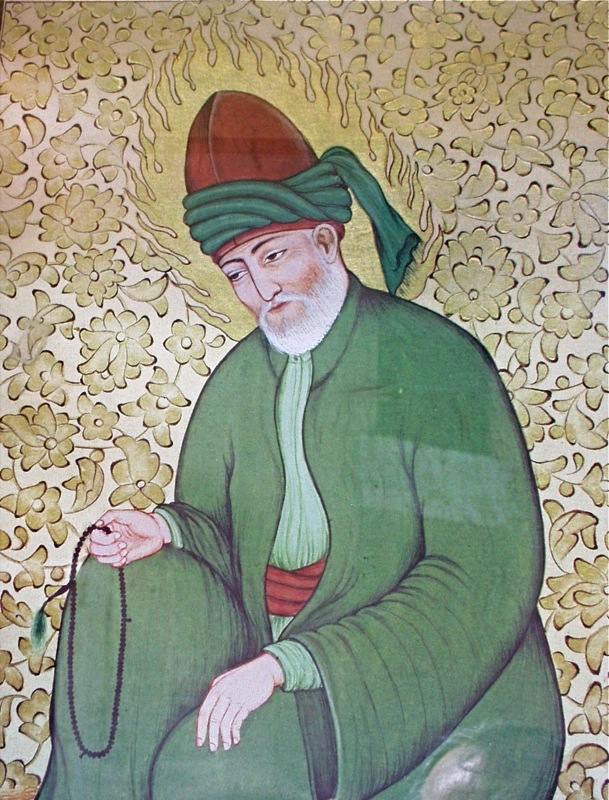
Have you seen the ‘About‘ section of our blog, where we featured a short rephrased poem by Rumi, the great Persian poet? If not, no problem. After some reflection, I felt it might be more meaningful—or at least more engaging—to offer an expansion and explanation of it.
But … first of all, why Rumi and this poem? Well … I have always felt a deep connection with Rumi’s poem, “A Great Wagon” (and his poems or proses in general), especially when I think about how language shapes our minds and saps our thinking.
Secondly, why choose a poem at all, since it isn’t a typical academic form? Precisely for that reason—because it resists conventional academic modes. Its very form helps unsettle and question the established patterns of thoughts.
Now, if you’re a strict rationalist who seeks logic in everything, fair warning: this might feel illogical. But, as many of us know, feelings—and much of what we do—often go beyond pure logic. As I essayed to show and even emphatically emphasise here, everything around us can be contingent, even those habits and intutions we’re taught to find most logical—like a strict sleeping schedule or waking up early.
Well … why go so far? Just ask a lover why they love, and you will get little logic in return. And maybe that’s the beauty of it. Is’t it? After all, as they say, beauty is in the eye of the beholder, and here it’s the lover who has long leapt the logical limits, driven by pure longing.
Language, like many other social systems, helps us create (dis?)order and curates our perception of the world. Yet, poetry, art, painting, dance, and similar expressions invite us to experience life beyond the boundaries of logic. Ironically, copyright law—the very system governing that creative leap—ensures this creative force remains controlled within capitalist chains. So, it becomes more imperative to examine IP law beyond the banal boundaries of logic.
But … why do I mix this IP, Rumi, love, life, and all?
Well, when I think of his poem, one verse especially stands out. Inspired by it, I’ve rephrased its spirit into an IP-themed reflection—not exactly a poem, but close. This is, above all, an invitation to go beyond logic—to encourage readers and myself to think abstractly, not lumber under the lode of logic, and to recognise the contingency of everything, including our most cherished concepts, laws, and policies.
Here’s what Rumi wrote, and I rephrased (Though I hope I haven’t infringed on Rumi’s moral rights!) …
Rumi writes in the Great Wagon
“Out beyond ideas of wrongdoing and rightdoing,
there is a field. I’ll meet you there.
When the soul lies down in that grass,
the world is too full to talk about.
Ideas, language, even the phrase ‘each other’
doesn’t make any sense.”
I’ve reimagined it and named it “The Great Leap”:
Somewhere between (and beyond) Intellectual, Property, and Rights,
There lies a space, I’ll meet you there,
Where ideas (e)merge, creativity cascades, and epistemes evaporate.
Where even the discourses dissolve, and structures that ‘make’ sense melt.
No one is regarded pirate or protected,
Even the words inventor, author, or infringer don’t exist or make sense,
Work is only understood as a deed, not a commodity to be sold or guarded, as though the world exists only to be pillaged.
We seek to meet you there—beyond the binaries of theory and practice.
This Rumi-fied spirit, I believe, should guide us—to think aloud, to explore beyond the confines of rigid language and dominant discourse, to simply muse on ideas that matter to us, hoping they resonate with others too.
Okay, that’s all for now. I’ll post a few more poems that I’ve written earlier or published at other places, mainly SpicyIP and IPRMENTLAW. See you in the next post!
(If you’ve read this far, why not subscribe to the blog and get the latest updates straight to your inbox? Just asking … 😉
Merci beaucoup.
फिर मिलेगे / À bientôt
 IP Musings