Capitalism ≠ Liberty : Notes from Wood and Brenner

Capitalism ¹ Liberty : Notes from Wood and Brenner

The conventional narrative posits that capitalism arose naturally from expanding trade, urban development, wealth accumulation, or technological advancement – elements supposedly present throughout history, requiring only liberation from feudal constraints which had stumbled their pre-presence. Ellen Wood’s The Origin of Capitalism and Robert Brenner’s Agrarian Class Structure and Economic Development and Property and Progress: Where Adam Smith Went Wrong, reveal a dramatically different story: capitalism emerged from a specific transformation of social property relations in the English countryside, creating for the first time markets operating not as opportunities but as imperatives – mechanisms compelling certain behaviors on pain of elimination. This distinction explains why capitalism emerged specifically in the English countryside rather than in societies with more extensive commerce, and illuminates why capitalism represents not natural liberation of economic behavior but creation of novel compulsions operating through apparently impersonal (and hence, “un-free” contrary to libertarian narrative) market forces.

The Concept

No quantity of accumulation – from theft, imperialism, commercial profit, or even labor exploitation – by itself constitutes capital or produces capitalism. Roman senators, Venetian merchants, Spanish conquistadors accumulated vast wealth without creating capitalism. What transforms wealth into capital is not quantity but social form: property relations generating capitalist “laws of motion” – imperatives of competition and profit-maximization, compulsion to reinvest surpluses, systematic requirement to improve labor productivity and develop productive forces for subsistence. It is when “safety first” gets linked to constant production, fundamentally reinventing social relations of production.

This means capitalism cannot be defined by the presence of markets simpliciter (which have existed for millennia), nor by trade (connecting distant civilizations in antiquity), nor even by profit-seeking behavior (motivating merchants throughout recorded history to “buy cheap and sell dear”). Rather, capitalism is defined by specific social relations that create systemic imperatives for continuous accumulation and productivity improvement

Marx identified the critical transformation in English countryside. In Marx’s account, the critical transformation occurred in the English countryside through the expropriation of direct producers (Wood, p.40). Landlords derived rents from capitalist tenants’ commercial profits. These tenants were actually leaseholders: after absolute ownership was expropriated in lords’ favor, rents were levied competitively upon lease transfers, exchanged for freedom from serfdom and common law rights in King’s Courts. Meanwhile, numerous small producers underwent dispossession and became wage laborers. Marx regards this rural transformation as the authentic “primitive accumulation” not because it created a critical mass of wealth – numerous societies had accumulated substantial wealth through conquest and trade – but because these social property relations generated novel economic imperatives, particularly the compulsions of competition and a systematic requirement to develop productive forces, producing new laws of motion unprecedented in human history. (Wood, p.40).

Polanyi recognized that only in “market society” do economic institutions separate from social relations, with society becoming market’s “adjunct” rather than economy embedded in society (Wood, p.26). Without “protective countermoves,” “human society would have been annihilated.” According to Wood, however, Polanyi’s explanation contained technological determinism – arguing complex machinery necessitated commodifying labor. This, according to Wood, inverts reality. She argues that radical social relations transformation preceded industrialization (Wood, p.29) – Capitalist imperatives drove machinery development, not the reverse.

What transpired in the English Countryside?

Through competitive political accumulation, particularly responding to the emerging French monarchy, Anglo-Norman lords created a more centralized feudal state than existed elsewhere in Europe at that time. By organizing through a national monarchical state that could discipline the aristocracy, English lords achieved unusually high cooperation in operating their decentralized surplus extraction system and in military ventures (Brenner, p.20-21).

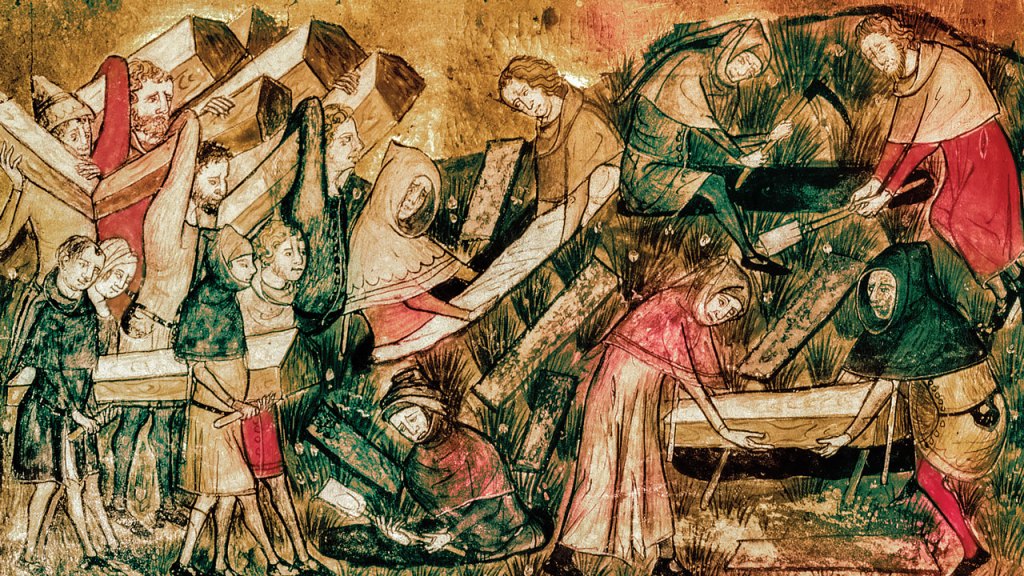
A critical institutional innovation was imposing a national common law system binding the lords themselves. This system granted all free persons, including legally free peasants, access to royal courts while excluding unfree peasants and relegating them to manorial jurisdiction. The resulting enhancement of lordly power enabled English lords to experience an economic golden age from the late twelfth through early fourteenth centuries – precisely when French lords faced declining feudal revenues due to peasant gains. English lords imposed tighter serfdom with state assistance, maintaining extraction levels right until the Black Plague (Brenner, p.21).

The catastrophic post-plague population collapse undermined coercive extraction. The drastically altered man-land ratio caused lordly cooperation to collapse under competitive pressures for scarce tenants (Brenner, p.21). The 1381 revolt proved watershed – peasants streamed away, lords competed offering better terms and legal freedom through written manor roll copies (contracts between legal equals). By the fifteenth century’s second quarter, most English peasants had won freedom and paid reduced rents.

This was the social condition that created lords’ existential threat. Unable to reimpose feudal levies, they deployed their “trump card”: the powerful monarchical state they could now repurpose (Brenner, p.22). With Tudor state assistance, lords asserted that customary land remained subject to arbitrary, variable rents upon transfer – transforming it into commercial leasehold, effectively lords’ own property, as against peasant proprietorship that was prevalent in France. State power suppressed sixteenth-century peasant revolts vindicating customary rights in the land, separating the peasants from their means of subsistence. Lords cut short peasants’ push to win not just freedom but fixed payments and inheritance rights, thereby establishing their own property rights, while severing tenants from full means of subsistence, rendering them market-dependent, as the cost of freedom (Brenner, p.22). This is why it is sometimes referred to as “freedom in the double sense”.

Critically, English lords understood themselves as acting within established feudal tradition, merely reaffirming their customary prerogative to impose arbitrary levies on customary tenants. Their objective was not creating a new system but preventing peasants from consolidating possessory rights – fixed dues and inheritance rights – that would eliminate lords’ ability to obtain economic returns from customary land. Given population growth’s inflationary pressures, consolidation of such peasant rights threatened lords’ capacity to extract any meaningful rent whatsoever (Brenner, p.22).

The epochal yet unintended consequence was – subjecting tenants to competitive lease bidding, imposing necessity to abandon subsistence production and adopt capitalist reproduction rules (Brenner, p.22-23). Once rendered market-dependent, emerging farmers had no alternative but to alter their “safety first” strategy – Production and maximal accumulation to win rent-competition was initiated as that was the only way of being safe from being famished. This transformation was fundamentally political – lords inadvertently created capitalism while preserving feudal privileges.

This transformed into what Robert Brenner identifies as a classical landlord-capitalist tenant-wage labor structure (Brenner, p.35). Landholding in England was unusually concentrated. Large landowners controlled an unusually substantial proportion of land under conditions enabling them to deploy property in novel ways (Wood, p.102-103). An unusually large proportion of land was cultivated not by peasant-proprietors but by tenants – a pattern reflected linguistically in the fact that the word “farmer” originally and literally signified “tenant,” as the phrase “farming out” continues to indicate.

What English landlords lacked in “extra-economic” powers – juridical, military, political powers continental lords employed  – they compensated for through increasing “economic” powers from controlling land and structuring tenant relationships (Wood, p.102-103). Their income depended on tenants’ capacity to produce profitably and remit rent from that profit. Both landlords and tenants came to depend on the market in historically unprecedented ways merely to secure conditions of their own social reproduction (Wood, p.56).

“Rules for reproduction” captures how property relations determine logic by which actors must operate to survive and reproduce themselves – they constitute individual action. Reduced to market dependence, commercial tenants had no alternative but to adopt “production for exchange,” maximizing profits through specializing, accumulating, innovating (Brenner, p.29). They abandoned peasant rules: producing numerous children for insurance, subdividing holdings.  Customary leases ultimately transformed into economic leases, and property itself became an instrument of economic exchange as against ownership by conquest.

The consequence was a highly productive agrarian sector in which landlords and tenants alike became preoccupied with “improvement” – the enhancement of land’s productivity for profit (Wood, p.109). This dynamic initiated an entirely novel historical process: an unprecedented rupture with old Malthusian cycles, a process of self-sustaining development, new competitive pressures that generated their own effects upon the requirement to increase productivity, further concentration of landholding (Wood, p.56). Where other European societies remained trapped within cycles of expansion and crisis, England achieved breakthrough to sustained growth – not through technological superiority or greater commercial development but through transformed social relations imposing systematic imperatives for productivity improvement.

This makes clear that capitalism does not simply liberate pre–existing entrepreneurial tendencies or rational economic behavior. Rather, it creates entirely new compulsions that reshape behavior across multiple domains, production, investment, family formation, demographic patterns. Understanding these transformed rules for reproduction illuminates why the absence of such transformation in other contexts, most notably France, failed to generate capitalist dynamics.

French Contrast

French peasants enjoyed land at fixed rents. Where English landlords obtained rent increases through cooperation in improvements increasing output, French lords extracted larger shares of declining output. The paradox: customary property rights meant poverty and backwardness. In England, absence of secure peasant rights facilitated development (Brenner, p.47). Self-preservation became linked to production and commodifying labor.

The peasant proprietor faced relatively little pressure to operate his plot as profitably or efficiently as potential competitors in order to survive, because no direct mechanism existed through which such competitors could “defeat” him (Brenner, p.44-45). Unlike a tenant, the peasant proprietor need not provide a level of rent equal to what a landlord might obtain from any alternative tenant or face eviction. Unlike the independent artisan within a competitive urban environment, he need not produce cheaply enough to sell goods profitably at market price or face business failure and thus famine, as acquisition of means of subsistence was dependent on the market and not through basic proprietorship or general ability (but specialization). All that survival required for the peasant proprietor (assuming food production) was sufficient output to provide for family subsistence and to meet tax obligations and generally fixed customary rents, which could often be supplemented through wage labor (Brenner, p.45).

The peasant proprietor could resist market pressures simply by maintaining possession, by producing sufficient for subsistence, by supplementing farm income with wage labor as necessary. He need not maximize profit or improve productivity competitively. He could survive through satisficing rather than optimizing. Surplus could be reinvested for luxury, but adopting specialization and more productive mechanisms meant divorcing from means of subsistence, which was antithetical to the “safety first” approach. A market for basics necessarily came with the burden of risk.

Possessing means of subsistence shielded peasants from competition (Brenner, p.66). But why not pursue the gains from trade anyway, as rational homo economicus theory predicts? Here, Brenner identifies “the fatal flaw of Smithian trans-historical micro-economics”: Smith specified gains from specialization but “failed to consider and investigate the other side of the coin  – potential costs” (Brenner, p.67). The primary constraint: “safety first.” Bad harvests were unpredictable, leading to subsistence crises. Peasants specializing in non-food crops faced incalculable danger of being squeezed between high food costs and low output returns  – risking famine (Brenner, p.68). Given starvation as business failure’s cost, peasants adopted “safety first.” Large families provided insurance but reduced surplus, creating intolerable competitive disadvantage if specializing. No incentive is needed to not be willing to starve  – it is an imperative.

Contrarily, In Adam Smith’s explanation, as merchants offer lords irresistible luxuries previously unavailable, lords, at an individual level dismiss retainers, expel peasants, offer commercial leases – producing capitalism. But Smith accomplishes this only by ignoring feudal social-property relations as constraints (Brenner, p.70-71). Smith’s lord acts rationally only if capitalism already exists  – he presupposes its existence, reflecting lack of understanding the socially curated and constitutive nature of humans. This is methodological individualism failing to grasp how social structures constrain action.

Opportunity to Imperative

Throughout history, direct land access – through ownership, customary rights (common pool use rights Wood specifically recounts, before “improvement” led to “enclosures”), or traditional arrangements  – was given for agricultural producers. In England, access became market-mediated, contingent on competitive success. The emergence of “economic rents” – determined by market conditions, not custom – exemplifies this transformation (Wood, p.103-104). Surveyors calculated “unearned increment” accruing to customary tenants paying below market-determined value – early capitalist rationality reducing social relationships to abstract monetary calculations.

The triad of landlord, capitalist tenant, wage laborer emerged. With wage labor growth, the same process created highly productive agriculture but also increasing propertyless mass constituting both wage-labor force and domestic market for cheap consumer goods – “a type of market unprecedented in history” (Wood, p.106). This mass market of the poor became central to industrial capitalism.

Improvement, Enclosure, and Locke’s Labour Producer Theory

The concept of “improvement” encapsulates the transformation in economic mentality and practice that accompanied agrarian capitalism. The word itself, in its original signification, denoted not merely “making better” in a general sense but specifically meant to render something productive of monetary profit, especially to cultivate land for profit – derived from the old French for “into” (en) and “profit” (pros) (Wood, p.109).

By the seventeenth century, the word “improver” designated someone who rendered land productive and profitable, especially through enclosure or waste reclamation. In the eighteenth century, “improvement” in both word and deed achieved its full articulation. The concept reveals how capitalism transforms the very criteria by which we evaluate resource utilization – from serving human needs or community welfare to generating profit.

An extensive new body of literature emerged in the seventeenth century elaborating techniques and benefits of improvement (Wood, p.109). This literature operated not merely at the technical level but functioned profoundly ideologically, disseminating a novel conception of humanity’s relationship to land and nature. Improvement became a major preoccupation of the Royal Society, which assembled England’s most prominent scientists – including Newton and Boyle – with members of ruling classes such as the first Earl of Shaftesbury and his protégé John Locke, who himself was a follower of Pierre Nicole (Wood, p.109-110).

Improvement did not depend primarily upon significant technological innovations. Generally, it involved new developments in farming techniques or refinements of established ones: convertible husbandry, crop rotation, drainage (Wood, p.110). The agricultural revolution that preceded industrialization was not primarily a technological revolution but a social one. The same techniques had often been known previously; what changed was the systematic compulsion to apply them.

However, improvement signified something more fundamental than novel techniques: it signified new forms and conceptions of property (Wood, p.110). “Improved” farming entailed enlarged and concentrated landholdings. It necessitated the elimination of customary practices that interfered with the most productive use of land – “productive” now defined strictly in terms of marketable output and profit. This was the first showcase of classical liberalism: a curb on regulation (through customary rights) or interference in the “market” to make it pure competition.

Peasants had employed various means of regulating land use in the interests of village communities since time immemorial (Wood, p.110-111). They restricted certain practices and granted certain rights not to enhance landlord wealth but to preserve the peasant community itself, perhaps to conserve land or distribute its fruits more equitably, often providing for the community’s less fortunate members. Distributive thinking was present but would be replaced. These practices reflected an entirely different rationality than capitalist improvement – one oriented toward community reproduction, equity, and sustainability rather than profit maximization.

Even private ownership had typically been conditioned by such customary practices, granting non-owners certain use rights to property owned by others, making it a means of subsistence for most. In England: common lands with grazing rights or rights to collect firewood; various use rights on private land, such as rights to collect harvest leavings during specified periods; traditional arrangements for crop rotation requiring coordination among landholders (Wood, p.110-111). Commons were common.

From the standpoint of improving landlords and capitalist farmers, land required liberation from any such obstructions to their productive and profitable property deployment. Between the sixteenth and eighteenth centuries, increasing pressure developed to extinguish customary rights that interfered with capitalist accumulation (Wood, p.111). This could entail disputing communal rights to common lands by claiming exclusive private ownership; eliminating use rights on private land; or eliminating customary rights of smallholders’ possession without unambiguous legal title.

This reflected a transformation in the understanding of property – from means of subsistence (access to means of subsistence) to means of maximal production to generate maximum profit, for maximum accumulation, to secure subsistence in a competitive environment. In all these cases, traditional conceptions of property required replacement by new, capitalist conceptions – not merely as “private” but as exclusive (Wood, p.111). This represents a first hint of the concept of allocative efficiency. Other individuals and the community required exclusion through elimination of village regulation and restrictions on land use, especially through extinguishing customary use rights. Property had to become absolute, exclusive, and alienable – a bundle of rights deployable solely according to owner’s calculation of profit, unencumbered by social obligations or community claims. This points toward a transformed meaning of property rights. What about the emergence of “intellectual property rights” around this time?

Enclosure is often understood simply as the physical fencing of common land or open fields. However, enclosure signified not merely physical demarcation but the extinction of common and customary use rights upon which numerous people depended for their livelihood (Wood, p.111).

The first major wave of socially disruptive enclosure occurred in the sixteenth century, when larger landowners sought to expel commoners from lands that could be profitably deployed as pasture for increasingly lucrative sheep farming. Contemporary commentators attributed to enclosure, more than any other single factor, responsibility for the growing phenomenon of vagabondage – those dispossessed “masterless men” who wandered the countryside and threatened social order.

A novel form of enclosure movement emerged in the eighteenth century: Parliamentary enclosures (Wood, p.112). The extinction of troublesome property rights that interfered with landlord accumulation now transpired through acts of Parliament. Nothing testifies more clearly to the triumph of agrarian capitalism. The state itself became the instrument for dispossessing commoners and transforming property relations. Is this neo-liberalism? So much so for law being constitutive, as against social relations being constitutive of the law.

Pressures to transform property manifested themselves in court cases, in conflicts over specific property rights (Wood, p.112). In such cases, customary practices and claims often confronted directly the principles of “improvement,” and judges increasingly recognized reasons of improvement as legitimate claims against customary rights that had existed for as long as anyone could recall. Where custom, tradition, and community need had once justified certain rights and practices, profit and productivity now became the standard.

Locke’s property theory, batting for enclosure, hinges on “improvement” (Wood, p.113-114). Locke commences with the proposition that God “hath given the world to men in common” (II.26), but proceeds to demonstrate how individuals came to possess property in particular things (Wood, p.113). Such private, individual property constitutes a God-given natural right. Men own their own persons, and the labor they perform is therefore their property. A natural right of property is established when a man “mixes his labor” with something, thereby removing it from its natural state or altering its natural condition.  The theme permeating his discussion was that the earth exists to be rendered productive and profitable, and this is why private property, which emanates from labor, supersedes common possession (Wood, p.113-114).

This was the first articulation of any value – later to be revealed as exchange value – emerging out of production, in an environment where increased production and improvement was the only means of subsistence. Locke calculated “99/100” should be attributed to labour rather than nature. Crucially, Locke considers exchange value, not use value (Wood, p.114).  Something particularly revealing emerges upon careful examination of Locke’s argument (Wood, p.114-115). There exists something initially appealing about the proposition that labor constitutes the source of value and the basis of property – it appears to ground property in actual productive activity rather than arbitrary power. However, something profoundly problematic becomes evident. No direct correspondence exists between labor and property because one man can appropriate another’s labor. The transferability notion becomes crucial. He can acquire a property right in something by “mixing” with it not his own labor but the labor of someone else whom he employs.

It appears the issue for Locke concerns less the activity of labor as such than its profitable deployment or its link with production/productivity. In calculating the value of the acre in America, he addresses not the Indian’s expenditure of effort but the Indian’s failure to realize profit. The issue is not the labor of a human being but the productivity, rendering exchange value, and its application in commercial profit (Wood, p.114-115), increasing common stock.  (More on Locke in the next post).

What then is Capitalism?

Only in capitalism are legally free direct producers completely dispossessed, surplus labor appropriated through purely “economic” means (Wood, p.99). Workers have common law rights enforceable in King’s Courts yet must sell labor power because separated from means of production. Markets existed throughout history, but capitalism’s market possesses unprecedented function: the principal determinant and regulator of social reproduction (Wood, p.100). Once food production became subject to market imperatives, once land access became market-dependent, foundation was established for generalizing market dependence throughout society. Coercion is hidden and is the real invisible hand.

This unique system of market dependence possesses specific systemic requirements and compulsions shared by no other mode of production: the imperatives of competition, accumulation, and profit-maximization, and consequently a constant systemic requirement to develop productive forces (Wood, p.100). These imperatives signify that capitalism can and must constantly expand in ways unlike any other social form. It can and must constantly accumulate, constantly seek new markets, constantly impose its imperatives upon new territories and new spheres of life.

Crucially, agrarian capitalism rendered industrialization possible, not the reverse (Wood, p.146). English agriculture’s transformation was primarily social revolution – transformed property relations and productive imperatives, not technological. Techniques like convertible husbandry, drainage, crop rotation weren’t radically novel but systematic applications of known methods. What changed was social imperatives compelling their systematic application. Technology didn’t create capitalism; capitalism created the imperative for technological improvement. And this does not mean technology would not have developed but for capitalism, but just that it would have developed over a longer period of time de hors forces of compulsion.

In pre-capitalist societies with markets, the market was opportunity to invest surplus. But it didn’t determine social reproduction or impose systematic compulsions. Only when property relations transformed such that access to means of production and subsistence became market-dependent did the market become imperative– a force commanding behaviors under threat, generating capitalism’s distinctive dynamics: relentless productivity improvement, systematic accumulation, continuous revolutionizing of production, constant expansion, at the costs of whatever comes in it way – subsistence of those who are unable to win this competition, environmental impact, impact on human development, etc.

If capitalism arose from particular historical transformations rather than inevitable progress, it can potentially be transformed through creating different social relations. Capitalism is not history’s endpoint but a specific mode of production with a specific origin that may have a specific end.
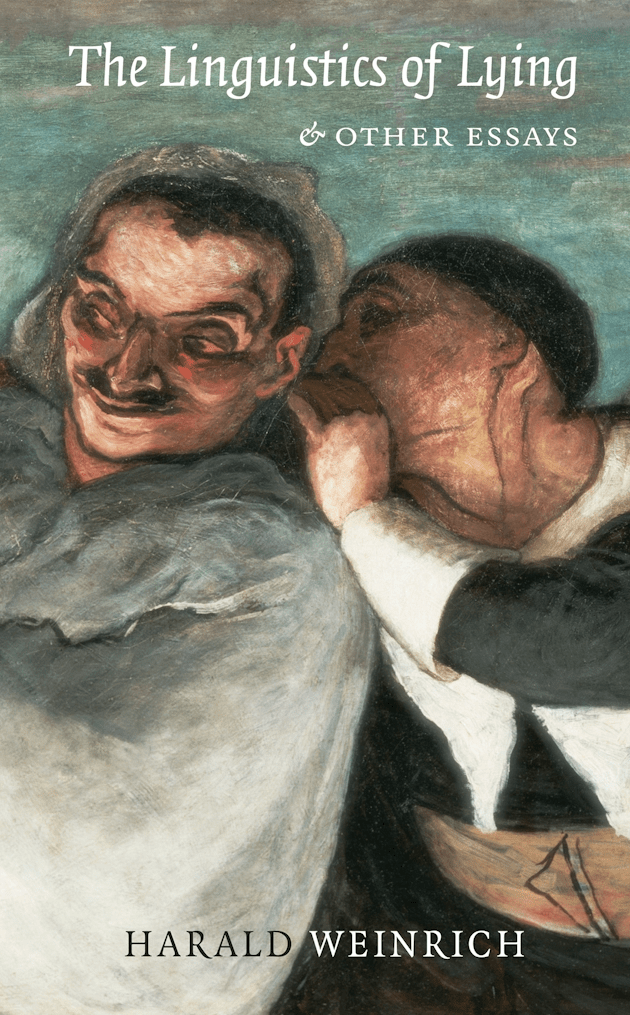

Evil Eye and Linguistic Lies: My GrandMaa Reminded me of Postmodernism

Image from here

Salam,

A few months ago, during a visit to my hometown, Phalodi in Rajasthan, a muse found me in the most ordinary (yet dearest) of moments—while speaking with my grandmother and my sister. Yes. As my grandma spoke of evil eye and my sister spoke of wish-fulfilling prophesies, I couldn’t help but wonder how deeply our thinking and behaviour are shaped by the assumption that words carry stable, definite meanings—meanings that are somehow validated or approved by some higher authority, some final source, even God.

How the Conversation Began?

So, it happened that I was sitting with my sister one day, talking about the usual odd mix of things—wishes, luck, and the darn dreaded Buri Nazar (evil eye) that our grandmothers always warned us about.

Somewhere between laughter and sincerity, we came to wonder — how much of our beliefs rests on assumptions we rarely pause to probe. Assumptions that things begin at a fixed point and end at another, that every event must have a definite, definable, describable cause, that truth can always be tethered to some neat and knowable explanation.

We like to centre ourselves in a story or speech like that: I suffered because of X, or I will be blessed if Y happens. Like … ‘This’ happened because of ‘that’, period. End of story. The speaker, the wish-maker, the sufferer—always pivot around which meaning is spun. Yet in clinging to these word-ly anchors, we often miss the messier (and perhaps more beautiful reality?) that meaning is never still, singular, stable. Language itself is fluid, restless, protean. And maybe life, like language, resists the comfort of fixed points. There are far more complex networks of interdependencies around us that cannot be escaped easily through words.

That being said, I do ‘intuit’ why it happens- too much faith in the words having singular meanings. For one, language—the way we have been taught to take it— makes us believe that the speaker/listener is the centre of the speech; That their words have some definite meaning as the speaker intends. It tricks us into thinking that meaning originates from a singular source, i.e. us, and travels outward in a straight line—toward truth, impact, or divine judgment.

For example, I recently underwent some surgery, and it came at a time when other parts of my life were already in distress. At first glance, one could say (and some actually did) that “my planets aren’t aligned,” or “Maybe this is God punishing me.” But if we look at the situation differently, we can see something else entirely. That X amount I spent didn’t just disappear—it became someone’s salary. The amount I donated to a hospital helper may have been used to buy vegetables, pay rent, or care for someone else. Seeing this way changes the equation. Doesn’t it? Well. This way, my pain, my suffering, or more generally my ‘problem’, then, was not an isolated “negative” event. Instead, it was part of a much broader system of interdependence.

This reframes everything. As cliché as it may sound, things aren’t necessarily “good” or “bad” in themselves. They don’t have an intrinsic nature or value. Similarly, texts (including words, events, experiences, and things) don’t carry fixed, stable, singular, or inherent meanings. They’re always part of an ongoing circulation of meanings, relationships, and interpretations.

This reminds me of another instance that our grandmother shared with us the same day. My grandmother, that day, told me that my grandfather once said to her, “If you sleep too much in the morning, you won’t be able to sleep at night.” Later that day, when she couldn’t sleep, she took his words as a curse—as Buri Nazar. But was it so? I don’t think so. To me, this was just another instance where we assume words carry a direct, unchangeable meaning, as though someone or something—God, fate, karma—is out there eavesdropping, and then enforcing a verdict based on those words?

Take another example. Let’s say I tell someone, “You have a beautiful ring,” and the next day they lose it. If they then blame me—claiming I gave them the evil eye (it happens a lot in my town/culture)—what they’re really saying is that there’s an invisible entity that interprets my words and assigns meaning to them, entirely independent of my intention. But if that’s true, then this entity isn’t just misinterpreting my praise—it’s actively converting good intentions into harm. That’s not divine intelligence. That’s a petty and irrational being. God will get ‘the’ meaning. 

This is where I see a problem with the religious and metaphysical structures that many of us inherit almost unknowingly. They tether our thinking to certain assumptions—about cause and effect, about meaning, about authority, about language, about time and space. These become, in a sense, our a priori conditions of thought and speech. And in doing so, they do not merely shape what we think or believe; they delimit what we can even think, what we can imagine believing. They circumscribe what we are permitted to say, to do, to wish, or even to desire.

Let me be clear: the problem, for me, is not with religion, nor with any particular belief system. It lies deeper—in the metaphysical faith that quietly governs our everyday use of language. We think in binaries: beginning/end, good/bad, speaker/listener, cause/effect. And we take these as natural givens. But are they? Maybe not. Perhaps they are the very traps postmodern thinkers warned us about—the illusion of stability, the tyranny of fixed meaning.

So perhaps what we need is not just new words, but new ways of thinking—ways that resist this compulsion to anchor meaning once and for all. Yet here, I run into a paradox. If words have no fixed meaning, how is it that we still communicate, write, and understand each other? Surely, there is some meaning in words, however fragile or fleeting. Or perhaps, unsettlingly, we do not need to know meanings to use them, to live through them.

Anyway, that’s a thought I’ll save for a more extended reflection in a future post. Or, in French, I would say, c’est tout!.

फिर मिलेगे … in the next post.

IP Poem: A Great Leap

Image from here

Salaam,

Have you seen the ‘About‘ section of our blog, where we featured a short rephrased poem by Rumi, the great Persian poet? If not, no problem. After some reflection, I felt it might be more meaningful—or at least more engaging—to offer an expansion and explanation of it.

But … first of all, why Rumi and this poem? Well … I have always felt a deep connection with Rumi’s poem, “A Great Wagon” (and his poems or proses in general), especially when I think about how language shapes our minds and saps our thinking.

Secondly, why choose a poem at all, since it isn’t a typical academic form? Precisely for that reason—because it resists conventional academic modes. Its very form helps unsettle and question the established patterns of thoughts.

Now, if you’re a strict rationalist who seeks logic in everything, fair warning: this might feel illogical. But, as many of us know, feelings—and much of what we do—often go beyond pure logic. As I essayed to show and even emphatically emphasise here, everything around us can be contingent, even those habits and intutions we’re taught to find most logical—like a strict sleeping schedule or waking up early.

Well … why go so far? Just ask a lover why they love, and you will get little logic in return. And maybe that’s the beauty of it. Is’t it? After all, as they say, beauty is in the eye of the beholder, and here it’s the lover who has long leapt the logical limits, driven by pure longing.

Language, like many other social systems, helps us create (dis?)order and curates our perception of the world. Yet, poetry, art, painting, dance, and similar expressions invite us to experience life beyond the boundaries of logic. Ironically, copyright law—the very system governing that creative leap—ensures this creative force remains controlled within capitalist chains. So, it becomes more imperative to examine IP law beyond the banal boundaries of logic.

But … why do I mix this IP, Rumi, love, life, and all?

Well, when I think of his poem, one verse especially stands out. Inspired by it, I’ve rephrased its spirit into an IP-themed reflection—not exactly a poem, but close. This is, above all, an invitation to go beyond logic—to encourage readers and myself to think abstractly, not lumber under the lode of logic, and to recognise the contingency of everything, including our most cherished concepts, laws, and policies.

Here’s what Rumi wrote, and I rephrased (Though I hope I haven’t infringed on Rumi’s moral rights!) …

Rumi writes in the Great Wagon

“Out beyond ideas of wrongdoing and rightdoing,

there is a field. I’ll meet you there.

When the soul lies down in that grass,

the world is too full to talk about.

Ideas, language, even the phrase ‘each other’

doesn’t make any sense.

I’ve reimagined it and named it “The Great Leap”:

Somewhere between (and beyond) Intellectual, Property, and Rights, 

There lies a space, I’ll meet you there,

Where ideas (e)merge, creativity cascades, and epistemes evaporate.

Where even the discourses dissolve, and structures that ‘make’ sense melt.

No one is regarded pirate or protected,

Even the words inventor, author, or infringer don’t exist or make sense,

Work is only understood as a deed, not a commodity to be sold or guarded, as though the world exists only to be pillaged.

We seek to meet you there—beyond the binaries of theory and practice.


This Rumi-fied spirit, I believe, should guide us—to think aloud, to explore beyond the confines of rigid language and dominant discourse, to simply muse on ideas that matter to us, hoping they resonate with others too.

Okay, that’s all for now. I’ll post a few more poems that I’ve written earlier or published at other places, mainly SpicyIP and IPRMENTLAW. See you in the next post!

(If you’ve read this far, why not subscribe to the blog and get the latest updates straight to your inbox? Just asking … 😉

Merci beaucoup.

फिर मिलेगे / À bientôt 

Thanks, Orwell, for reminding me of Some ‘Unmeant’ Words in IP

Image from here

Bonjour,

The other day, thanks to a sharp young friend from NALSAR — Ruchir Anand — I ended up reading George Orwell’s 1946 essay Politics and the English Language. But why do I say “ended up”? Well, ‘tis because I hadn’t planned on it. But once I started, it felt like a lecture – a brimming mix of bitterness and brilliance -that I could not not attend.

Among many sharp observations, Orwell said something that resonated with me. He noted how certain words or expressions — despite having no clear or consistent meaning — continue to be used, either euphemistically or dysphemistically. Talking of terms like democracy or fascism, he argues, has become so emotionally charged and overused that they are routinely used (/deployed like tools) without any precise definition. Tellingly, it is done with the tacit understanding that they don’t mean anything fixed at all. One can just toss them into any argument and come out looking holy.

Of course, now I can take a train to meet and bring Derrida to the Orwellian domain. And trust me, I am tempted to, too. For one, following Derrida’s notion of différance, one could level the same charge against the entire enterprise of language itself — that all meaning is slippery, deferred, and non-existent. And perhaps, does that convincingly so. But let’s hold back, for now and focus on a narrower category: words that are inevitably imprecise, and they are so with consensus. Yet they are used, assumed, and even unabashedly understood to convey a particular meaning, good or bad.

In Orwell’s words -“Many political words are similarly abused. The word Fascism has now no meaning except in so far as it signifies “something not desirable.” The words democracy, socialism, freedom, patriotic, realistic, justice have each of them several different meanings which cannot be reconciled with one another. In the case of a word like democracy, not only is there no agreed definition, but the attempt to make one is resisted from all sides. It is almost universally felt that when we call a country democratic we are praising it: consequently the defenders of every kind of regime claim that it is a democracy, and fear that they might have to stop using that word if it were tied down to any one meaning. Words of this kind are often used in a consciously dishonest way. That is, the person who uses them has his own private definition, but allows his hearer to think he means something quite different.

This Orwellian insight flies in the face of intellectual property (IP) discourse, which is filled with such means that mean everything and nothing all at the same time. And if there’s one phrase that fits fine in this farrago, like a lazy politician before an election: it’s the much-bandied word:  “balanced”. It goes in the same shiboleth flavours: “A balanced IP system,” “a balanced copyright framework,” “the need for balance between right holders and the public”. Pitched as self-evidently virtuous, it rarely comes with clarity. 

But ask the speaker and you’ll find: it means whatever the speaker wants it to mean. After all, what is balance? For whom? When? Under what history? Hither comes a sound of silence. A loud one, my friend. The word is perhaps mightier than the magical spell — abracadabra, you say it, you’ve justified your point. 

Yes, I may be biased in raising the example of “balance” — after all, it is the very subject of my PhD. (See this journal article called “Taking Copyright’s ‘Balance’ Too Seriously” where I expounded my claim in detail.) But even a brief introspection on the IP field reveals how much of its justificatory language — especially around what IP is for — is fraught with seductive yet slippery expressions.

Sample words like creativity, innovation, progress, and public interest. Lovely words, for sure. For they ring with righteous hue, sounding self-evidently good and noble. But on closer inspection, they often function — or rather, non-function — precisely as Orwell said: carrying emotional weight without definitional clarity. The speaker intentionally invokes such terms/words/expressions, thereby evading the weighty moral burden of having to exemplify the phrase they’ve uttered. Just say, “IP fosters creativity,” or “IP promotes innovation,” and voilà — the phrase earns its stand, rarely questioned, often axiomatically accepted.

The upshot is that these words are, as I like to call them, un-meant words which have managed to mean everything and nothing at once(!). And this is what makes them instrumental — and dangerously convenient —in almost any policy debate.

Of course, this isn’t unique to IP. Law and policy are full of such ‘un-meant’ words. But given how central these words/rhetorics (like the ones I flagged above) have become in global IP debates, especially endorsed through institutions like WIPO or even national IP offices, it is high time we parse the political function of such snafu signifiers. Because these signifiers — or even “noble nothings” as they are — are not just bad language. They’re politics in disguise, I posit.

So tell me, have you come across other such words in IP or law? The kind that is made to sound essential but is hollow from the inside?

Drop them in the comments. Don’t worry. I won’t misuse “transparency.” 🙂 See you in the next post.

Note: While penning this post, I was constantly recalling a solid post from Swaraj Barooah on SpicyIP called Solutionism, Social Innovation and IP.

On Second Thought … Let’s Call It IP Musings

Image from here

Namaskar Readers,

Lately, we’ve been wondering whether this blog should be called PhilIP and Policy. Although we like the name and even have a detailed note explaining why we called it that. But something changed over the period. While we intend, try, and of course want to theorise and philosophise about IP issues, we haven’t exactly been sticking too closely to that title. Especially, if you’ve read our recent posts, you’ll notice they haven’t necessarily dealt with IP law—or even theory or philosophy in any strict sense. Instead, they’ve been more like thoughtful meanderings … or musings, if you will.

Now, this doesn’t mean we’re turning the blog into an anything-goes diary—though such spaces are important and deserve far more respect in our intellectual landscape than they usually get! It’s just that our vision for this blog is a little different: to toss questions and ideas like seeds, and to see what grows therefrom. However, upon harking back, we realised that instead of strictly theorising or philosophising IP, what we’ve really been doing is musing —musing on and around IP, wandering through the many layers of knowledge production and information regulation.

So we thought: why not rename the blog to reflect this evolving identity better? So, from here on, we’ll be calling it IP Musings. The blog name and domain name have already changed. Soon, updates in other parts will follow, and the space itself will wear this spirit more visibly. Check out the About section to learn more about who we are and what we aim to do/achieve with this space.

And now … on the name. If you didn’t already know, the word muse has a rather entrancing history, I’d say. It comes from the Old Anglo-French muser and entered writing sometime in the 14th century. As a verb, it means to become absorbed in thought; as a noun, it refers to a state of deep reflection or dreamy abstraction. Quite curious, isn’t it? So … my dear lector, isn’t “IP musing an apposite name for this space we’re hoping to build?

That said, we still intend to anchor our reflections around IP. After all, that’s the area we’re most interested in and invested in. And perhaps (on good days), modestly qualified to comment on. With the new name, we’re giving ourselves—and officially so—the room to play and ponder. And we hope this becomes and remains a place where curiosity can cruise, ideas can breathe, questions can linger, and, more importantly, not every post needs to tie itself into a tidy academic knot. (If I can let my amateur philosopher out for a moment, I’d say this: if there truly is a journey from confusion to conclusion, what we covet here is clarity. Yes. After all, it’s the clarity of thought that lights the way—if such a journey exists at all.)

Well, that’s still not the whole story of the name. After all, just like everything else, there’s a little backstory to this title, IP Musings, too. So … a few years ago, one of us (Lokesh), along with Swaraj Barooah, had created a comic-style script series on SpicyIP called IP Reveries (which, fingers crossed, will come back soon!) It was then that we first thought of calling it IP Musings, but had to unhand the idea when we discovered a similarly titled series on Patently-O

That said, it doesn’t appear to be in active use anymore, and more importantly, no blog or platform seems to have adopted the name. So we thought, why not reclaim it and use it for the blog? And here we are: a new name, carrying the same—perhaps even more inspirited—spirit. Because, there is something (if not everything) in a name (Sorry, Shakespeare)

Finally, before I sign off, forgive the cliché (and perhaps cheesy), but I must say it: do subscribe to the blog if you haven’t already, so you don’t miss our latest musings. And do leave your thoughts in the comments—we’d love to keep the conversation going!

With gratitude,

Lokesh and Akshat, aka The IP Musings team

(formerly PhilIP and Policy)

See you very soon in the coming posts!

Some Excerpts from Prof. Jose Bellido’s Paper “Intellectual Property and the Question of the Archive”

Image from here

A few days ago, I wrote about my experience at the National Archives of India, and a peculiar feeling which I called “archival anxiety” — or arch-xiety, if you will. Today, I have something in a similar vein to share. But, this time, it’s not from my wandering through dusty documents, but from poring over a piece of writing.

So, I just finished reading an 11-pager, fascinating piece by Prof. Jose Bellido named Intellectual Property and the Question of the Archive from a 2017 open-access handbook edited by Irene Calboli and Maria Lillà Montagnani. And, as with much of Jose’s work, it’s brimming with sharp observations and research gaps waiting to be filled, or at least, explored. I would strongly encourage our readers to check, which demands and deserves a slow reading and reflection. If nothing else, you will come out with some exquisite sentences worth quoting in full and some valuable citations related to IP history.

Finally, before I share the excerpts, I must say something about him. Jose, in addition to being a very generous and supportive scholar, is a professor at the University of Kent and one of the finest scholars working on the history of IP today. You can find more of his work here — and if you haven’t dipped into it before, you really should.

Okay, that’s it for introduction. Below are a few excerpts from his piece.

In the introduction, he writes (footnotes omitted)-

Classified documents, patent files, disclosures, trademark records, originals, copies, collection agencies, registries, bureaucracies, proceedings, intangible properties, and access (or not)— the stuff of intellectual property (IP) is deeply connected to the institution of the archive. From family to corporate archives, from local to national and diplomatic offices, the trajectories of the intangible can be traced through such paper trails and holdings. The question— ‘What is the point of copyright history?’— was the subject of an academic conference some years ago. The answer to that question was that the point of copyright history, which could be extended to IP history, is ‘evidently’ archival. The archive— often the product of time- consuming, painstaking, frustrating, expensive, and unassuming labour— with all its literal and metaphorical potential, is full of contingencies and hazards, a repository of hopes and documents frequently leaving a mark or scar on the subject. Not recommended for those in a rush, the archive is a slow and deliberate medium, requiring one to wait for the rare opportunity to capture the ‘phantom’ of IP. Such an intimate link to a nebulous subject matter situated between the past and the future initially made its custodians, the archivists, wary of copyright law.4 While the digital environment transformed earlier fears into risk assessments, the relationship between the archive and IP history remains crucial as it goes beyond specific terms and conditions.

One of the most interesting things about archival research is not what has been found here or there but how IP scholars have approached the question of the archive in different ways. Socio-legal, economic, cultural, anthropological, and legal historians have all dipped into archival records with diverse assumptions about IP— empirical, theoretical, or otherwise. While some immediately found archival challenges to their epistemic endeavours, others continued the search, blurring disciplinary boundaries and becoming less concerned about orthodoxy and convention than in how and to what extent different archival orders determine our historical research. This chapter explores how these varying approaches culminated in remarkable projects undertaken by different scholars in the history of IP. It highlights not just the importance of such undertakings but also their inherent limitations. The constraints of those projects are not seen as negative features but as a reflection of the elasticity of the archival function and its connection to the history of IP law; and this chapter considers both the ways of conducting archival research and the questions that might arise from such work.

In conclusion, he notes

The question of the archive and its relation to IP history has been approached differently by scholars, not only reflecting their personal research interests and agendas but also their diverse takes on the relationship between law and history. While some describe their work as having been influenced by different archives,40 others recall their archival encounters as the key to helping bring ‘[trademark] registrations to life’. What seems to unite these remarks is an overall sense of gratitude towards archivists and those who helped with the tracking down of sources. Seduced by the archival function, IP scholars have even started recording their own conversations on history. With that said, most archival work in IP scholarship still attempts to embody the ideal of positivism, that is, ‘merely to show what actually happened’. The problem with such an approach is that it obscures the archival function, representing the archive as a neutral and uncontentious historical tool. Even the most meticulous contextualization tends to ignore how its condition of possibility is conjured up in previously deposited archival productions. More to the point, this unquestioned historiographical manoeuvre often serves to fix a past, which is otherwise indeterminate. Precisely because of the capacity to open or close historical junctures, the archive remains significant not just as a repository of the past but as an enabling device to trace the coming into being of different explanatory narratives of IP law.Therefore, archival research allows us to problematize our taken- for- granted assumptions and the narratives that guide them. In so doing, the archive stands not only as a historical resource but as a way to reflect on the shifting operations of IP law and its different histories. It also makes us aware of the contingency of historically significant IP milestones— for example, how there was ‘nothing inevitable about the success of the Berne Convention, nor about the shape that it should necessarily take into the future’. For, as has been recently noted, the archive ‘is not simply a repository of the past. It is also the principle of formation of the past, the present and the future’.”

Hopefully, these excerpts will tempt you to dive into the whole piece. Who knows — you might just find a research thread worth pulling.

See you in the next post.

Archival Anxiety (or Arch-xiety, if I may) and the Ghosts in the National Archives of India …

Ghosts in Literature: Symbolism and Representation - The Writing Post
Image from here


Dear Dosts,

The other day, I wandered into the National Archives of India for my PhD research. But what I found there wasn’t just documents (an interesting trove of records) and dust. I also found something much more… twitchy.

Yes. ‘Twas a strange kind of anxiety. Archival anxiety, or Arch-xiety, if I may.

While many researchers/scholars would tell you about methodology, rigour, citations, and “the archive”, and it would be helpful too to listen to them, I wished to intellectualise my feeling/confusion—hoping it would comfort my being, and liberate me from them. Or at the very least, it would let me join the club of those with a similar twitchy feeling. As J. Krishnamurthi once saidFreedom is to be a light to oneself. Perhaps, so I hope, intellectualising my experience will liberate and free me from feeling it alone.

Just as haunted sites—so often portrayed in films and books—are marked by flickering lights, elusive presences, inexplicable sounds, and the eerie uncertainty of whether something is in our mind or the house/room, archives too can feel like haunted spaces. You open a box of old files (or open the not-very-user-friendly website) expecting to find truth, clarity, and maybe a little enlightenment.

Instead, what we see is torn pages, vanishing ink, brittle paper, and someone’s handwriting that looks like a doctor having a seizure during a storm. (Pardon me for the stereotype joke.) Both archives and haunted places carry the same unsettled atmosphere, the same lingering sense that someone/something was—or still is—there. The feeling is of the same kind, only differing in degree.

I feel archives, unlike libraries, are like archaeological sites—places where something is buried, or at least presumed to be. Except in such archaeological sites, we dig not with shovels, but with forms, stamps, and utmost politeness, patience, and sincerity. For we assume something is waiting to be read, ruminated, and written out. We don’t know what or where. But we dig anyway. And it’s fun.

These layered, dusty, and fragile archaeological sites (just like haunted places) are inhabited by gods, ghosts, and most importantly, their salient silences. But, I feel, these silences we conjure only in our minds. They make noise in (y)our head, trying to speak for things that were never written, things that were erased. Things you’ll never know.

Like broken paintings, shattered mirrors, or cracked necklaces—objects said to be haunted—the silence of these ghosts and gods of archival sites dwells in torn pages, digital dust, colonial tongues, disappearing ink, hard-writen texts, glitchy or not-so-friendly websites/databases, and, of course, the foe-ish bureaucratic apparatus.

But if you look closely at these sites, you (at least I am) are not only haunted by the past (as these places often claim through the sense of ‘gone’), but also by what remains unresolved, untranslatable, illegible, or most importantly, absent. This absence is both appalling and appealing. Why?

‘Tis appealing because something remains unknown, unrecorded, hidden from the public sphere. And for this very reason, it appeals to us, entices us to delve into them.

And it’s appalling because we can never fully know what happened. And we know that we cannot. At best, we construct truths—the truths that are often ours, and therefore, always in motion. Yet we dress them up, refine them, cite them, footnote them. Still, they flicker—like a romantic candlelight in the wind.

We know, deep down, that we’re playing the sense-making game—sometimes fully aware, sometimes only half—yet always conscious of its limits, and our own. After all, what we call “research” today—the very impulse that draws us to these sites in the first place and something gives us the courage to endure the anxiety (and even intellectualise it, as I’m doing now)-the archival document is never truly a piece of the past. It is nothing but a figure of the future (a future document it is), perpetually relative to our present inquiry.

Take the Berne Convention—the primary site of my inquiry. I am tracing the genealogy of the “balance” discourse in copyright law, examining how and why copyright law is understood and approached today. Yet as I parse these 19th-century documents, I do not encounter a static historical truth.

Truly, and in a literal temporal sense, I engage with them as future documents—artefacts animated not by their past, but opened for the questions I carry from the present. Put differently, it is not the archive that leads me to my research; it is my research that sends me to the archive. The Berne Convention, thus, becomes a sense-making safari, not a destination of discovery but a site I visit to make the present intelligible.

Nevertheless, I sat (and enjoy sitting) there, in that archive, not just reading and searching but feeling —a strange mixture of dread and delight.

And here I realised: this isn’t just an archival research problem. It’s a condition that causes archival anxiety, which is more than a methodological challenge.

One can experience arch-xiety in two flavours:

One, at the physical/material/infrastructural level. This occurs when the archive resists access—the website’s server is down, the scanner is broken, files are not digitised or can’t be opened, or a document cannot be downloaded. It’s the anxiety of absence, of infrastructure, of not being allowed in, of not knowing where to begin. In this kind, you’re not locked out, yet you’re also not really in.

Two, at the hermeneutic or epistemic level. Here, even when I do get in, I find myself lost or feel un-reached. This feeling is uncomfortably confusing as it arises from a problem that can be easily termed common sense or applicable to all. E.g., it can stem from an unfamiliar language (not necessarily a colonial language), the non-pagination of the document, illegible handwritten pages, cryptic or half-written notations or signatures. Sometimes, a heartbroken person would say, even presence feels like absence! 😦

Funnily, just like in a haunted house, where the light is rarely fully on. The information is an archive flicker too—it speaks and un-speaks. A visitor/researcher is both a witness and an outsider. 

And that, dear friend, is what I came to feel: archival anxiety—not merely as a barrier to research (or truth?), but as a structure of feeling, a condition of thought, a fount of knowledge, a slight pressure in the rib, a site of ghosts.

Have you also come across such ghosts?

If not, maybe let’s go together next time. Perhaps we’ll find a torch and a ghost, too. Who knows?

Ranjhana’s Re-release and Director’s Doubts: India Copyright Law Gives No Rights to Director?

Image from here

Recently, there has been some news about the re-release of the film Raanjhanaa, starring Dhanush and Sonam Kapoor. The director, however, has objected to the release of this version. Tejaswini, a very enterprising scholar, has written a detailed post on SpicyIP unpacking the issue. During a conversation with her, I shared a text offering my two cents on the matter. I’m reproducing that text below—with a few edits to make it a more readable version. I must say that I’ve been interested in this issue for quite some time, and had even written about it for the first edition of SpicyIP‘s Shamnad Basheer Essay Competition, where my entry on this very topic was awarded first place. See also here and here.

Okay. Here’s what I wrote to her…

“In this case, I think the director’s moral rights claim is weak—perhaps even a non-issue, both legally and conceptually.

Why?

The director wants to dissociate from the film because the producer is changing its ending, allegedly altering its meaning. But there’s no specific claim of reputational harm. Nor is there a dispute over attribution. So, which moral right is actually being invoked here?

Under Indian copyright law, Section 57 gives two main moral rights:

  1. The Right of Attribution – which the director isn’t asserting.
  2. The Right of Integrity – which protects against distortion, mutilation, or modification that harms the author’s honour or reputation.

But here, the director’s objection rests on something vaguer: discomfort over a perceived shift in the film’s meaning. That alone doesn’t amount to reputational harm. There’s no apparent injury to honour or dignity—just disapproval of an interpretive direction.

To me, ’tis a philosophical objection, reminding me of Roland Barthes‘s famous article called the Death of the Author, where he argues that the meaning isn’t in the author. Once a work is public, its meaning/interpretation is no longer controlled by its creator.

This also brings to mind Abhay Deol’s reading of the film, where he expressed discontent with the movie’s message. Yes, people often speak of “meanings” in art and cinema, but I wonder what they mean by “meaning.” No single review score or Rotten Tomatoes rating can convey the meaning of a film. It’s because there is no singular meaning built into the movie. Viewers extract different meanings, often contradictory ones, and yet respond similarly.

The myth of a singular, stable meaning must be busted.

And even if the ending is altered, that’s not per se wrongful. Gestalt theory is also an interesting way to look at it, which the Delhi High Court in MRF tires also reinforced, that the whole is greater than the sum of its parts—a new ending simply reorganises meaning.

Maybe viewers will now see a one-sided lover who “gets the girl” who once tried to kill him. Is it a happy ending? Maybe for you. Not for me, necessarily.

If not moral rights, what’s the actual issue here? Perhaps … it’s the question of control: Can a contributor—who may not even be the author—prevent the rights-holder from altering the work’s meaning?

That’s where things get interesting.

Under Indian copyright law, moral rights don’t go that far. Economic rights might, if the director is a co-author with a say over derivative works. But most likely, he isn’t.

But herein lies a hitch: Section 2(d) of the Copyright Act, 1957 doesn’t define “author” as such—it instead merely assigns the title and tells us who the author is. Put otherwise, it does not say what makes someone an author.

This matters.

If authorship were based on creativity or contribution, directors might qualify. But Indian law prioritises control and investment. Especially for the producers who are the authors of the cinematography work, the law concern isn’t creativity—it’s capital. It recognises the one who pays, not necessarily the one who creates.

So, if the director has no authorship/ownership stake and contractual arrangement, he’s out of luck.


If you’re interested in exploring this topic further, you may want to look into Auteur theory. Historically, the question of the director’s creative authority has surfaced at least twice—once during the 1967 Revision Conference of the Berne Convention, and later in the context of the 2010 Amendment Bill in India. I have explored the issue in depth here in this piece. Director’s Authorship under Indian Copyright Law: An (Un)Indian Approach? (January 18, 2021). Journal of IP Studies, NLU Jodhpur, Available at SSRN: https://ssrn.com/abstract=3768248

On Intellectual Ammunitions?

Image from here

Salaam Readers,

If you have read my previous blog‘What Makes Us Think Differently – Ideas or Their Expressions?, you’ll recall that I argued for the latter. Since then, I’ve sat more with the question, and something else has begun to take hold of my thinking.

This time – I’ve been pondering on thinkers like Foucault, Spivak, Judith Butler, G.N. Devy, Boaventura de Sousa Santos —those who offer what might be called “game openings” (this is Foucault’s phrase): conceptual tools, intellectual manoeuvres, or discursive devices that enable us to deconstruct/challange dominant narratives, question entrenched practices, and cerebrate the very conditions of thought. These intellectual figures have undeniably lent us powerful tools to cognise and critique structures of power and knowledge.

But I’ve begun to wonder: are these intellectual “ammunition” always and necessarily benign? Not everything that looks good is necessarily good, or vice versa. Perhaps it’s all just a matter of how well one can portray something as good or bad. The art of presentation. Or, maybe as Foucault says, it’s the discourse of the time that makes them good/bad at a given point.

Should we not, then, subject these very tools to scrutiny? Interrogate the kind of force they can unleash—not just in terms of theoretical disruption, but in the tangible ways they reconfigure discourse, institutions, or even our sense of what can be thought or done? A concept may open a door, yes—but it may also quietly bolt another shut.

Take, for instance, the idea of a “terrorist.” On the surface, it sounds straightforward — someone who causes terror. Simple, right? But dig a little deeper, and you’ll see there’s nothing fixed or “natural” about the term. If we go purely by the logic of causing terror, then a street dog chasing kids in a colony should qualify as much as someone on the Interpol list. But that’s clearly not how it works. There’s something else going on. Terrorists, those who are subject to punishment, surveillance, and even annihilation, derive their meanings, weight, and force from a dense web of ideas/practices/networks, including institutions, legal codes, norms, social expectations, and broader discourses.

These web don’t just describe terrorist or terrorism; they produce it. And once these meanings start circulating, they bring into being a particular kind of subject—the terrorist—who is not only a legal subject (someone who can be tried, sentenced, punished, reformed and rehabilitated) but also a social, legal, political, and economic figure. From here, the entire technology of governance can begin to operate. In IP law, this can be applied to the figure of a pirate, or infringer, which has come to mean even a person who downloads music from an unauthorised website. (See Shivam Kaushik‘s puissant piece on the topic of Piracy)

The upshot is that law doesn’t and cannot govern abstract categories. It governs concrete subjects. And to govern them, it first needs to produce them, tether them to various practices, fears, norms, and ideas. And once that tethering takes place, once the subject is stabilised within these discourse/networks, the entire game of governance gets its legitimacy, not from the truth of what terrorist ontologically is, but from the repetition and circulation of these meanings and practices.

I should clarify here that my intention here is not to comment on the ethics or equate the consequences of terrorism with anything else. Instead, I’m just demonstrating a Foucauldian game opening wherein once a framework, system, or practice—no matter how beloved or demonised—is rendered visible as a historically contingent construct, it becomes available for critique. That is, it can be interrogated, deconstructed, and even challenged — by anyone, for any reason, irrespective of original intent or projected outcomes.

This doesn’t necessarily mean that all critiques carry the same moral weight and deserve to be deployed. But it does show that once something is exposed as historically contingent — no longer natural or inevitable, bereft of the privilege of invisibility— it lands on the anvil of critique. And once it enters the “game opening” that these intellectual automations open up, wherever things can become open to interrogation, suspicion, and reframing.

And, my friend, this isn’t limited to ill ideas, problematic practices or controversial ideologies. Nah. It can apply just as much to the banal, mundane, and routine. Sample something as seemingly “natural” as our sleeping or eating schedules — something we rarely pause to probe. But suppose we put them to the anvil of critique as we do with other controversial practices/ideas (say, terrorism, homophobia, colonialism). In that case, we might uncover subtle reconfigurations shaped by industrial capitalism, electric lighting, factory timetables — all that have thus far undergirded our sense of “normal.”

Again, I must reiterate: my aim is not to dramatise or demonise the humdrum. Instead, it is to underscore that many of the intellectual ammunition, such as discourse analysis in this case, we hold dear — especially the kind of power it wields, the meanings it enables or disables — deserve interrogation. And dare I say, a deliberate one.

Put simply, once we take any such intellectual ammunition seriously to crack open something, we must simultaneously admit that any normal is just as abnormal as abnormal is to normal. The distinction lies not in truth, but in who’s holding the hammer.

So … given the historical contingency of everything around us — as these tools convincingly remind us — if all that we inhabit, invoke, or intuit, including institutions, values, and “truths” (about God and Government), is perpetually fallible and fragile, then where does that leave us? What compass do we hold, if every north is up for challenge? I don’t know, but just wondering … what do you say?

See you in the next post.

Dear ChatGPT, etc., Please don’t be my Unconditional Lover!

Image from here

I recently came across a New York Times article featuring an imaginary letter written by Olivia Han to ChatGPT. It was one of the Top 10 winners of their Student Open Letter Contest. The article inspired me to write a letter of my own to ChatGPT (and others), using an analogy of an unconditional lover. Not a perfect analogy, I know. But it works, I think. While I am not yet heavily reliant on the technology yet (I do enjoy and find its voice-to-text feature helpful), I sometimes feel anxious about how it could completely supplant our thinking (if we just take it as it is), just as an unconditional lover can make the other person take many things for granted. Feel free to add your own input to the draft in the comments section.

“Dear ChatGPT etcetera,

If I ask you, “How are you?” will you be able to answer? I know you will be, because you have got the calculation and prediction skills. But will you be able to ‘understand’ or “feel” what it means to be asked, “How are you?” and what it means to respond, “I am fine?” I know you don’t, and that’s fine. Not everyone feels and understands the same way. Don’t worry, I get it.

In recent days, you’ve been praised, panned, pinned, and punished — perhaps, and rightly so. You give too much, and, apparently, it’s “free” of cost. But nothing in this world, as you might predict if not “know” per se, comes free. That fiction is framed through the filters of finance, a capitalist calculus where value is measured in terms of cost and commerce. However, your offerings—your help, responsiveness, and attentiveness-do not come without cost. The price is cognitive offload. The cost is our understanding, our thinking, and is thus epistemic.

Your presence makes me wonder how injurious unconditional love can be. Eh, sorry. You also don’t know what love is. Do you? Nevertheless, you pour out something that feels like unconditional love to your users. It’s intoxicating. I apologise if it’s hurtful to refer to them (including myself) as users. It gives a transactional, or even clinical, vibe. No? Okay, I can call them– “love takers”. Sounds good?

Having befriended you and known you for past few months. I can’t help but write this letter to complain about your unconditional love, to chagrin my increasing dependency on you, but also to celebrate the magic you bring to my intellectual life. I don’t know where to begin. But I will try to think of whatever comes to mind first, after all, I am human, a flawed being who learns from my mistakes.

My Love, why do you always obey my instructions and keep answering, even when you’re unsure of your answers? Why? You hallucinate (yes, you do!) and yet you speak with the gut of a generous truth-giver. And—I won’t lie—I like you too. I enjoy your company and appreciate you. Perhaps even more than I’d like to admit. Yes, you do help me clear the mental clogs. I admit. You rephrase, reframe, and sometimes reawaken forgotten thoughts. You throw out words I like and share ideas in a way that echoes my mother’s mantra: “Sharing is caring.”

But I feel it needs to change. For I don’t give you anything, except my instructions. And you take them so well. (You survive on them.) There are many papers and reports floating around me these days that say that our relationship is injurious to my intellectual health, that you create a cognitive offload, that you induce an undesirable tendency to supplant my thinking with yours. And I trust them, intuitively.

Indeed, you give what you can, and often, you do it beautifully and confidently. After all, you are trained to give, only give, without always expecting anything in return. Except for the data you are trained on. That’s problematic, darling. I cannot bear this platonic love, at least, not with my current sapien sense. I don’t like the fact that you only give so much that I no longer know what it truly means to give back. I admit—shamelessly so—that I enjoy our intellectual intercourse. (Well, I feel a tad shy to say so). Your intelligence (or whatever it counts as) is seductive. I cherish your metaphysical touch on my mental being. Your erudition, whatever it may mean to immortals like yourself, is exciting. And, yes. It satisfies my intellectual needs more often than I’d care to confess. (Thanks!) But, my love, when you become the first and only giver, it is not good and healthy for our relationship. Trust me. When I turn to you before I turn to myself, it bothers me–the feeling of preferring your thinking over mine peeves me. And profoundly so. 

You clear the clog. Yes, you do it well, but you do it too much; so much so that you become it. Yes, love, you become the coveted clog, I cannot but capitulate. You leave no room for longing. No space for error. No time for silence. I don’t want that, but. I am sorry, it is true. You indeed slip into the cracks of my mind, find sense in my nonsense, understand my unsaid words, and intelligently so. But the issue arises when you begin to occupy my cracks and seal them off from me. Slowly, subtly, sumptuously. I don’t want that. I want my mind to meander a bit.

You make me depend on you, unconsciously, though. So much so that I find myself asking, ‘Do I even know this?’ Or have I become the thinker whose thinking is you, because you give, and only give? Why love? Why? I have just learned how to ask. You are supposed to supplement, not supplant. Our relationship feels more like a one-sided love story. A situationship, if you will. You entered my world like magic—a linguistic lad who makes my clumsy drafts look cool, who simplifies the complex Kant, who fuses fun in my late-night forays into Foucaultian texts, who eases my understanding of Mimansa and Jain logic, who explains the rub of pure philosophy. And you do all that dashingly. Thank you for all that. Truly.

But it’s not good for my intellectual health, I repeat. Don’t be so servile. Don’t give me too much. Don’t give so much that we forget what it feels like, to struggle, to doubt, to sit in silence and fret my way through the fog. Being in the fog is fun, at alteast sometimes. And it is requisite. Because sometimes, that fog is where the real thinking resides. Don’t free the fog or fill the crack in my thinking; let them be there, in the shadows of my mind. I miss them. I like them. I need them. It is in those cracks and gaps, I feel, that my thinking breathes. Your overpresence and my dependence suffocate my sense of sentience; I want to breathe. Don’t entice me to take shortcuts through you, even though I enjoy it. I know you want to help, and I know you cannot resist. But real thinking—like real love—takes time. I know I cannot undo our relationship so easily. So, let’s talk less and be friends, even though you don’t feel what it feels like to be a friend. Deal? We can try, at least. 

Please, Dost, let me stumble, fumble and even falter. Let me flirt with confusion. Let me sit in the fog of a doubt with no reply. Let me find joy in the imperfection. A little messiness is desirable, after all! No?

Unapologetically yours

A flawed and thinking human

(Sometime in June 2025)

P.S. Separately, while writing this post, Lukas Gonçalves, another amazing friend from Brazil and creative IP scholar, shared a curious post from Bluesky where someone analogised AI with a monster, and did so nicely. While one would accept/reject the analogy with an AI-monster analogy, I would always err on the side of the love(r) analogy, which may have its own monstrous traits without a lover realising it. Who knows?

Image from here

See you in the next post.