
Thanks, Orwell, for reminding me of Some ‘Unmeant’ Words in IP

Image from here

Bonjour,

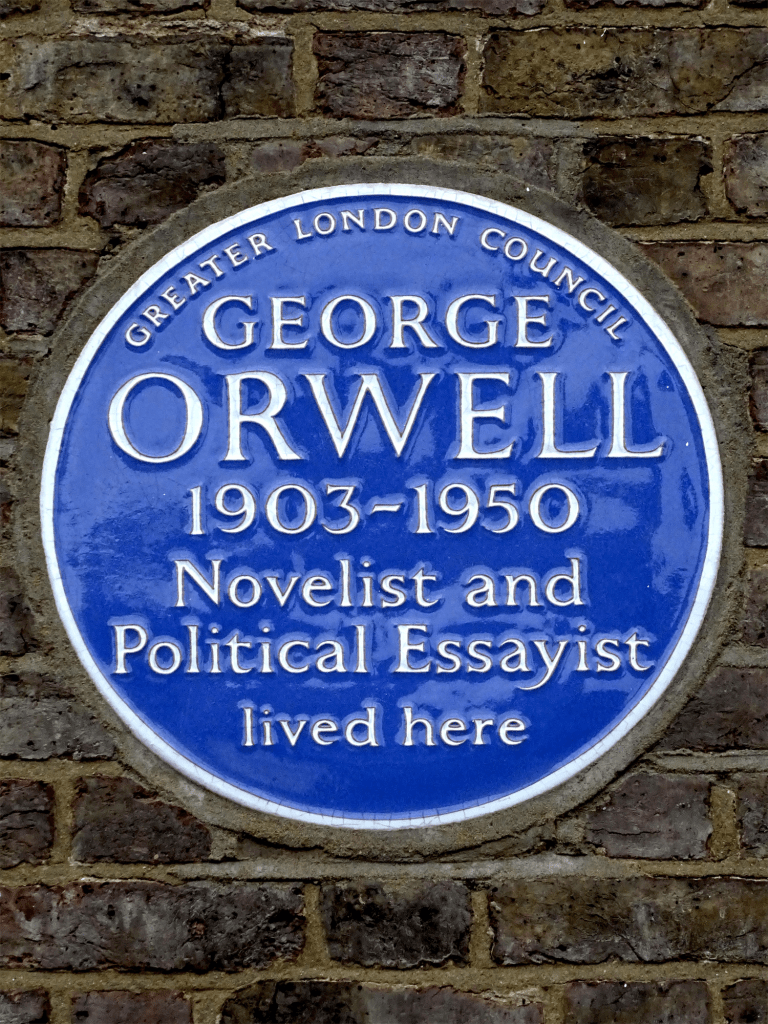
The other day, thanks to a sharp young friend from NALSAR — Ruchir Anand — I ended up reading George Orwell’s 1946 essay Politics and the English Language. But why do I say “ended up”? Well, ‘tis because I hadn’t planned on it. But once I started, it felt like a lecture – a brimming mix of bitterness and brilliance -that I could not not attend.

Among many sharp observations, Orwell said something that resonated with me. He noted how certain words or expressions — despite having no clear or consistent meaning — continue to be used, either euphemistically or dysphemistically. Talking of terms like democracy or fascism, he argues, has become so emotionally charged and overused that they are routinely used (/deployed like tools) without any precise definition. Tellingly, it is done with the tacit understanding that they don’t mean anything fixed at all. One can just toss them into any argument and come out looking holy.

Of course, now I can take a train to meet and bring Derrida to the Orwellian domain. And trust me, I am tempted to, too. For one, following Derrida’s notion of différance, one could level the same charge against the entire enterprise of language itself — that all meaning is slippery, deferred, and non-existent. And perhaps, does that convincingly so. But let’s hold back, for now and focus on a narrower category: words that are inevitably imprecise, and they are so with consensus. Yet they are used, assumed, and even unabashedly understood to convey a particular meaning, good or bad.

In Orwell’s words -“Many political words are similarly abused. The word Fascism has now no meaning except in so far as it signifies “something not desirable.” The words democracy, socialism, freedom, patriotic, realistic, justice have each of them several different meanings which cannot be reconciled with one another. In the case of a word like democracy, not only is there no agreed definition, but the attempt to make one is resisted from all sides. It is almost universally felt that when we call a country democratic we are praising it: consequently the defenders of every kind of regime claim that it is a democracy, and fear that they might have to stop using that word if it were tied down to any one meaning. Words of this kind are often used in a consciously dishonest way. That is, the person who uses them has his own private definition, but allows his hearer to think he means something quite different.

This Orwellian insight flies in the face of intellectual property (IP) discourse, which is filled with such means that mean everything and nothing all at the same time. And if there’s one phrase that fits fine in this farrago, like a lazy politician before an election: it’s the much-bandied word:  “balanced”. It goes in the same shiboleth flavours: “A balanced IP system,” “a balanced copyright framework,” “the need for balance between right holders and the public”. Pitched as self-evidently virtuous, it rarely comes with clarity. 

But ask the speaker and you’ll find: it means whatever the speaker wants it to mean. After all, what is balance? For whom? When? Under what history? Hither comes a sound of silence. A loud one, my friend. The word is perhaps mightier than the magical spell — abracadabra, you say it, you’ve justified your point. 

Yes, I may be biased in raising the example of “balance” — after all, it is the very subject of my PhD. (See this journal article called “Taking Copyright’s ‘Balance’ Too Seriously” where I expounded my claim in detail.) But even a brief introspection on the IP field reveals how much of its justificatory language — especially around what IP is for — is fraught with seductive yet slippery expressions.

Sample words like creativity, innovation, progress, and public interest. Lovely words, for sure. For they ring with righteous hue, sounding self-evidently good and noble. But on closer inspection, they often function — or rather, non-function — precisely as Orwell said: carrying emotional weight without definitional clarity. The speaker intentionally invokes such terms/words/expressions, thereby evading the weighty moral burden of having to exemplify the phrase they’ve uttered. Just say, “IP fosters creativity,” or “IP promotes innovation,” and voilà — the phrase earns its stand, rarely questioned, often axiomatically accepted.

The upshot is that these words are, as I like to call them, un-meant words which have managed to mean everything and nothing at once(!). And this is what makes them instrumental — and dangerously convenient —in almost any policy debate.

Of course, this isn’t unique to IP. Law and policy are full of such ‘un-meant’ words. But given how central these words/rhetorics (like the ones I flagged above) have become in global IP debates, especially endorsed through institutions like WIPO or even national IP offices, it is high time we parse the political function of such snafu signifiers. Because these signifiers — or even “noble nothings” as they are — are not just bad language. They’re politics in disguise, I posit.

So tell me, have you come across other such words in IP or law? The kind that is made to sound essential but is hollow from the inside?

Drop them in the comments. Don’t worry. I won’t misuse “transparency.” 🙂 See you in the next post.

Note: While penning this post, I was constantly recalling a solid post from Swaraj Barooah on SpicyIP called Solutionism, Social Innovation and IP.

On Second Thought … Let’s Call It IP Musings

Image from here

Namaskar Readers,

Lately, we’ve been wondering whether this blog should be called PhilIP and Policy. Although we like the name and even have a detailed note explaining why we called it that. But something changed over the period. While we intend, try, and of course want to theorise and philosophise about IP issues, we haven’t exactly been sticking too closely to that title. Especially, if you’ve read our recent posts, you’ll notice they haven’t necessarily dealt with IP law—or even theory or philosophy in any strict sense. Instead, they’ve been more like thoughtful meanderings … or musings, if you will.

Now, this doesn’t mean we’re turning the blog into an anything-goes diary—though such spaces are important and deserve far more respect in our intellectual landscape than they usually get! It’s just that our vision for this blog is a little different: to toss questions and ideas like seeds, and to see what grows therefrom. However, upon harking back, we realised that instead of strictly theorising or philosophising IP, what we’ve really been doing is musing —musing on and around IP, wandering through the many layers of knowledge production and information regulation.

So we thought: why not rename the blog to reflect this evolving identity better? So, from here on, we’ll be calling it IP Musings. The blog name and domain name have already changed. Soon, updates in other parts will follow, and the space itself will wear this spirit more visibly. Check out the About section to learn more about who we are and what we aim to do/achieve with this space.

And now … on the name. If you didn’t already know, the word muse has a rather entrancing history, I’d say. It comes from the Old Anglo-French muser and entered writing sometime in the 14th century. As a verb, it means to become absorbed in thought; as a noun, it refers to a state of deep reflection or dreamy abstraction. Quite curious, isn’t it? So … my dear lector, isn’t “IP musing an apposite name for this space we’re hoping to build?

That said, we still intend to anchor our reflections around IP. After all, that’s the area we’re most interested in and invested in. And perhaps (on good days), modestly qualified to comment on. With the new name, we’re giving ourselves—and officially so—the room to play and ponder. And we hope this becomes and remains a place where curiosity can cruise, ideas can breathe, questions can linger, and, more importantly, not every post needs to tie itself into a tidy academic knot. (If I can let my amateur philosopher out for a moment, I’d say this: if there truly is a journey from confusion to conclusion, what we covet here is clarity. Yes. After all, it’s the clarity of thought that lights the way—if such a journey exists at all.)

Well, that’s still not the whole story of the name. After all, just like everything else, there’s a little backstory to this title, IP Musings, too. So … a few years ago, one of us (Lokesh), along with Swaraj Barooah, had created a comic-style script series on SpicyIP called IP Reveries (which, fingers crossed, will come back soon!) It was then that we first thought of calling it IP Musings, but had to unhand the idea when we discovered a similarly titled series on Patently-O

That said, it doesn’t appear to be in active use anymore, and more importantly, no blog or platform seems to have adopted the name. So we thought, why not reclaim it and use it for the blog? And here we are: a new name, carrying the same—perhaps even more inspirited—spirit. Because, there is something (if not everything) in a name (Sorry, Shakespeare)

Finally, before I sign off, forgive the cliché (and perhaps cheesy), but I must say it: do subscribe to the blog if you haven’t already, so you don’t miss our latest musings. And do leave your thoughts in the comments—we’d love to keep the conversation going!

With gratitude,

Lokesh and Akshat, aka The IP Musings team

(formerly PhilIP and Policy)

See you very soon in the coming posts!

Some Excerpts from Prof. Jose Bellido’s Paper “Intellectual Property and the Question of the Archive”

Image from here

A few days ago, I wrote about my experience at the National Archives of India, and a peculiar feeling which I called “archival anxiety” — or arch-xiety, if you will. Today, I have something in a similar vein to share. But, this time, it’s not from my wandering through dusty documents, but from poring over a piece of writing.

So, I just finished reading an 11-pager, fascinating piece by Prof. Jose Bellido named Intellectual Property and the Question of the Archive from a 2017 open-access handbook edited by Irene Calboli and Maria Lillà Montagnani. And, as with much of Jose’s work, it’s brimming with sharp observations and research gaps waiting to be filled, or at least, explored. I would strongly encourage our readers to check, which demands and deserves a slow reading and reflection. If nothing else, you will come out with some exquisite sentences worth quoting in full and some valuable citations related to IP history.

Finally, before I share the excerpts, I must say something about him. Jose, in addition to being a very generous and supportive scholar, is a professor at the University of Kent and one of the finest scholars working on the history of IP today. You can find more of his work here — and if you haven’t dipped into it before, you really should.

Okay, that’s it for introduction. Below are a few excerpts from his piece.

In the introduction, he writes (footnotes omitted)-

Classified documents, patent files, disclosures, trademark records, originals, copies, collection agencies, registries, bureaucracies, proceedings, intangible properties, and access (or not)— the stuff of intellectual property (IP) is deeply connected to the institution of the archive. From family to corporate archives, from local to national and diplomatic offices, the trajectories of the intangible can be traced through such paper trails and holdings. The question— ‘What is the point of copyright history?’— was the subject of an academic conference some years ago. The answer to that question was that the point of copyright history, which could be extended to IP history, is ‘evidently’ archival. The archive— often the product of time- consuming, painstaking, frustrating, expensive, and unassuming labour— with all its literal and metaphorical potential, is full of contingencies and hazards, a repository of hopes and documents frequently leaving a mark or scar on the subject. Not recommended for those in a rush, the archive is a slow and deliberate medium, requiring one to wait for the rare opportunity to capture the ‘phantom’ of IP. Such an intimate link to a nebulous subject matter situated between the past and the future initially made its custodians, the archivists, wary of copyright law.4 While the digital environment transformed earlier fears into risk assessments, the relationship between the archive and IP history remains crucial as it goes beyond specific terms and conditions.

One of the most interesting things about archival research is not what has been found here or there but how IP scholars have approached the question of the archive in different ways. Socio-legal, economic, cultural, anthropological, and legal historians have all dipped into archival records with diverse assumptions about IP— empirical, theoretical, or otherwise. While some immediately found archival challenges to their epistemic endeavours, others continued the search, blurring disciplinary boundaries and becoming less concerned about orthodoxy and convention than in how and to what extent different archival orders determine our historical research. This chapter explores how these varying approaches culminated in remarkable projects undertaken by different scholars in the history of IP. It highlights not just the importance of such undertakings but also their inherent limitations. The constraints of those projects are not seen as negative features but as a reflection of the elasticity of the archival function and its connection to the history of IP law; and this chapter considers both the ways of conducting archival research and the questions that might arise from such work.

In conclusion, he notes

The question of the archive and its relation to IP history has been approached differently by scholars, not only reflecting their personal research interests and agendas but also their diverse takes on the relationship between law and history. While some describe their work as having been influenced by different archives,40 others recall their archival encounters as the key to helping bring ‘[trademark] registrations to life’. What seems to unite these remarks is an overall sense of gratitude towards archivists and those who helped with the tracking down of sources. Seduced by the archival function, IP scholars have even started recording their own conversations on history. With that said, most archival work in IP scholarship still attempts to embody the ideal of positivism, that is, ‘merely to show what actually happened’. The problem with such an approach is that it obscures the archival function, representing the archive as a neutral and uncontentious historical tool. Even the most meticulous contextualization tends to ignore how its condition of possibility is conjured up in previously deposited archival productions. More to the point, this unquestioned historiographical manoeuvre often serves to fix a past, which is otherwise indeterminate. Precisely because of the capacity to open or close historical junctures, the archive remains significant not just as a repository of the past but as an enabling device to trace the coming into being of different explanatory narratives of IP law.Therefore, archival research allows us to problematize our taken- for- granted assumptions and the narratives that guide them. In so doing, the archive stands not only as a historical resource but as a way to reflect on the shifting operations of IP law and its different histories. It also makes us aware of the contingency of historically significant IP milestones— for example, how there was ‘nothing inevitable about the success of the Berne Convention, nor about the shape that it should necessarily take into the future’. For, as has been recently noted, the archive ‘is not simply a repository of the past. It is also the principle of formation of the past, the present and the future’.”

Hopefully, these excerpts will tempt you to dive into the whole piece. Who knows — you might just find a research thread worth pulling.

See you in the next post.