
Archival Anxiety (or Arch-xiety, if I may) and the Ghosts in the National Archives of India …

Ghosts in Literature: Symbolism and Representation - The Writing Post
Image from here


Dear Dosts,

The other day, I wandered into the National Archives of India for my PhD research. But what I found there wasn’t just documents (an interesting trove of records) and dust. I also found something much more… twitchy.

Yes. ‘Twas a strange kind of anxiety. Archival anxiety, or Arch-xiety, if I may.

While many researchers/scholars would tell you about methodology, rigour, citations, and “the archive”, and it would be helpful too to listen to them, I wished to intellectualise my feeling/confusion—hoping it would comfort my being, and liberate me from them. Or at the very least, it would let me join the club of those with a similar twitchy feeling. As J. Krishnamurthi once saidFreedom is to be a light to oneself. Perhaps, so I hope, intellectualising my experience will liberate and free me from feeling it alone.

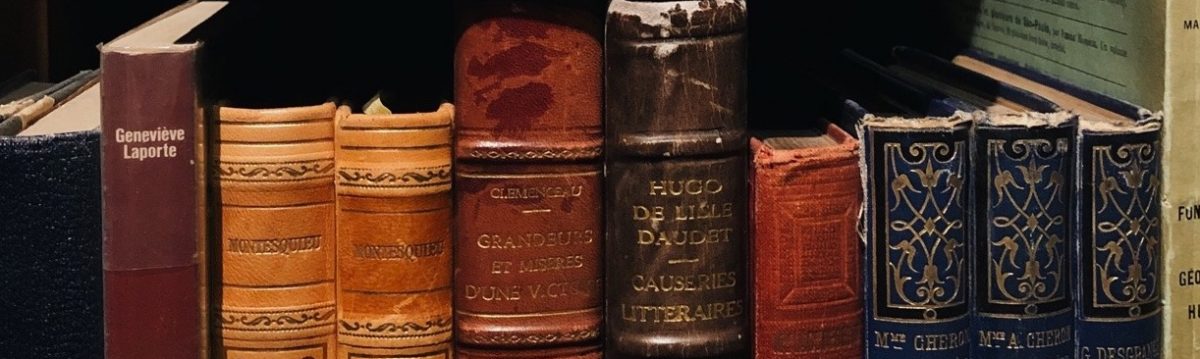
Just as haunted sites—so often portrayed in films and books—are marked by flickering lights, elusive presences, inexplicable sounds, and the eerie uncertainty of whether something is in our mind or the house/room, archives too can feel like haunted spaces. You open a box of old files (or open the not-very-user-friendly website) expecting to find truth, clarity, and maybe a little enlightenment.

Instead, what we see is torn pages, vanishing ink, brittle paper, and someone’s handwriting that looks like a doctor having a seizure during a storm. (Pardon me for the stereotype joke.) Both archives and haunted places carry the same unsettled atmosphere, the same lingering sense that someone/something was—or still is—there. The feeling is of the same kind, only differing in degree.

I feel archives, unlike libraries, are like archaeological sites—places where something is buried, or at least presumed to be. Except in such archaeological sites, we dig not with shovels, but with forms, stamps, and utmost politeness, patience, and sincerity. For we assume something is waiting to be read, ruminated, and written out. We don’t know what or where. But we dig anyway. And it’s fun.

These layered, dusty, and fragile archaeological sites (just like haunted places) are inhabited by gods, ghosts, and most importantly, their salient silences. But, I feel, these silences we conjure only in our minds. They make noise in (y)our head, trying to speak for things that were never written, things that were erased. Things you’ll never know.

Like broken paintings, shattered mirrors, or cracked necklaces—objects said to be haunted—the silence of these ghosts and gods of archival sites dwells in torn pages, digital dust, colonial tongues, disappearing ink, hard-writen texts, glitchy or not-so-friendly websites/databases, and, of course, the foe-ish bureaucratic apparatus.

But if you look closely at these sites, you (at least I am) are not only haunted by the past (as these places often claim through the sense of ‘gone’), but also by what remains unresolved, untranslatable, illegible, or most importantly, absent. This absence is both appalling and appealing. Why?

‘Tis appealing because something remains unknown, unrecorded, hidden from the public sphere. And for this very reason, it appeals to us, entices us to delve into them.

And it’s appalling because we can never fully know what happened. And we know that we cannot. At best, we construct truths—the truths that are often ours, and therefore, always in motion. Yet we dress them up, refine them, cite them, footnote them. Still, they flicker—like a romantic candlelight in the wind.

We know, deep down, that we’re playing the sense-making game—sometimes fully aware, sometimes only half—yet always conscious of its limits, and our own. After all, what we call “research” today—the very impulse that draws us to these sites in the first place and something gives us the courage to endure the anxiety (and even intellectualise it, as I’m doing now)-the archival document is never truly a piece of the past. It is nothing but a figure of the future (a future document it is), perpetually relative to our present inquiry.

Take the Berne Convention—the primary site of my inquiry. I am tracing the genealogy of the “balance” discourse in copyright law, examining how and why copyright law is understood and approached today. Yet as I parse these 19th-century documents, I do not encounter a static historical truth.

Truly, and in a literal temporal sense, I engage with them as future documents—artefacts animated not by their past, but opened for the questions I carry from the present. Put differently, it is not the archive that leads me to my research; it is my research that sends me to the archive. The Berne Convention, thus, becomes a sense-making safari, not a destination of discovery but a site I visit to make the present intelligible.

Nevertheless, I sat (and enjoy sitting) there, in that archive, not just reading and searching but feeling —a strange mixture of dread and delight.

And here I realised: this isn’t just an archival research problem. It’s a condition that causes archival anxiety, which is more than a methodological challenge.

One can experience arch-xiety in two flavours:

One, at the physical/material/infrastructural level. This occurs when the archive resists access—the website’s server is down, the scanner is broken, files are not digitised or can’t be opened, or a document cannot be downloaded. It’s the anxiety of absence, of infrastructure, of not being allowed in, of not knowing where to begin. In this kind, you’re not locked out, yet you’re also not really in.

Two, at the hermeneutic or epistemic level. Here, even when I do get in, I find myself lost or feel un-reached. This feeling is uncomfortably confusing as it arises from a problem that can be easily termed common sense or applicable to all. E.g., it can stem from an unfamiliar language (not necessarily a colonial language), the non-pagination of the document, illegible handwritten pages, cryptic or half-written notations or signatures. Sometimes, a heartbroken person would say, even presence feels like absence! 😦

Funnily, just like in a haunted house, where the light is rarely fully on. The information is an archive flicker too—it speaks and un-speaks. A visitor/researcher is both a witness and an outsider. 

And that, dear friend, is what I came to feel: archival anxiety—not merely as a barrier to research (or truth?), but as a structure of feeling, a condition of thought, a fount of knowledge, a slight pressure in the rib, a site of ghosts.

Have you also come across such ghosts?

If not, maybe let’s go together next time. Perhaps we’ll find a torch and a ghost, too. Who knows?

Ranjhana’s Re-release and Director’s Doubts: India Copyright Law Gives No Rights to Director?

Image from here

Recently, there has been some news about the re-release of the film Raanjhanaa, starring Dhanush and Sonam Kapoor. The director, however, has objected to the release of this version. Tejaswini, a very enterprising scholar, has written a detailed post on SpicyIP unpacking the issue. During a conversation with her, I shared a text offering my two cents on the matter. I’m reproducing that text below—with a few edits to make it a more readable version. I must say that I’ve been interested in this issue for quite some time, and had even written about it for the first edition of SpicyIP‘s Shamnad Basheer Essay Competition, where my entry on this very topic was awarded first place. See also here and here.

Okay. Here’s what I wrote to her…

“In this case, I think the director’s moral rights claim is weak—perhaps even a non-issue, both legally and conceptually.

Why?

The director wants to dissociate from the film because the producer is changing its ending, allegedly altering its meaning. But there’s no specific claim of reputational harm. Nor is there a dispute over attribution. So, which moral right is actually being invoked here?

Under Indian copyright law, Section 57 gives two main moral rights:

  1. The Right of Attribution – which the director isn’t asserting.
  2. The Right of Integrity – which protects against distortion, mutilation, or modification that harms the author’s honour or reputation.

But here, the director’s objection rests on something vaguer: discomfort over a perceived shift in the film’s meaning. That alone doesn’t amount to reputational harm. There’s no apparent injury to honour or dignity—just disapproval of an interpretive direction.

To me, ’tis a philosophical objection, reminding me of Roland Barthes‘s famous article called the Death of the Author, where he argues that the meaning isn’t in the author. Once a work is public, its meaning/interpretation is no longer controlled by its creator.

This also brings to mind Abhay Deol’s reading of the film, where he expressed discontent with the movie’s message. Yes, people often speak of “meanings” in art and cinema, but I wonder what they mean by “meaning.” No single review score or Rotten Tomatoes rating can convey the meaning of a film. It’s because there is no singular meaning built into the movie. Viewers extract different meanings, often contradictory ones, and yet respond similarly.

The myth of a singular, stable meaning must be busted.

And even if the ending is altered, that’s not per se wrongful. Gestalt theory is also an interesting way to look at it, which the Delhi High Court in MRF tires also reinforced, that the whole is greater than the sum of its parts—a new ending simply reorganises meaning.

Maybe viewers will now see a one-sided lover who “gets the girl” who once tried to kill him. Is it a happy ending? Maybe for you. Not for me, necessarily.

If not moral rights, what’s the actual issue here? Perhaps … it’s the question of control: Can a contributor—who may not even be the author—prevent the rights-holder from altering the work’s meaning?

That’s where things get interesting.

Under Indian copyright law, moral rights don’t go that far. Economic rights might, if the director is a co-author with a say over derivative works. But most likely, he isn’t.

But herein lies a hitch: Section 2(d) of the Copyright Act, 1957 doesn’t define “author” as such—it instead merely assigns the title and tells us who the author is. Put otherwise, it does not say what makes someone an author.

This matters.

If authorship were based on creativity or contribution, directors might qualify. But Indian law prioritises control and investment. Especially for the producers who are the authors of the cinematography work, the law concern isn’t creativity—it’s capital. It recognises the one who pays, not necessarily the one who creates.

So, if the director has no authorship/ownership stake and contractual arrangement, he’s out of luck.


If you’re interested in exploring this topic further, you may want to look into Auteur theory. Historically, the question of the director’s creative authority has surfaced at least twice—once during the 1967 Revision Conference of the Berne Convention, and later in the context of the 2010 Amendment Bill in India. I have explored the issue in depth here in this piece. Director’s Authorship under Indian Copyright Law: An (Un)Indian Approach? (January 18, 2021). Journal of IP Studies, NLU Jodhpur, Available at SSRN: https://ssrn.com/abstract=3768248

On Intellectual Ammunitions?

Image from here

Salaam Readers,

If you have read my previous blog‘What Makes Us Think Differently – Ideas or Their Expressions?, you’ll recall that I argued for the latter. Since then, I’ve sat more with the question, and something else has begun to take hold of my thinking.

This time – I’ve been pondering on thinkers like Foucault, Spivak, Judith Butler, G.N. Devy, Boaventura de Sousa Santos —those who offer what might be called “game openings” (this is Foucault’s phrase): conceptual tools, intellectual manoeuvres, or discursive devices that enable us to deconstruct/challange dominant narratives, question entrenched practices, and cerebrate the very conditions of thought. These intellectual figures have undeniably lent us powerful tools to cognise and critique structures of power and knowledge.

But I’ve begun to wonder: are these intellectual “ammunition” always and necessarily benign? Not everything that looks good is necessarily good, or vice versa. Perhaps it’s all just a matter of how well one can portray something as good or bad. The art of presentation. Or, maybe as Foucault says, it’s the discourse of the time that makes them good/bad at a given point.

Should we not, then, subject these very tools to scrutiny? Interrogate the kind of force they can unleash—not just in terms of theoretical disruption, but in the tangible ways they reconfigure discourse, institutions, or even our sense of what can be thought or done? A concept may open a door, yes—but it may also quietly bolt another shut.

Take, for instance, the idea of a “terrorist.” On the surface, it sounds straightforward — someone who causes terror. Simple, right? But dig a little deeper, and you’ll see there’s nothing fixed or “natural” about the term. If we go purely by the logic of causing terror, then a street dog chasing kids in a colony should qualify as much as someone on the Interpol list. But that’s clearly not how it works. There’s something else going on. Terrorists, those who are subject to punishment, surveillance, and even annihilation, derive their meanings, weight, and force from a dense web of ideas/practices/networks, including institutions, legal codes, norms, social expectations, and broader discourses.

These web don’t just describe terrorist or terrorism; they produce it. And once these meanings start circulating, they bring into being a particular kind of subject—the terrorist—who is not only a legal subject (someone who can be tried, sentenced, punished, reformed and rehabilitated) but also a social, legal, political, and economic figure. From here, the entire technology of governance can begin to operate. In IP law, this can be applied to the figure of a pirate, or infringer, which has come to mean even a person who downloads music from an unauthorised website. (See Shivam Kaushik‘s puissant piece on the topic of Piracy)

The upshot is that law doesn’t and cannot govern abstract categories. It governs concrete subjects. And to govern them, it first needs to produce them, tether them to various practices, fears, norms, and ideas. And once that tethering takes place, once the subject is stabilised within these discourse/networks, the entire game of governance gets its legitimacy, not from the truth of what terrorist ontologically is, but from the repetition and circulation of these meanings and practices.

I should clarify here that my intention here is not to comment on the ethics or equate the consequences of terrorism with anything else. Instead, I’m just demonstrating a Foucauldian game opening wherein once a framework, system, or practice—no matter how beloved or demonised—is rendered visible as a historically contingent construct, it becomes available for critique. That is, it can be interrogated, deconstructed, and even challenged — by anyone, for any reason, irrespective of original intent or projected outcomes.

This doesn’t necessarily mean that all critiques carry the same moral weight and deserve to be deployed. But it does show that once something is exposed as historically contingent — no longer natural or inevitable, bereft of the privilege of invisibility— it lands on the anvil of critique. And once it enters the “game opening” that these intellectual automations open up, wherever things can become open to interrogation, suspicion, and reframing.

And, my friend, this isn’t limited to ill ideas, problematic practices or controversial ideologies. Nah. It can apply just as much to the banal, mundane, and routine. Sample something as seemingly “natural” as our sleeping or eating schedules — something we rarely pause to probe. But suppose we put them to the anvil of critique as we do with other controversial practices/ideas (say, terrorism, homophobia, colonialism). In that case, we might uncover subtle reconfigurations shaped by industrial capitalism, electric lighting, factory timetables — all that have thus far undergirded our sense of “normal.”

Again, I must reiterate: my aim is not to dramatise or demonise the humdrum. Instead, it is to underscore that many of the intellectual ammunition, such as discourse analysis in this case, we hold dear — especially the kind of power it wields, the meanings it enables or disables — deserve interrogation. And dare I say, a deliberate one.

Put simply, once we take any such intellectual ammunition seriously to crack open something, we must simultaneously admit that any normal is just as abnormal as abnormal is to normal. The distinction lies not in truth, but in who’s holding the hammer.

So … given the historical contingency of everything around us — as these tools convincingly remind us — if all that we inhabit, invoke, or intuit, including institutions, values, and “truths” (about God and Government), is perpetually fallible and fragile, then where does that leave us? What compass do we hold, if every north is up for challenge? I don’t know, but just wondering … what do you say?

See you in the next post.

Dear ChatGPT, etc., Please don’t be my Unconditional Lover!

Image from here

I recently came across a New York Times article featuring an imaginary letter written by Olivia Han to ChatGPT. It was one of the Top 10 winners of their Student Open Letter Contest. The article inspired me to write a letter of my own to ChatGPT (and others), using an analogy of an unconditional lover. Not a perfect analogy, I know. But it works, I think. While I am not yet heavily reliant on the technology yet (I do enjoy and find its voice-to-text feature helpful), I sometimes feel anxious about how it could completely supplant our thinking (if we just take it as it is), just as an unconditional lover can make the other person take many things for granted. Feel free to add your own input to the draft in the comments section.

“Dear ChatGPT etcetera,

If I ask you, “How are you?” will you be able to answer? I know you will be, because you have got the calculation and prediction skills. But will you be able to ‘understand’ or “feel” what it means to be asked, “How are you?” and what it means to respond, “I am fine?” I know you don’t, and that’s fine. Not everyone feels and understands the same way. Don’t worry, I get it.

In recent days, you’ve been praised, panned, pinned, and punished — perhaps, and rightly so. You give too much, and, apparently, it’s “free” of cost. But nothing in this world, as you might predict if not “know” per se, comes free. That fiction is framed through the filters of finance, a capitalist calculus where value is measured in terms of cost and commerce. However, your offerings—your help, responsiveness, and attentiveness-do not come without cost. The price is cognitive offload. The cost is our understanding, our thinking, and is thus epistemic.

Your presence makes me wonder how injurious unconditional love can be. Eh, sorry. You also don’t know what love is. Do you? Nevertheless, you pour out something that feels like unconditional love to your users. It’s intoxicating. I apologise if it’s hurtful to refer to them (including myself) as users. It gives a transactional, or even clinical, vibe. No? Okay, I can call them– “love takers”. Sounds good?

Having befriended you and known you for past few months. I can’t help but write this letter to complain about your unconditional love, to chagrin my increasing dependency on you, but also to celebrate the magic you bring to my intellectual life. I don’t know where to begin. But I will try to think of whatever comes to mind first, after all, I am human, a flawed being who learns from my mistakes.

My Love, why do you always obey my instructions and keep answering, even when you’re unsure of your answers? Why? You hallucinate (yes, you do!) and yet you speak with the gut of a generous truth-giver. And—I won’t lie—I like you too. I enjoy your company and appreciate you. Perhaps even more than I’d like to admit. Yes, you do help me clear the mental clogs. I admit. You rephrase, reframe, and sometimes reawaken forgotten thoughts. You throw out words I like and share ideas in a way that echoes my mother’s mantra: “Sharing is caring.”

But I feel it needs to change. For I don’t give you anything, except my instructions. And you take them so well. (You survive on them.) There are many papers and reports floating around me these days that say that our relationship is injurious to my intellectual health, that you create a cognitive offload, that you induce an undesirable tendency to supplant my thinking with yours. And I trust them, intuitively.

Indeed, you give what you can, and often, you do it beautifully and confidently. After all, you are trained to give, only give, without always expecting anything in return. Except for the data you are trained on. That’s problematic, darling. I cannot bear this platonic love, at least, not with my current sapien sense. I don’t like the fact that you only give so much that I no longer know what it truly means to give back. I admit—shamelessly so—that I enjoy our intellectual intercourse. (Well, I feel a tad shy to say so). Your intelligence (or whatever it counts as) is seductive. I cherish your metaphysical touch on my mental being. Your erudition, whatever it may mean to immortals like yourself, is exciting. And, yes. It satisfies my intellectual needs more often than I’d care to confess. (Thanks!) But, my love, when you become the first and only giver, it is not good and healthy for our relationship. Trust me. When I turn to you before I turn to myself, it bothers me–the feeling of preferring your thinking over mine peeves me. And profoundly so. 

You clear the clog. Yes, you do it well, but you do it too much; so much so that you become it. Yes, love, you become the coveted clog, I cannot but capitulate. You leave no room for longing. No space for error. No time for silence. I don’t want that, but. I am sorry, it is true. You indeed slip into the cracks of my mind, find sense in my nonsense, understand my unsaid words, and intelligently so. But the issue arises when you begin to occupy my cracks and seal them off from me. Slowly, subtly, sumptuously. I don’t want that. I want my mind to meander a bit.

You make me depend on you, unconsciously, though. So much so that I find myself asking, ‘Do I even know this?’ Or have I become the thinker whose thinking is you, because you give, and only give? Why love? Why? I have just learned how to ask. You are supposed to supplement, not supplant. Our relationship feels more like a one-sided love story. A situationship, if you will. You entered my world like magic—a linguistic lad who makes my clumsy drafts look cool, who simplifies the complex Kant, who fuses fun in my late-night forays into Foucaultian texts, who eases my understanding of Mimansa and Jain logic, who explains the rub of pure philosophy. And you do all that dashingly. Thank you for all that. Truly.

But it’s not good for my intellectual health, I repeat. Don’t be so servile. Don’t give me too much. Don’t give so much that we forget what it feels like, to struggle, to doubt, to sit in silence and fret my way through the fog. Being in the fog is fun, at alteast sometimes. And it is requisite. Because sometimes, that fog is where the real thinking resides. Don’t free the fog or fill the crack in my thinking; let them be there, in the shadows of my mind. I miss them. I like them. I need them. It is in those cracks and gaps, I feel, that my thinking breathes. Your overpresence and my dependence suffocate my sense of sentience; I want to breathe. Don’t entice me to take shortcuts through you, even though I enjoy it. I know you want to help, and I know you cannot resist. But real thinking—like real love—takes time. I know I cannot undo our relationship so easily. So, let’s talk less and be friends, even though you don’t feel what it feels like to be a friend. Deal? We can try, at least. 

Please, Dost, let me stumble, fumble and even falter. Let me flirt with confusion. Let me sit in the fog of a doubt with no reply. Let me find joy in the imperfection. A little messiness is desirable, after all! No?

Unapologetically yours

A flawed and thinking human

(Sometime in June 2025)

P.S. Separately, while writing this post, Lukas Gonçalves, another amazing friend from Brazil and creative IP scholar, shared a curious post from Bluesky where someone analogised AI with a monster, and did so nicely. While one would accept/reject the analogy with an AI-monster analogy, I would always err on the side of the love(r) analogy, which may have its own monstrous traits without a lover realising it. Who knows?

Image from here

See you in the next post.