
I am tired of hearing the phrase “balance”. I am tired of those who say that limitations to Copyright ought to be interpreted in a way that balances it with the interests of Copyright holders. I am tired of those who argue for limitations to be read narrowly in the name of “balance”. I am tired of those who argue for wider and broader IP rights and contest limitations by claiming that they must be applied in a “balanced” way, that they must be applied in only “certain special cases”. I am tired!
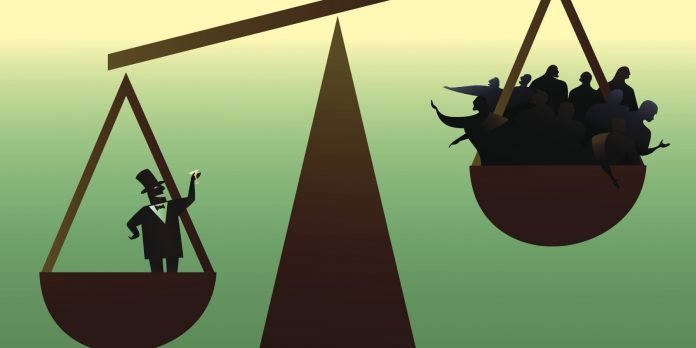
What is Balance? Balance is keeping scales aligned and symmetrical. Balance is ensuring that every conscious act, which is a step away from normative thoughts, practices etc., is regulated to the extent that it does not take a form of a tyrannical unconscious act. Balance is meant to ensure that things are conscious of tradeoffs – and every move played, in the game of chess, for a purpose (whatever that might be), is smart and not one which is erratic and unreasoned. It is a way of ensuring that even erratic moves do not affect the most fundamental, by safeguarding and keeping them in the realm of generic normalcy.
Well, Copyright is, in and by itself, abnormal. It is not intuitive or natural. It can never be. It is deemed “commodification” for a purpose – i.e., to serve the end of ensuring that creators do not shift to marginal sources of revenue that will economically help them survive better. It is an imbalance, in the norm of competitive markets. It is encouraging monopoly, as against the norm of discouraging clusters or market power. It is by itself an imbalance.
I often get riled up when copyright owners (with enormous aggregated market power through tools of assignment/contracting out these rights of creators), say that hey- please do not restrict our monopoly in the name of limitations like use/fair use/permitted dealings etc. “We deserve free markets.” “We contribute to the GDP.” “We make the economy.” I often get riled up when they call for narrow readings of limitations- touting them as “exceptions”, saying that well a balance must be struck that does not defeat the owners right to market and exploitation.
Copyright is by itself an interference in “free markets”. It is a monopoly statutorily conferred, in the backdrop of a constitution which discourages monopolies. How can businesses, which by their genesis run on a model that is an interference in free markets- want complete regulatory stagnation? How can they want their rights/ businesses to be treated like other businesses in the free markets?
The idea of “limiting” the exemptions from Copyright/ limitations to Copyright, or applying them narrowly, is something which we need to get rid of. Asking for balance within an imbalance is an oxymoron. These limitations ARE THE BALANCE. Reading them widely, or as strongly (sadly) as we read these rights IS THE BALANCE.
Copyright owners asking for free markets/ no regulation (by arguing that any regulation like limitations or compulsory licenses goes against free trade or right to property) is the biggest oxymoron ever- as the genesis of their claims is by itself a regulatory interference in the free market.
To conclude in a single line-
Reading limitations to Copyright narrowly, in the name of “Balance” is the genesis of systemic imbalance. Reading them broadly, or at least at a similar threshold as those rights , is what constitutes “Balance”.
 IP Musings
Further, the idea of ‘balance’ (un)consciously legitimizes the current laws which are in the first place built in an imbalanced way. To be more specific, how many countries actually played role in drafting Berne convention – the so called copyright treaty? Zero! Most of asian and African nations today were colonies that time, so they never really joined Berne by themselves, thanks to colonial masters for pranking us.
Copyright is an ideology imposed on us which, with the passage of time, has become a dominant thought in knowledge sharing.